
Week 1:
University of Iowa Office of Sustainability
January 21, 2013
My first week as an intern at the University of Iowa Office of Sustainability was a whirlwind. There was a lot to do and even more to learn.
On my very first day I was both nervous and excited at what was to come. After meeting my site mentor, Liz Christiansen, in person, I also met George McCory, the communications specialist (many people were still away on vacation, as the University of Iowa’s winter break does not end until January 21, 2013).
Liz and George began with the introductory presentation that they give all new employees at the Office of Sustainability. The presentation included a PowerPoint slideshow as well as additional information from Liz and George, and lasted about an hour. With all of the information coming at me, and with nearly no knowledge of what they were talking about, I decided to take notes that I could later view (this decision would help me later). I attribute my readiness to take notes to Cornell College’s classes – I would hardly get through any classes if I never took notes!
The basic gist of the presentation was that the University of Iowa is committed to achieving a more green and sustainable campus, from bicycle riding to recycling, how they heat the buildings, to the construction and renovation of buildings, all of it must be done in a manner in which adds to their seven detailed goals that they are striving to reach by 2020. Here is where my notes become helpful:
Goal #1: Use less energy in 2020 than they did in 2010. This will require a 20% decrease in usage.
Goal #2: Achieve 40% renewable energy consumption. This means using less fossil fuels like gasoline and coal for fuel, and using recycled goods such as wood-chips, seed corn, pellets of cardboard or paper made with adhesives (like labels) that cannot be otherwise used, oat holes, which are long, thin middles of an oat (hey get these from the factory in Cedar Rapids) to mix in with the coal, so that they can use less coal. They are planning a gradual transition from fossil fuels to renewables. I actually got to see all of the alternative renewable fuel sources, touch them and examine them, and it was simply astounding! You hear about the amazing things scientists and engineers come up with, but to see it in person is very different – a great experience.
Goal #3: Reduce waste. Enhance green purchasing. Capture more food waste for composting. Educate and communicate. Already, I have written or started to write articles about all of these things, after only a week! But more on that later.
Goal #4: Achieve 10% reduction per capita emissions of fossil fuel derived CO2 generated by University-related transportation and travel. For this reason, the University has electric and hybrid cars available to drive on campus, as well as University-sponsored public transit that is free and open to the public. They call it BONGO, or “Bus ON the GO” and there is even an application for smart phones and tablets to let you know when buses will get to your stop and how far away they are.
Goal #5: Support growth in educational and on-campus opportunities. This includes more green events to raise awareness, as well as more degrees and certification provided for those interested in sustainability who may not want to major in it.
Goal #6: Become a leader in academic research in water sustainability by 2020. At this point in the presentation, Liz talked about how many people in the world just do not have access to clean water. Thus their office is looking to stop the pollution of waters everywhere, starting with the most polluted water supply nearby: the Iowa River.
Goal #7: Build partnerships to advance academic and operational initiatives. For this, Liz talked about unifying the University of Iowa, especially because of its very large size. She and her office want to get all of the other offices on the same page so that they can all see how important their goals are, and they can all work together to help achieve them.
After becoming acquainted with the Office of Sustainability’s goals and commitments, I was given my first assignment! I was to write a press release for the website about an upcoming event (a benefit concert) on campus regarding sustainability. It was a simple assignment. After giving me the information I needed (i.e. where it was, when it was, what it was) I had to transform that into an enticing advertisement about why the public should attend.
After George checked the press release to make sure it was in correct Associated Press (AP) format, I was given another assignment. This one was more difficult. I had to write a longer article about very detailed and specific statistics and programs, which took significant research. My classes at Cornell have all required some sort of research paper, and I am also an editor for the newspaper, so those experiences helped this to not be too overwhelming. I finished on Wednesday, two days before my given deadline (something I will attribute to being accustomed to writing on the block plan). After finishing the first story, George went through more AP formatting basics. I was also assigned two more stories throughout the week, which I am currently working on for my deadlines next week.
In addition, there was a press release about me, and my position as a new intern. The picture below is the one they took from the press release.
Even though I have been very busy and been handed lots of work in a short time frame, I haven’t become overwhelmed. I think that the block plan will adequately prepare students for a work environment, as you may have many assignments/responsibilities at once, all relating to the same subject. I cannot wait to see what else is to come from this internship.
That’s all for now.
– Brianna Meeks

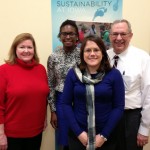
Major: English. Hometown: Norcross, Georgia.