
Week 2:
University of Iowa Department of Biochemistry
June 3, 2013
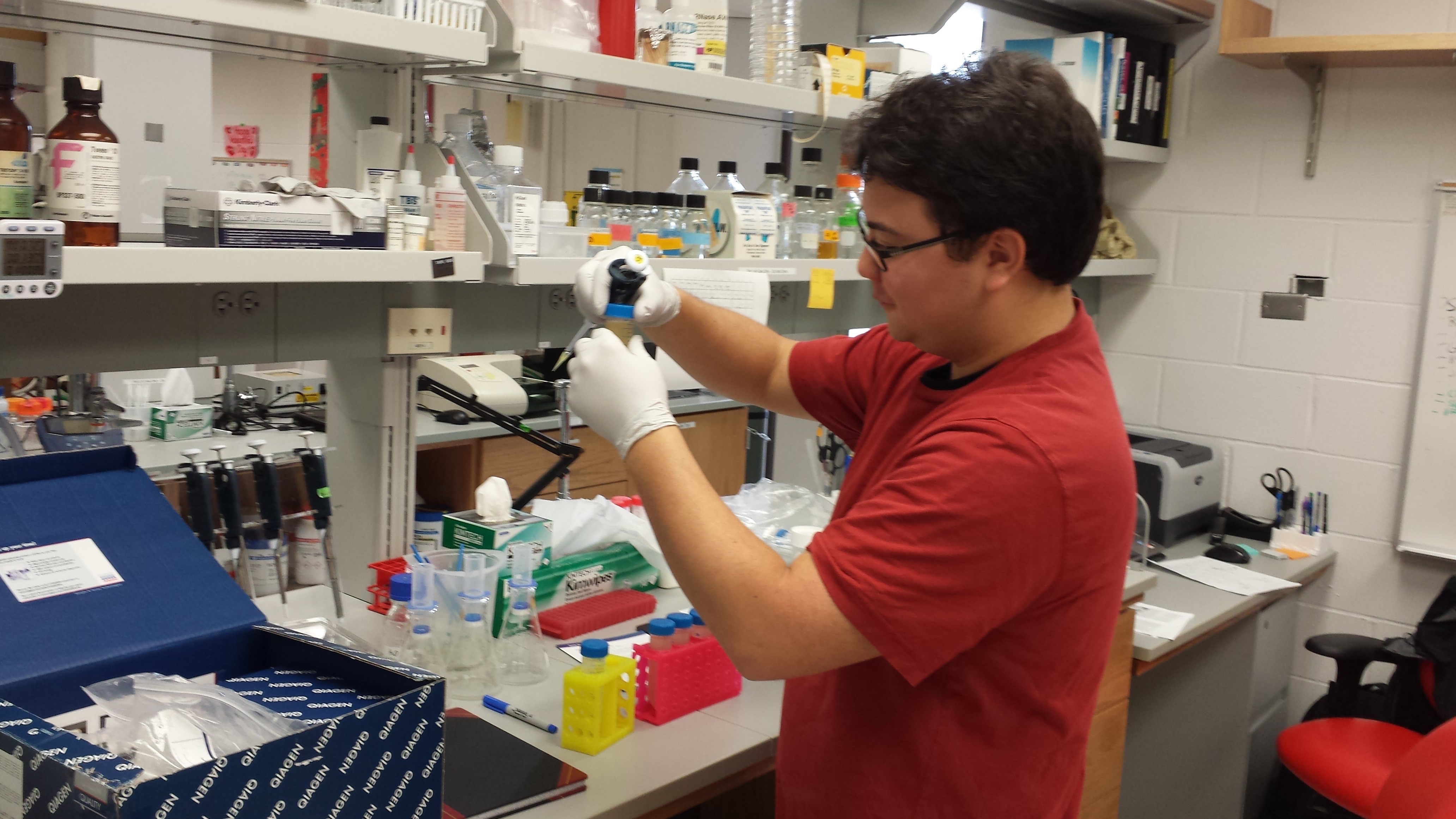
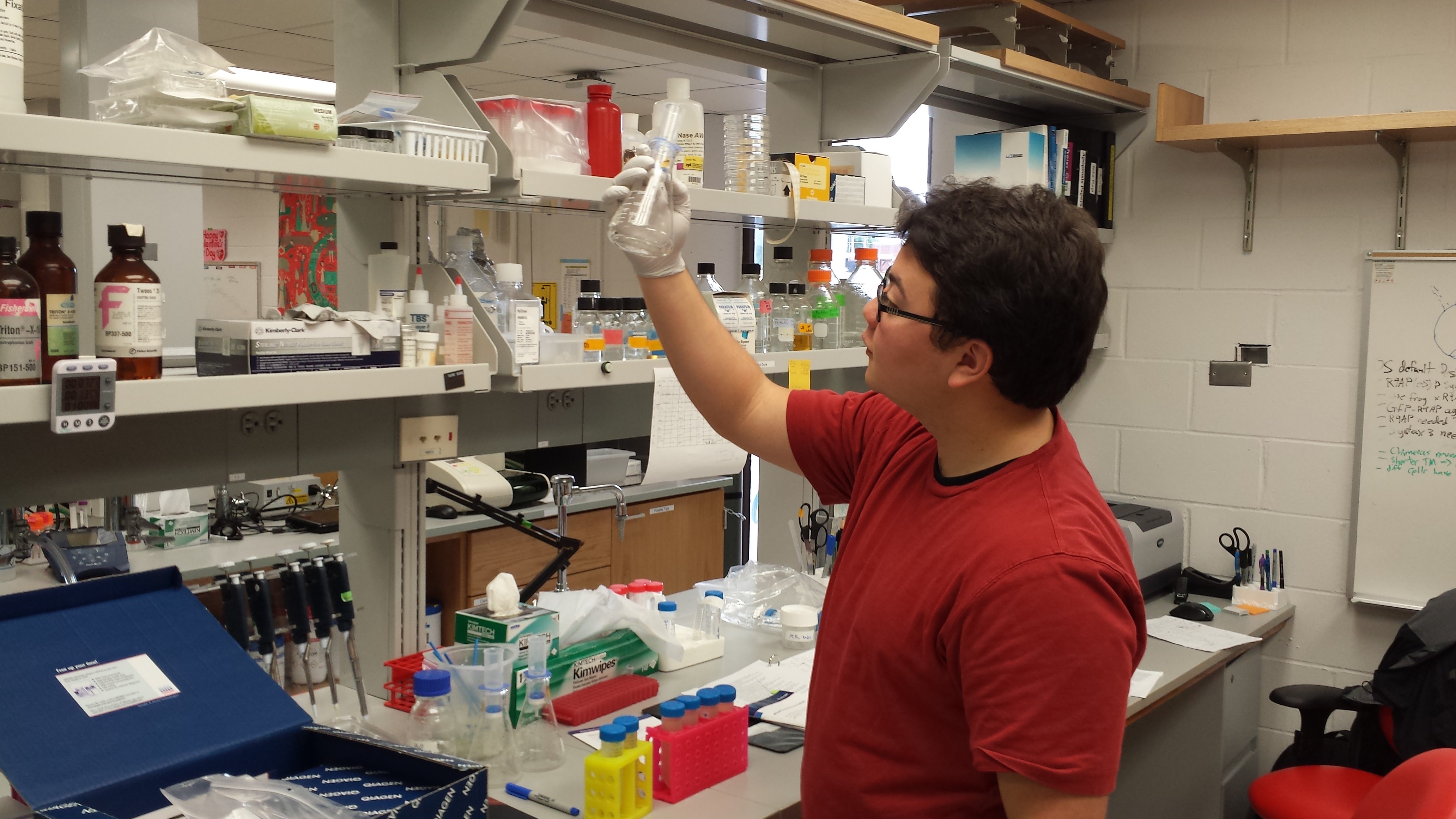
This week was noticeably more rhythmic than last week. The protocols I performed I had already done the week before and was much more comfortable than week one where absolutely everything was new. The molecular cloning process we’re performing is done by putting different parts of the C-terminus of HCN1 onto ACTx reporter protein sequence. By inserting this construct DNA into frog sperm and fertilizing a frog egg, we grow tadpoles that express the construct. The photoreceptors of these frogs are then examined on a cryostat which allows us to follow where the construct protein is being trafficked and indicates whether or not the selected section of the C-terminus of HCN1 contains a trafficking signal which directs the protein away from the outer segment.
Yuan has had me working on two different sets of DNA sequences containing different combinations of HCN1. Yuan walked me through the steps to create constructs H31, H32, and H33 from the beginning while at the same time, Yuan had already started, and had me continue, to work on constructs H28, H29, and H30.
The idea Yuan’s and I are implementing goes something like this.
Given a template plasmid already constructed (H23 for H28, H29, and H30 and H27 for H31, H32, and H33) we select which parts of the template we amplify in Phusion PCR by selecting primers which give us the strands we desire. After the PCR, the construct fragments, or pieces to be inserted into the final plasmid, are evaluated by agarose gel electrophoresis to make sure the majority of the fragments are the correct length and then isolated from the gel by a Thermo isolation kit. We then send off some of the fragment for DNA sequencing analysis to make sure there aren’t any point mutations in the majority of the sample.
The fragments then get digested in restriction enzymes which clip the ends of the DNA in preparation for ligation with the vector. The fragment and vector are then added to TOP10 cells in a process called transformation and the cells are cultured on agar dishes overnight. We then check the size of the plasmids to make sure no weird fragment lengths were inserted into a vector. Once the size has been confirmed agarose gel the DNA is isolated with the Thermo kit. To make sure no point mutations occurred in the transformation stage, we send the plasmids off for another DNA sequencing. Once we know there aren’t any point mutations in the plasmid, we digest the plasmid in restriction enzymes to linearize the DNA in preparation for transgenic insertion into the sperm DNA of Xenopus laevis or African Clawed Frog. We check the linearized DNA by running it through a gel against the supercoiled version of the DNA to make sure the digestion was complete. If any of the DNA isn’t digested, it will travel further in the gel and can be omitted from the DNA isolation process.
In week 3, we start the transgenic process on Tuesday by inject the H28 and H30 constructs into thousands of eggs. Then there are several sorting periods over next few days of the week which ensures at least some of the frogs develop correctly. Apparently, if sick or dead fertilized eggs are left in with the healthy ones, all of the eggs die. The process is very inefficient and the vast majority of the frogs will die with one period even called the “death night” where the majority of the organisms will die off. Although this makes me a little sad and scared, at least they gave me some fair warning that this is going to happen and that it may not be entirely my fault if a lot of them die.
Some exciting news came when Yuan told me that I will be responsible for the entire creation of construct H34! I’m responsible for scheduling my time appropriately and preparing the construct for transgenic insertion on June 25th. This shouldn’t be too difficult as I’ve already been through the process about one and half times by now, but it’s really exciting that I’ve reached a point in my education where people trust me to perform primary research and will rely upon the results I collect to form conclusions and may even include it in their publications.
The fellowship I’m participating in is running virtually parallel to the University of Iowa FUTURE in Biomedicine program which is a summer program for fellows (usually professors) of small undergraduate schools (like Cornell) can bring a student to work with a professor in their lab over the summer. The FUTURE program has seminars and talks for the undergraduates participating in this program and I am lucky enough to be able to attend these talks. The most recent event was the undergraduate research survival skills workshop where they told me how to keep a lab book and how to give a powerpoint and poster presentation. BIO-141 with Professor Barbara Christie-Pope (who is a “Senior FUTURE Fellow” –the “Senior” part she especially adores- in Robert Cornell’s Lab) and BIO-205 with Professor Craig Tepper gave me all of the information covered in the seminar reassuring me that my time at Cornell is well spent and preparing me for a career in Bioscience if I choose to pursue it.
An amusing anecdote about the lab would have to be what I’m calling the -80°C Freezer Re-Organization Debacle. Madestos (a.k.a. “The Angry Greek”) is the lab manager who knows where everything is and how most of the stuff works and had reorganized the -80°C freezer and thought everyone knew where things were. While I was running a Thermo DNA isolation kit, a member of another lab came over to Modestos and said, “I think Sarah was calling for you” as Sarah was in the -80°C looking for something.
Joe walks over to see what was wrong because Modestos was busy with some protein work. After a few minutes, Sarah comes back down the hall to our lab looking a little… irritated followed by a giggling Joe. I started laughing as Modestos asked Sarah with his Greek accent, “Is everything okay? Were you calling for me?”
She responded sharply, “No. I was cursing you for putting my stuff where I couldn’t find it.” And before Modestos could respond and without really breathing, she added, “I was so freaked out. You can’t do that to me.”
After that there was the expected basic argument concerning what organization system had been agreed upon. This lasted for much longer than was necessary for clarity, but just the right length to be amusing to no end.
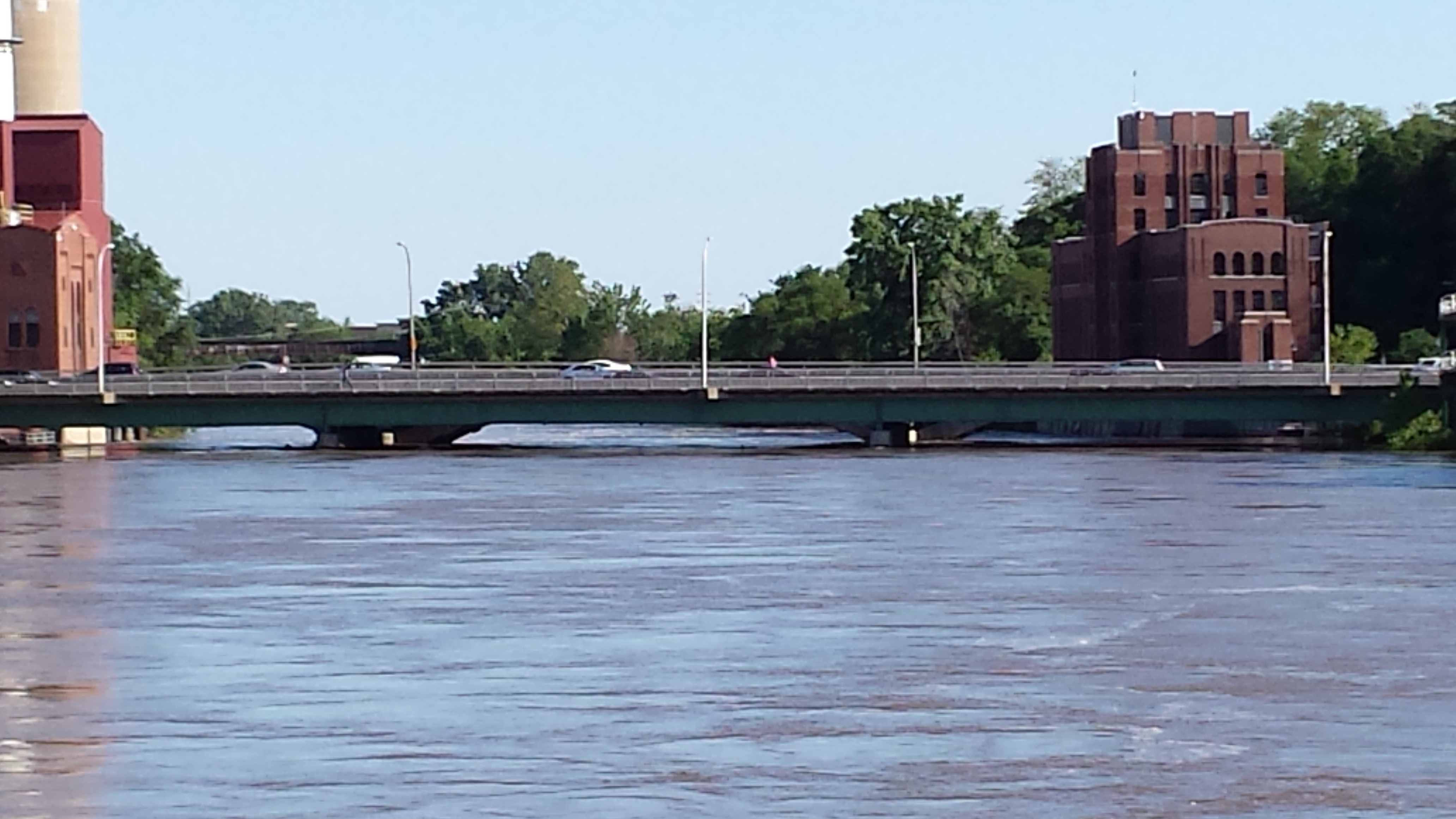
There’s also been an unreasonable amount of rain recently and the rivers are running pretty high. Joe told me the University of Iowa website has a link with information concerning the high rivers.
http://now.uiowa.edu/keywords/flood-updates-2013
Major: Biochemistry & Molecular Biology. Hometown:Erie, Colorado.
PreviousWeek 1: University of Iowa Department of Biochemistry
NextWeek 3: University of Iowa Department of Biochemistry