
Week 8:
Mayo Clinic
July 16, 2013
I am thankful I had the opportunity to shadow a Physician Assistant (PA) and Nurse Practitioner (NP) on the Sleep Medicine floor this past week. After Cornell, my goal is to attend a PA program. For those of you who don’t know, a PA is a mid-level healthcare professional who practices medicine under the supervision of a doctor. PAs take medical histories, conduct physical examinations, diagnose and treat patients, and prescribe medications. This opportunity was a great way to explore the medical field and interact with patients. In addition, I was able to use some of the background knowledge I’ve gained from my fellowship while shadowing.
Both days of shadowing were similar. In the morning, we began in the reading room to go over the sleep studies that were conducted the night before. After reviewing the sleep study, the patient was diagnosed and a treatment plan was formulated. The rest of the day was spent seeing patients. When a patient has a sleep study, they come in for a follow-up appointment the next day. In addition to these follow-up appointments, we also saw patients for consultations. These patients have already had an oximetry test which screens them for obstructive sleep apnea (OSA). OSA occurs when there is complete or partial blockage of the upper airway during sleep. If their oximetry test is abnormal (too many drops in oxygen levels), they are recommended to have a sleep study to be formally diagnosed with OSA. OSA is thought to be a “scapegoat” because of its many associated comorbidities. For example, OSA can lead to high blood pressure, high levels of hemoglobin, low levels of testosterone, etc. Patients come to the Sleep Medicine floor hopeful that sleep apnea treatment will solve all of their problems.
One of the amazing things about the Mayo Clinic is that people come here for treatment from all over the world! In just the two days I shadowed, three out of the fifteen patients I saw were from different countries. These patients, however, present a challenge with the language barrier. Mayo Clinic offers great resources such as interpreters and language lines. On the first day of shadowing, the patient spoke Nepali. Since an interpreter was not available for this language, we had to use the language line. This required using an interpreter over-the-phone. On the second day,the patient required an Arabic interpreter for which one was available. I think the examination with the interpreter went better than the examination using the language line, mainly because the was more personal interaction with the patient. In addition, this was a great experience to see how different cultures can affect a patients decision for medical treatment.
Overall, this has been my favorite week at Mayo Clinic thus far. I loved interacting with patients! In addition, I was able to ask the PA I worked with a lot about her career and her schooling. It is great to hear the perspective of someone who has already been in my shoes. As well as shadowing, I have also been researching PA programs. I finally have a “short list” of 35 programs that I am interested in attending. My goal is to narrow this list down to approximately 15 schools. As I become more familiar with the medical field through my everyday interactions in this fellowship, I think it will be easier to decide which PA program will be right for me.
“There are two objects of medical education: To heal the sick, and to advance the science.” – Dr. Charlie Mayo
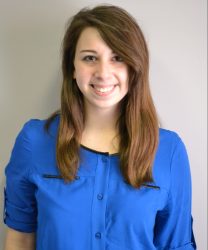
Major: Biochemistry & Molecular Biology. Hometown:White Bear Lake, Minnesota.