
Week 1:
Matthew 25
January 25, 2013
It’s been a wonderful nine days so far. I didn’t have a lot of prior knowledge about Matthew 25 as an organization, so I didn’t know what to expect. Basically I’d heard about it from friends who were like, “sorry we’re busy on Saturday, we’re doing [flood relief] [music mentoring] [youth empowerment] with this really cool non-profit in Cedar Rapids.” I should have been paying attention earlier! It’s great.
So, quick intro: I’m working with Matthew 25, a Cedar Rapids-based nonprofit focused on strengthening communities (specifically the Taylor and Time Check neighborhoods, at the moment) by empowering kids and families. They have several projects going, but I’m working with Cultivate Hope, which runs M25’s Urban Farm and their three satellite Garden Learning Centers in neighborhood elementary and middle schools. The vision is to make the Urban Farm, and Cedar Rapids in general, the preeminent destination in Eastern Iowa for learning about garden-based curriculum, small-scale farming, and urban agriculture. It’s the only urban farm in the whole state! How cool is that!
Matt (my boss) and I have determined that I will mostly focus on fundraising for Cultivate Hope projects, a personal interest that conveniently dovetails with the current needs of the project. As such, I have been researching grant opportunities, writing grant proposals (sorta – the first one was mostly copy/paste, but the training wheels will come off eventually), compiling on-the-ground fundraising ideas, drafting outreach letters, and making long lists of potential community partnerships.
But I’ve also poured over seed catalogs, wrestled with Google Calendar’s less user-friendly features, attended meetings for other programs, and toured the Farm (briefly; it’s January, and also freezing). I really hope to do some practical, hands-on learning in addition to the desk work; use some power tools, you know, maybe build some gutter gardens. One of my objectives for this fellowship is to gain a working knowledge of all operational aspects of the Urban Farm. Obviously I’m not going for expertise, but I’d love to be able to speak coherently about two-by-fours, germination rates, volunteer labor, and sheet mulching, in addition to being a grant-writing superhero (my other fellowship objective). Actually my secret goal is to do something interesting-looking so that someone can take a picture of me doing it. Otherwise all my pictures for this blog are going to be of me sitting at my desk with seventeen windows open on my laptop.
It’s probably important to note at this point that this fellowship is EXACTLY what I want to be doing when I graduate. I spent the first eighteen years of my life growing up in south-central Denver; I never expected to care so much about agriculture. But somehow food policy found me, and it is as nearly perfect of a calling as I could ask for.
Food issues stand at a crossroads of public health, education, and economic stability. The “movement” (the “local foods” movement, the “sustainable agriculture” movement, the “slow food” movement, the “school gardens” movement) is a hotbed of innovative, joyful, solution-based, wonderfully audacious ideas. Like the idea that green cities will have less violence (studies are already showing this to be true), the idea that local food-based business networks can revitalize the economies of struggling communities, or the idea that kids who hate math might do it if they could graph the growth of a mung bean sprout that they planted with their own hands. That inner-city six-year-olds will eat kale chips by the handful while sixteen-year-olds plant a food forest, or erect a hoophouse, and find a reason not to drop out of school. These are foundations of the Cultivate Hope project, and I believe in them very much.
When I graduate in May, I am moving to Chicago. For one thing, I love Chicago. For another thing, I now know more people who live there than I know in any other city in the world. But mostly, Chicago is a mecca for food policy and urban agriculture; among many other things, the first-ever food policy think tank launched there this month, Milwaukee’s famed Growing Power urban farm has a Chicago sister organization, and the city’s Green Healthy Neighborhoods initiative is looking to turn vacant parts of troubled South Side neighborhoods into jobs-incubating, fresh-produce-producing, community-driven expanses of urban oasis. When I get there, if I could find somewhere as cool as Matthew 25, with a position open for a politics junkie with a pronounced PR bent, my life would be complete.
Which is why this fellowship – and the fact that I am being entrusted with serious work, not the proverbial filing or coffee-fetching – is such a big deal for my life. My resume was so lopsided that the “work experience” section barely deserved to exist. The difference between applying for jobs with the resume I had two months ago and applying for jobs having completed this fellowship is incomprehensible. Especially since food movement types tend to be practical people who value practical skills, and don’t care all that much about academic accolades. Grant-writing, on the other hand…
Though I have to be fair: I already have a lot of practical skills, because I learned them in college. My Cornell life has made me a clearer thinker, a more attentive reader, and a more effective writer, and has convinced me that any new topic is comprehensible if you take a deep breath and break it down. If I can step easily between roles as grant-writer, recipe-compiler, and IT problem-solver, this is why. The last three and a half years have also been a tremendous catalyst for growth in personal confidence and social intelligence, because Cornell is both a safe space and a provider of challenging, horizon-expanding opportunities. If I’m able to drop into a new reality and mostly just have fun with it from day one, this probably has something to do with it.
The M25 staff deserve a lot a credit for that too, though. They are funny, intelligent, thoughtful, passionate people who don’t take themselves too seriously. It’s clear every day that they are doing work they believe in, which is pretty darn inspiring to be around. In a complete reversal of desk-job stereotypes, I am always excited to be at the office, to tackle work that is not homework, work that positively impacts the world instead of sitting on my hard drive or ending up in the recycling bin (sorry – is my second-semester-senior showing?). This is a comforting and galvanizing validation that the field I thought I wanted to work in when I knew absolutely nothing about it actually is a career I could happily pursue. Commence the job search!
But also, live in the moment, because it’s a pretty good moment. I’ll have more details and less background next week, promise.
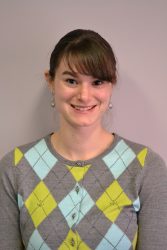
Major: Politics. Hometown:Denver, Colorado.