
Weeks 3-6:
Matthew 25
February 24, 2013
The long-awaited third blog post!
See, the thing about my fellowship is that it’s basically just a two-month exerpt from a normal-person job, and there are reasons that novels and Oscar-winning screenplays don’t get written about normal-person jobs. They are not very glamorous, and they involve a lot of me sitting at my desk and endlessly refining projects that I wrote about in the first two weeks. So it doesn’t necessarily make for a lot of interesting blog post material.
However, that is absolutely not to say that this experience does not continue to be profound and important for me. The gift of the Fellows program in my life is that it came at exactly the right time: just when I had two flexible blocks in the last semester of my senior year, and just when I was wondering how on earth I was going to get hired without any work experience. For me, this fellowship’s very nature as a fairly normal working-world experience is what makes it so valuable to me. I have now cleared some very basic hurdles, which condense ever so nicely during job interviews: I have professional experience, I have worked in a non-profit organization, I have successfully written grants and created fundraising plans. The importance of this experience is difficult to overstate. It may not look flashy, but inside my head it has changed everything.
It is also actually a disservice to Matthew 25 to suggest that this is, in some way, a run-of-the-mill experience. It is a joy and a privilege to go to work every day. And they have, in a gratifying leap of faith, thrown me into the deep end. Most entry-level positions wouldn’t get their hands on something as important as grant-writing for, like, a year; I was into it in my second week, and I like it, and I’m pretty decent at it. This is invaluable. It is a trump card I never expected.
In addition to lots of grant-writing and brainstorming about fundraising, I’m also starting to experience the framework of Cedar Rapids nonprofits and advisory groups into which Matthew 25 is embedded. Last week I went to a meeting of the Hunger Free Communities Plan committee at United Way of Eastern Iowa. It was interesting just to be in the United Way building; it is a much larger, older, and more established non-profit than Matthew 25 (actually, than most non-profit organizations in the whole country). Matt and I talked later about how non-profits, as they get larger, start to become indistinguishable from corporations in their practices, inter-staff realtions, and even their decor. Matthew 25 is more like a small business: scrappy, agile, and highly personal, though not necessarily obsessed with efficiency, as small for-profit businesses frequently have to be.
The HFCP meeting was revelatory. For the first time, I really saw in action a concept I’d only read about: the separation, in the world of food systems issues, between the anti-hunger contingent and everybody else. The HFCP for Cedar Rapids is, at this point, largely focused on getting food to hungry people, whether through food banks, school programs, or encouraging enrollment in public programs such as SNAP (the Supplemental Nutrition Assistance Program, formerly known as Food Stamps) and WIC (the Women, Infants, and Children program). Ideas about nutrition education, local economic revitalization, access issues for fresh food, and policy solutions were present, but clearly were not the focus. For contrast, the Cultivate Hope program at Matthew 25 currently addresses nutrition and access, and intends to expand the Urban Farm into a multipurpose hub that will train people for real jobs in the food and farm sector and shift the whole culture of the Taylor and Time Check neighborhoods towards better food and a greater connection to the land. This week, I will also be attending a meeting of the Linn County Food Policy Council. I assume, as per their name, that they will pick up one of the final pieces of this puzzle: policy solutions. This is where most of my training and knowledge in these issues is, so I’m very interested to see what is discussed.
Though I truly think that all of these approaches are valuable and important, I am drawn so much more to the culture-shifting solutions than the others; giving three days worth of canned goods to a family on SNAP is just a very, very small band-aid, after all, and even direct attacks on state or national policy are really focused on the symptoms of the problem, not the cause (although policy can certainly cause problems). If we don’t figure out a way to shift the culture, we’re never going to change the policies. That’s just how it works. Without a grassroots food revolution, does anyone really think the Farm Bill will stop giving millions of dollars to agribusiness companies who are destroying the Upper Mississipi River Basin? Of course not. The only thing that trumps money in politics is the threat of many angry voters.
Local policy is a different story. Under the guideline of “subsidiarity,” all decisions in the European Union are supposed to devolve to the most local decision-making body possible. Europe doesn’t necessarily follow this concept all that faithfully, but that doesn’t mean we can’t. Local policy change is, at its best, a direct expression of democracy. It becomes part of the culture shift; I think this is why I care about it so much. Shifting local policy towards building a real food economy has immediate, tangible, lasting effects. These effects are not transient, like SNAP benefits, or corruptible, like national legislation. They are foundational.
So basically this fellowship is a miraculous integration of my academic interests, my activist passions, my professional life, and my future. Aside from everything else, I now know what I’m looking for as I embark on the Great Employment Search. If I weren’t moving, I’d just try to convince Matthew 25 to hire me full-time. That would solve all my problems.
P.S. Kyle Decker has convinced me that everyday photos can be interesting. I will put together a little photo essay for the next post (get excited).
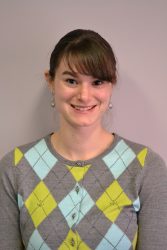
Major: Politics. Hometown:Denver, Colorado.