
Week 4:
Baruch Institute for Marine & Coastal Sciences
June 9, 2013
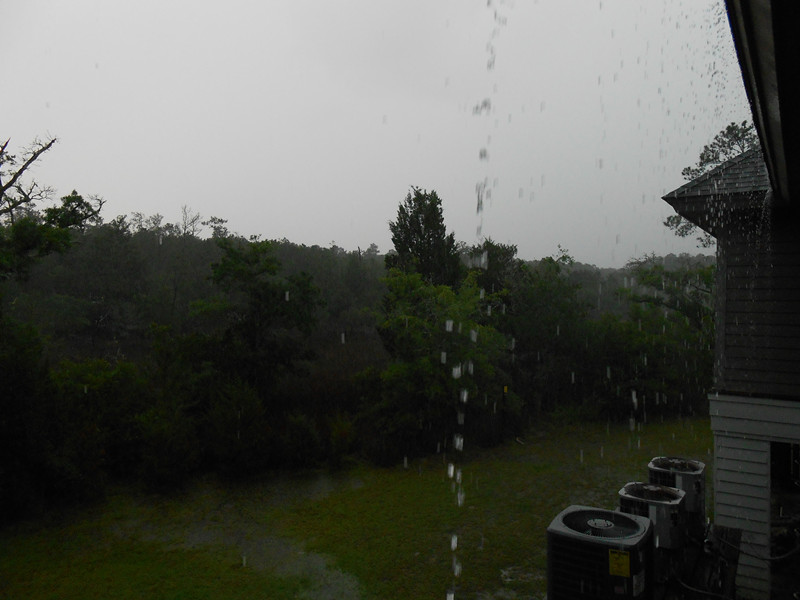
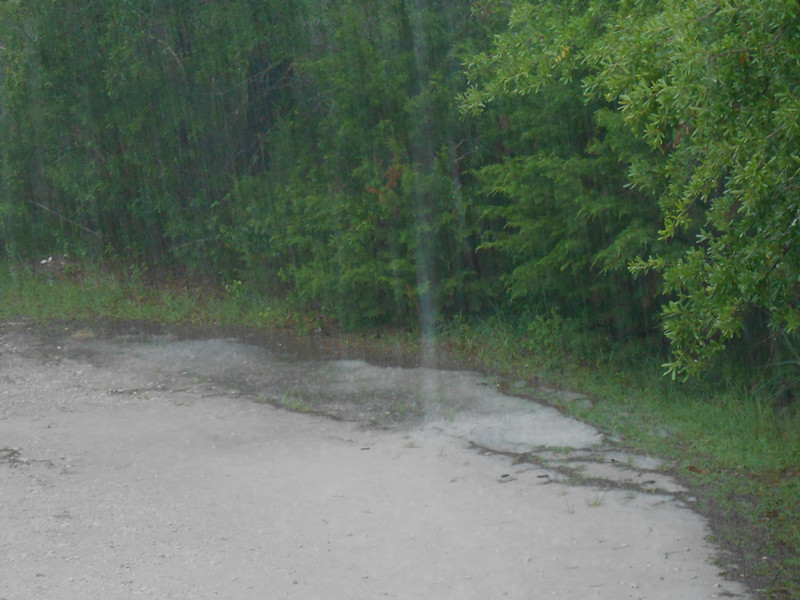
It’s been a long week. The rain was ceaseless. Day, night; it made no difference. The few times when it let up were just as bad – the sky was gloomy and the air was thick as tar. Every morning, I awaken tired from a bad night’s sleep. The humidity also makes my face swell, and that’s certainly no fun. Being at the lab is a blessing because the AC is always going at full tilt. I hate that I’m not as energetic as I should be – especially when I have so much work to do – but, unfortunately, I can’t control the weather. I want to stay cheerful, but the gloom that hangs in the air makes that unfeasible. I often think of home, and that only serves to make me sadder. Since it rained the entire week I couldn’t go out into the marshes to put out tiles. The bright side of that is that I had time to catch up on the all the stuff I already had to work on.
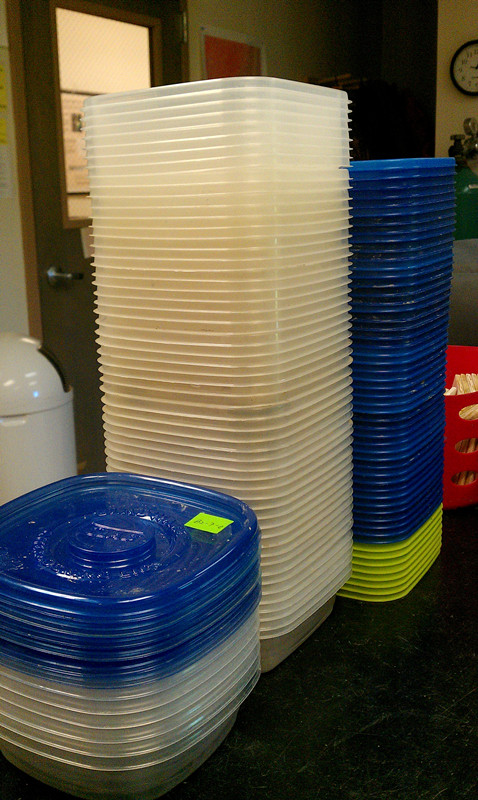
One characteristic of this internship that I like is that it is easy to set out and collect the tiles with the accumulated sediments. Thankfully, it’s becomes easier than when I first started as I now have more experience and I’m more familiar with the three transects I’ve been working at. However, it takes a long time to process the tiles and obtain the data. To be specific about why it’s hard, here’s the process: after collecting one set of tiles, I clean and transfer the sediments into tubes. This usually takes three hours. After this, three fifths of the samples are put into the centrifuge and are then put into the oven to dry – a three day process. After they are completely dry, I weigh them and burn them in the muffle furnace. The combustion process takes eight hours, and the cooling takes another half a day. After the samples are back to room temperature, I weigh them again so that I can find the organic/inorganic ratio. For the other two fifths of the samples, I process them in the Clemson lab to obtain the grain size distribution. This takes three to four hours – assuming the machine is well behaved. During the sample processing, I start sorting data on Excel. As you can see, getting and analyzing the data is a long process.
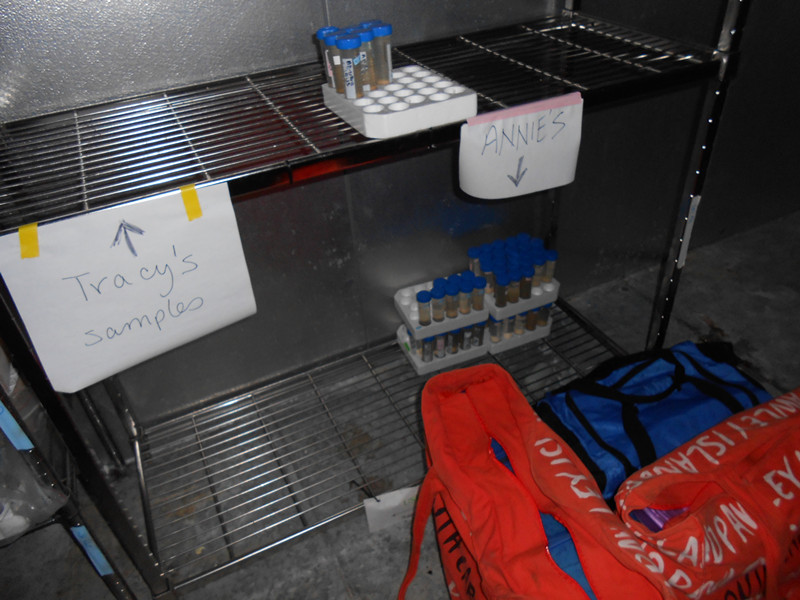
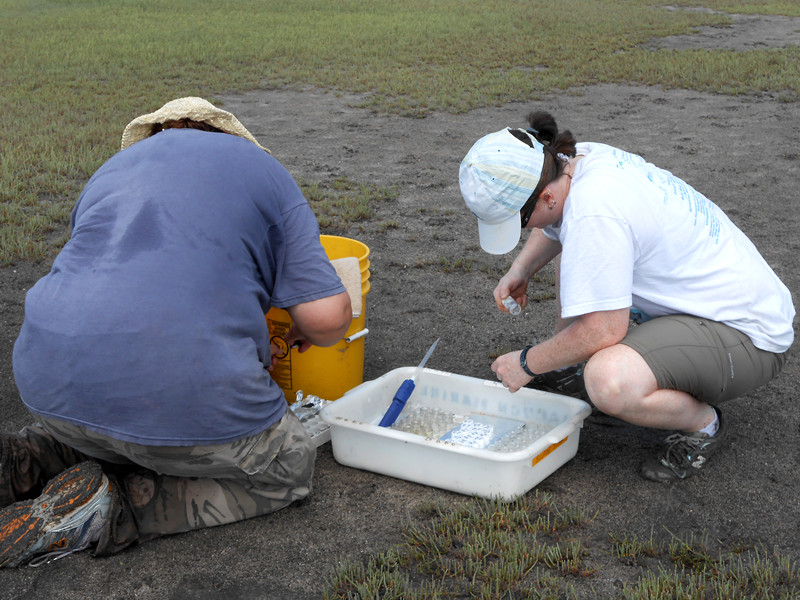
In addition to cleaning tiles and analyzing samples, I went to the field with Tracy and Susan on Tuesday – the only day it didn’t rain- to collect the water samples which were set out months ago to analyze sulfates and nutrients in the water. We deployed new sample collectors after we collected the old ones. It only took two and a half hours, but the repetitive bending down and getting up made my legs sore for the next two days. It was definitely a good workout that tells me I need more exercise. Another noteworthy thing is that after Tracy taught me how to make different, important graphs, Erik – my other mentor – discussed with me about the current and future schedule and the detailed scientific aspects about the project. We talked about things such as whether the accretion of the sediments is caused by biological activity, the wind, or the tides and how to evaluate the impacts of plant density and elevation on sediment accumulation. It was a good meeting. Of course, as with all meetings I’ve had with my college advisor, I am left with more work and more graphs to make. Patterns can only be found through repetitive trials.
Next week, I put out more tiles, so hopefully it’s less rainy and the bugs lay off for a while.
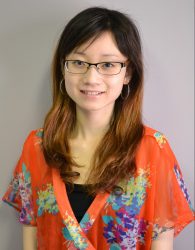
Major: Geology. Hometown:Xi’an, Shaanxi, China.
PreviousWeek 3: Baruch Institute for Marine & Coastal Sciences
NextWeek 5: Baruch Institute for Marine & Coastal Sciences