
Week 7:
Project Transitions
July 17, 2013
 On my AP English Language exam in junior year of high school, I learned to write synthesis essays. My first block at Cornell (Educational Psychology), my final 17 page paper was essentially a synthesis essay. When I created study guides to study for my Religions of the World course, I essentially wrote a synthesized cumulative essay. I learned to pull information from all of the corners of my brain and all pieces of my literary vocabulary/research in order to craft a complete picture. Little did I know, those hours of synthesis essays in high school would end up as the foundation of my education, and eventually as social worker at Project Transitions.
I’ve talked about this a little before, but gathering a client’s entire story during an intake is the first step in deciding if and when PT can provide them services. This week I got to run intakes all by myself, so it was up to me to get a complete picture of the clients (side note: there is nothing more exciting to walk into a room with two strangers knowing you’ll be familiar with their entire life story in an hour’s time). By the time the clients walked out of the room, it was my job to gather enough information that I could assess if/how they fit into the program and why. Then comes the fun part: paperwork. Usually that statement would be a facetious, sarcastic comment on bureaucracy, but this time I mean it. The paperwork is where my AP Language, Educational Psychology essays paid off. When I sat down to complete the final paperwork and needs assessment for the intakes, I was drawing on the previous few hours’ worth of interview material, everything I’ve learned about the programs at PT, my interpretations of the clients’ body language/tone of voice, first impressions, and all I’ve ever learned about understanding people. I got to take all of those ingredients and stir them together to make the best needs assessment I can possibly make. It’s like a giant puzzle, and I love every minute I get to spend putting the pieces together.
Earlier in the week, I created packets for a client about a local affordable housing option. I basically went to the website and pulled information about each of five or six options for permanent housing, slapped them into a word document, and printed a couple copies. At first glance, I just described a menial task. The interested part is knowing what information to pull and how to put it together. When I created this packet, I was synthesizing everything I knew about the client (personally, financially, emotionally) and using that “complete picture” to assess what he needed and how I could present the information in the easiest possible way that included what he needs. It was another puzzle. Even when I audit charts (going through a checklist and signing off that everything is there and in order), I am synthesizing everything I know about PT programs and grants as I scan files for the key information our program needs to fulfill our grant requirements.
As a result of all of this puzzle assembly, I now know that I need puzzles to serve as intellectual stimulation. I’ve always known I like puzzles. That’s why I came to Cornell thinking I was going to major in Chemistry, which I consider to be a giant puzzle. It’s cool for me to discover puzzles in other subjects, though, and know that I love puzzles made of people’s life stories even more than I love puzzles made of molecules. In my intakes and case management, I’ve found the intellectual stimulation that helps make my fellowship an academic experience.
Besides the intellectual side of my intakes, it was also really nice to know that my judgment is being trusted. After I assemble the puzzle, I pass the file on to be put on the waiting list. From then on the story that I filed away is the one that PT will reference for the client. It is the packet that our director of client services, my boss, will depend on to make a choice about when and if that client will enter into our housing program. It’s scary, but also very fulfilling, to think my judgment is being trusted in a decision that could change someone’s life.
While I am lucky enough to be part of (hopefully) changing other people’s lives, I’d like to make it very clear that everyone here is also changing my life. I’ve said it before and I’ll say it again: my supervisors and coworkers are incredible. I work in a fun, casual, professional office space that allows us to laugh while we work, smile during meetings and rely on each other as a positive support system. Even when our computers run slow or our binder clips run out (as is typical in non-profits; resources are not overly abundant and we do with what we’ve got), everyone in the office does stellar work with a passion that amazes me every day. Every single person has taught me something new about Project Transitions, social work, professionalism, and myself. Only 7 weeks later, I already feel more confident in my professional presentation and less anxious about entering into the work world. They have given me the tools to explore social work as a possible career field and encouraged me to explore myself, not just my work, on my professional journey.
Speaking of exploring, I’ve still been running around like crazy in Austin. I love the city more than ever- I’ve gone to the cutest coffee shops, been on air on the UT radio station, seen a bunch of poetry slams, gone dancing a handful of times….and that’s just a few. Since I’ve been here, I’m pretty sure I’ve done something new in Austin all but 2 nights.
Thanks to all of my Austinite friends and coworkers, my family and friends from afar for their constant support, and thanks for reading!
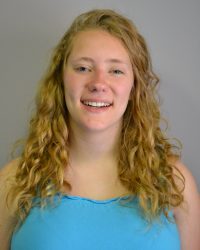
Major: Psychology of Performance. Hometown:Centennial, Colorado.