
Week 3:
African American Historical Museum and Cultural Center of Iowa
June 11, 2013
Okay, remember when I said I digitized over 900 photos for the Virgil Powell Collection? According to my digital output (sometimes you scan the backs of images too, if there is important information written on them, but for this collection that was a rare thing), I actually digitized over 2,000. When you spend 8 hours standing around and scanning items, you get into a rhythm, and uh, maybe lose track of how much work you’re really getting done.
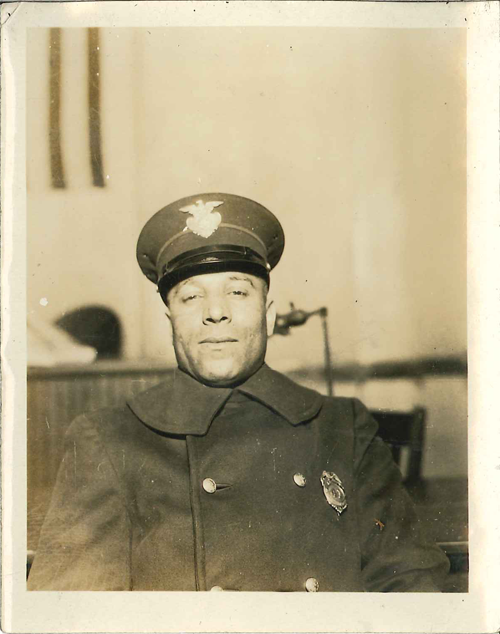
That is one of the images I digitized, which isn’t online yet. Shh. When his materials go live online, I highly suggest checking them out. Or better yet, make your way to the museum. Powell is an incredibly interesting man. Outside of his professional work, he was an amateur photographer and author. That should give you a bit of insight as to why we have over 2,000 photos. A lot of the time Powell was playing around with filters, so we have Red, Blue, Green, and Yellow versions of the ‘same’ photos. Don’t worry, we only digitize one. Realistically, just his photo collection is probably closer to 2,500+ than anything else. Oh, and don’t get me started on the documents! Writers. They love drafts.
Everyone else blogging seems to be giving you a breakdown of the research they’re doing, so I thought I’d give a bit of a breakdown as to what my weeks are normally like.
Monday: A staff meeting is implemented by our new director Michael. Our old director (and one of the founders of the museum) Tom, retired after my second week. Tom was great, kind and patient, so while I still enjoy seeing him around the museum sometimes, I’m in the firm camp that he should be at home relaxing or golfing. Returning to Michael and our new staff meetings though. Essentially, the meetings are to give everyone a look at what everyone else is doing for the week. Even interns are required to go, and we’re kind of treated like staff, which was something I wasn’t really expecting. We have the option to lead the meeting, etc. It’s new, and while there have only been two, I’m wondering if they don’t waste more time than anything else. For an archivist, an hour to an hour and a half handling materials can really make a difference in a project. If I’m working with the Virgil Powell Collection, I can probably get 200-300 photos sorted in that time. But hey, when you’re on the management side of things, I can see needing to be on the same page as everyone else. Education people are doing very different things than I do, so are the people writing grants (and by people I mean person, and his name is Grant), etc. Ah, office politics.
After the meeting, I usually work on the oral histories. I’m working on two, Adult Voices and The Only One. Let me say something first. I’m obsessed with storytelling. I love it. I’m double majoring in History and Classical studies because I believe they’re the vehicles use use to tell our stories, how we shape the world. When I heard that the museum had collected oral histories I was kind of over the moon. I wanted to work with those, ASAP. Having them as one of my big projects was perfect, especially with my strong background in technology. Now, I’m specifically here at the museum to learn about curatorial and archival best practices within the context of a historical museum, and while I talk about my work with the Powell Collection a lot, and it is kind of the traditional archival work, proper digital storage, maintenance, organization methods are incredibly important in a museum. That is what I have been doing with the oral histories. There are 100+ of them, and they were done by different people, at different times, and taken in different formats. For a tech person, you just kind of have to sigh, especially when your museum software (Past Perfect) only likes certain kinds of file formats. So I start from the bottom up. I take the boxes that have transcripts and the disks (they’ve all been put on to DVDs, thank goodness!) and start to rip them onto the computer. None of the transcripts are digital, but luckily some of them are already online. I take those, make .pdfs, and wait for each disk to rip. I considered .doc files, but who is to say everyone will be running Office, or that someone may not delete a segment on accident? Another plus, .pdfs are relatively streamline.
These oral histories are videos of various lengths, and they come off the disk as .VOB files. Over the past two weeks (weeks 2 and 3), all the files are ripped…relatively successfully.
Tuesday: Felicite is in! Felicite is a consulting archivist. She works on the computer that I normally do with the Past Perfect software, adding search terms, updating the archives, etc. She makes sure everything digital reflects our actual holdings to the best of our ability, and that means everything from taking an object and measuring its dimensions to identifying people in various collection photos. While Felicite is working, I work on other things. Mainly the Virgil Powell Collection. After digitizing the collection, now it is time to start to sort, house, and organize. Traditionally, you keep the natural order of a collection, which is how you received the collection from the donor. The Powell Collection had no natural order, so it is up to me to figure something out. Which is what I started this week (week 4), but we’ll get to that later. Instead I spend all of Tuesday and Thursday putting 2,000+ photos into sleeves. Sleeves are what I call photo envelopes.
Wednesday: Return to the oral histories! Troubleshoot should probably be my middle name, because while I finish the transcripts, and scan in the ones that didn’t exist digitally, many of the files are corrupt. I decide to just finish ripping everything, create a physical log of all the things that need to be done (find master copy, rip file, convert to .wmv, rename, store, upload to Past Perfect, edit metadata).
Thursday: Felicite is back. Felicite works Tuesdays and Thursdays, if you didn’t get that before. So I return to the Powell collection and finish putting everything into photo envelopes.
Friday: Sabryna is in (another consulting archivist who is in most days but works more with objects) and is using the computer for half the day. While she does that I start to sort and organize the Powell Collection. Now, if I’m being honest, I should have probably started to write a finding guide before I started this. Real fast though, this is what a finding guide is. So while I still feel like I should have started a guide before actual sorting and eventual organization, I’ve seen all these photos at least twice, and there was no natural order to speak of, for a life with many interests over a long period of time. Realistically, writing a guide after the fact may be smarter, but time has yet to tell. I decide to break everything up by vague categories, then I’ll keep working my way in to become more and more specific. So I have professional, family, and personal lives. Breakdown becomes more specific per category, and all of this is evolving as I go along. For instance, there is a personal – amateur photography – activity – vehicular folder. This means that these photos were taken by Powell, display an activity, and it involves some kind of moving vehicle. We have personal – amateur photography – still life, personal – amateur photography – architecture and landscapes, personal – amateur photography – activity – leisure, and it goes on and on. While I know there are photos in the collection that just don’t have a set place, like the following, which is really cool but who knows what was happening here. It’s a start.
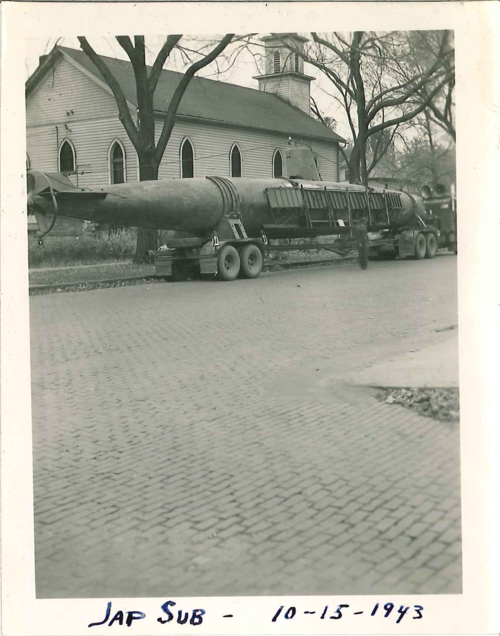
When Sabryna goes home, I go back to the oral histories. I sort and weed out all the corrupt video files! I even upload all the videos to Past Perfect, ignoring all the corrupt videos so I can search for the master copies and hope they aren’t damaged as well. At 3:54pm Past Perfect won’t respond (this isn’t a big deal, sometimes systems get a little stressed out when you’re running large programs, ripping large videos, and converting other large videos all at the same time). I leave it be usually, and it take a bit, but everything goes smoothly. I return at 4:00pm and Past Perfect has ‘unexpectedly closed.’ I start up Past Perfect and see that all my uploading work hasn’t been recorded. I take it as a sign to go home, because come on.
That was Week 3. You get the idea though, because I powered through researching and revising outdated museum traveling exhibits for re-print, the basic exhibition and label writing skills of the internship as been a little light lately. But no longer! Today (Tuesday of Week 4) I got a really cool project that I can’t wait to tell you all about next week.
Major: History and Classical Studies. Hometown:Munster, Indiana.
PreviousWeek 2: African American Historical Museum and Cultural Center of Iowa
NextWeek 4: African American Historical Museum and Cultural Center of Iowa