
Week 7:
African American Historical Museum and Cultural Center of Iowa
July 9, 2013
Monday: No staff meeting, Claire and I are in Chicago visiting/touring the Chicago Symphony Orchestra archive. Talking to another archivist, and someone who is pursuing archival studies, about how much we love…well, the stuff, organizing, playing detective, and helping people find the information they need. It was great. Maybe I like the technology implementation side a little bit more, because going through 2,000+ photos three times by hand can be a little tedious, but having archival based discussions was really lovely. It makes me seriously consider pursuing archival science in the future.
Tuesday-Wednesday: I continue working through Powell’s paper materials, this time I end up finishing it! I’m not sure if I mentioned it before, but Powell was an inventor as well. Much of the paper materials I went though today was patent requests, letters between him and manufacturers, etc. Powell was working on a finger printing game, see?
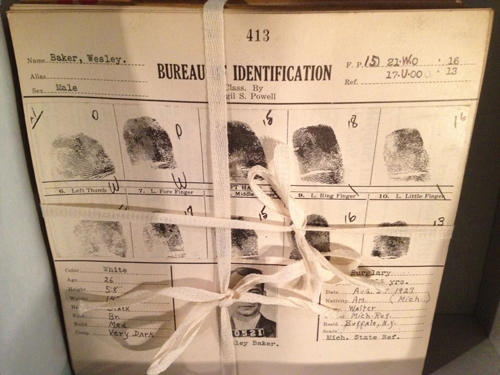
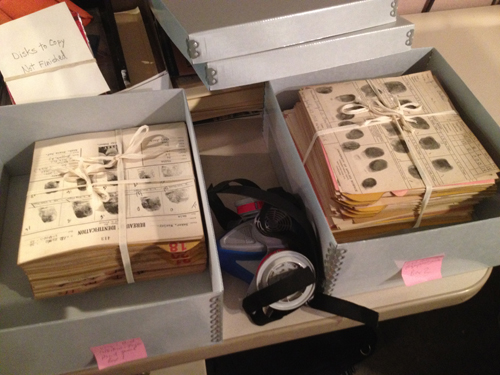
But there were also plenty more photo albums and post card albums to go through too, so time was divided between more photocopying, placing paper, and keeping everything in it’s natural order (which is a heaven send, sorry if you’re tired of hearing that!).
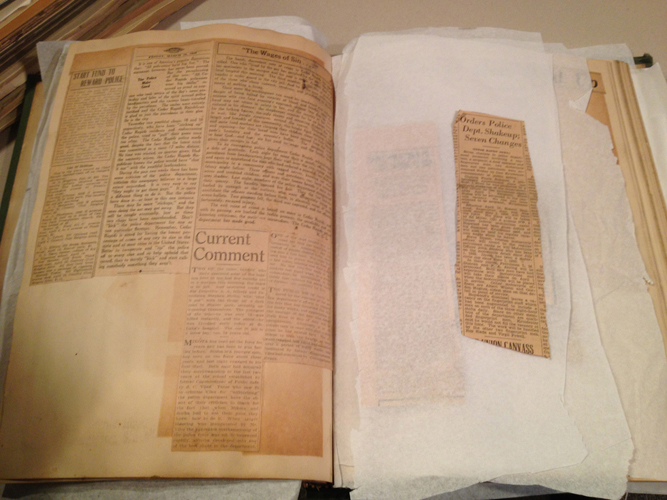
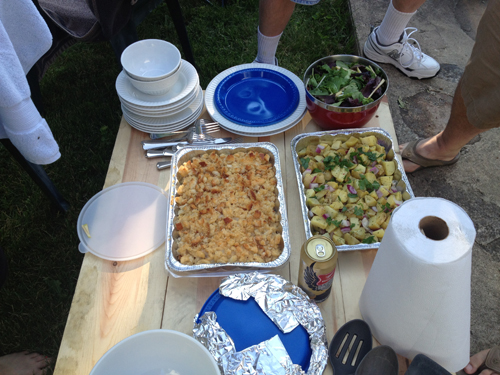
Thursday: Off day! National holiday, and all. I was able to use one of the recipes I had pulled out from an old newspaper from the Powell Collection for a cookout though. Well, I fiddled around with the recipe, but it was well received. Check it out below.
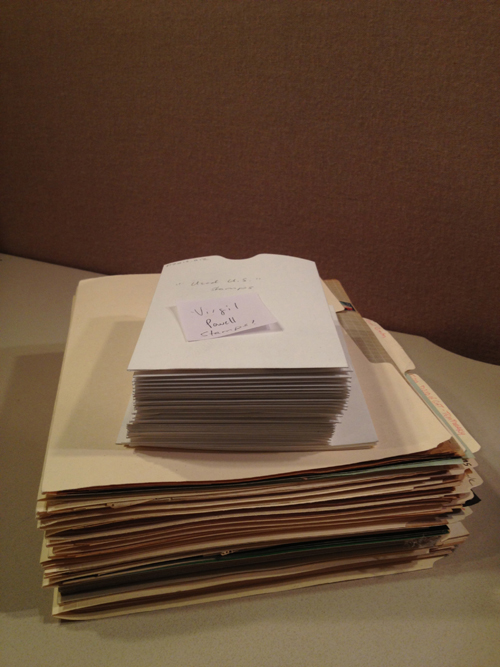
Friday: Stamps. When you think about it, stamps seem pretty counteractive to archiving. They are built to stick to things. Seeing as a Powell was a stamp collector, I would have to go through the collection and figure out a way to store it, and even if storage was viable. Here’s what I came up with:
PET polyethylene terephthalate (marketed as ‘polyester’ or Mylar or Melinex)PVC polyvinyl chloridePE polyethylenePP polypropylenePS polystyrene
PE – Polyethylene films are highly flexible and are somewhat cloudy which preclude their use as mounts. However, they are easy to fabricate into cover protestors and are relatively inexpensive. They begin to soften at 150-2300F, well above the expected usage conditions of the films.
PP – Polypropylene films have high flexibility with acceptable clarity, and they soften and degrade at high temperatures, similar to PET films. In the three year oven test, PP films performed very well.
PS – Polystyrene films are relatively rigid and very clear. However, at elevated temperatures, they tend to shrink and buckle.
Stockbook by Lighthouse pH 5.78Black Sheets by Hanger pH 6.56White 8419 by Davo pH 6.69White Sheets by Hagner pH 6.72Manilla sheets by Master pH 7.88White manilla strips by Harco pH 8.23
#3311 by Stanley Gibbons pH 5.26#322 by Stanley Gibbons pH 5.35interleaves by Harco pH 5.88
Now that you know how most people would narrow down ways to archive/store stamps, you have to consider the time and funds you have to do this. I was able to separate…about 80% of free floating stamps from one another, but some of Powell’s collection was already stuck to paper, then mounted, or just flat out stuck so hard together, it would require a chemical solution to even think about prying them apart. This requires money and knowledge out of my range, so I did my best, separated what I could, and stored it as I would a photo, hoping that the less acidic paper and controlled humidity/temperature of the Collections room would keep the glue on the back of the stamps from activating and sticking to the paper of the storage sleeve. Alas, sometimes you have to wait on the technical details or higher-ups taking a look at a collection and its historical value.
It’s all in a day’s work!

Major: History and Classical Studies. Hometown:Munster, Indiana.
PreviousWeek 6: African American Historical Museum and Cultural Center of Iowa
NextWeek 8: African American Historical Museum and Cultural Center of Iowa