
Week 8:
Children’s Hospital Colorado
July 27, 2014
This week we had a summer lecture with Dr. Miller about idiopathic scoliosis. I learned that scoliosis is an abnormal curve in the spine that often appears as a child is experiencing a growth spurt. Some spine curves are normal, but a scoliosis spine, curves to the side, has a lateral curvature or sometimes has an “S” shape. Some of the signs and symptoms include one shoulder is higher than the other, uneven rib cage or rib hump, waistline is uneven or one hip seems higher than the other, back appears crooked, and some patients experience back pain, but this is uncommon. Scoliosis is identified during a child’s routine physical exam. If the child’s primary doctor detects a curve in his or her spine, they may order an x-ray to determine the degree of the curve, or refer the child to a pediatric orthopedic specialist. At the Children’s Hospital they have a Spine Program that treats patients with all types of spinal diseases, deformities, and injures. Since scoliosis change as the child grows, it is important to monitor its progression closely and have x-rays two or three times per year during the child’s growth cycle. Physical therapy, stretching and core fitness exercises are encouraged for patients with scoliosis, however, research has shown that these will not prevent or cure scoliosis. Thus, treatments for scoliosis depend on a variety of factors including type of scoliosis, age, degree of scoliosis, and other associated medial conditions. The types of scoliosis are neuromuscular, where a child has underlying diagnoses including cerebral palsy, and congenital scoliosis, due to bony abnormalities during birth. Dr. Miller explained that the cause of an idiopathic scoliosis is unknown. Her background includes genetics; she wanted to recognize the patterns of how this disease is passed on. From her experience, she found that children from the same family have the same mutation, but their presentation of this disease is different, some are worse than others are. She used to believe there was one chromosomal abnormality that was the cause of scoliosis, but believes now that it is about the genetic make-up. There is no detectable vertebral malformation.
In addition, I shadowed the rehab clinic with Dr. Rhodes; he is an orthopedic surgeon and specializes in sports medicine. I really enjoyed shadowing him; he was very friendly and welcoming. He took the time to explain the diagnosis of the patients. His philosophy I learned is providing the best care for his patients by taking all aspects of their life into consideration of the treatment, with the overall goal of good functional results. Dr. Rhodes’s clinical and research interest includes gait analysis, neuromuscular disorders, pediatric sports medicine, and pediatric orthopedic trauma care. He is very interested in combining all of these interests by studying the biomechanical changes seen through sports and trauma injuries and the care of these injuries and conditions. In addition, I learned about a patient that had cerebral palsy that had a gait disorder. This patient had a crouched gait, which is characterized primarily by excessive flexion of the knee during stance, although flexion, adduction, and internal rotation of the hips are also observed too. Hamstring surgical intervention is generally very effective in diminishing the crouch posture, which involves lengthening. After lengthening, the hamstrings are not tight and less spasticity is triggered, thus more erect posture at the knee. Due to less spasticity, the knee can make faster reactions, so the legs can move back and forth more rapidly while walking. Also, since the knees can extend better, they can reach further forward while taking the next step, bigger steps can result and lead to a faster walking speed. Faster reactions are also associated with more balance.
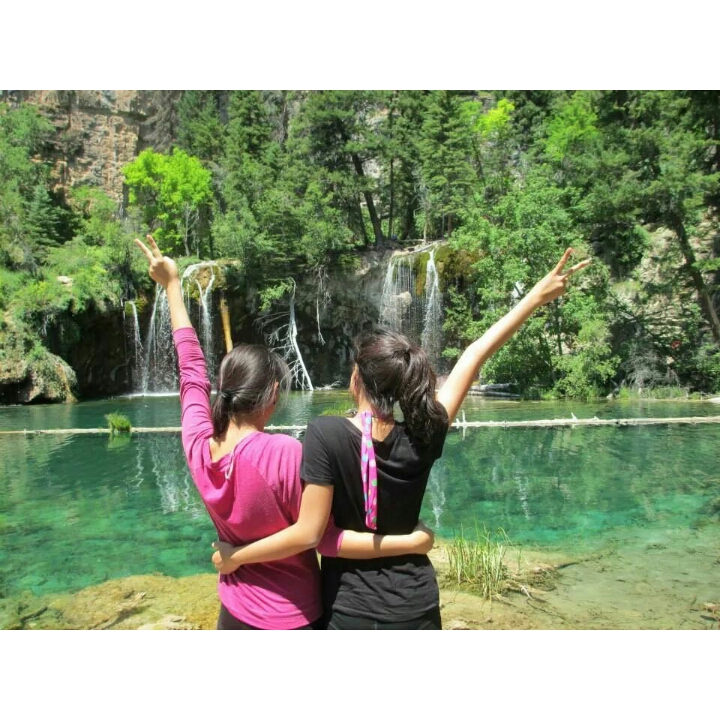
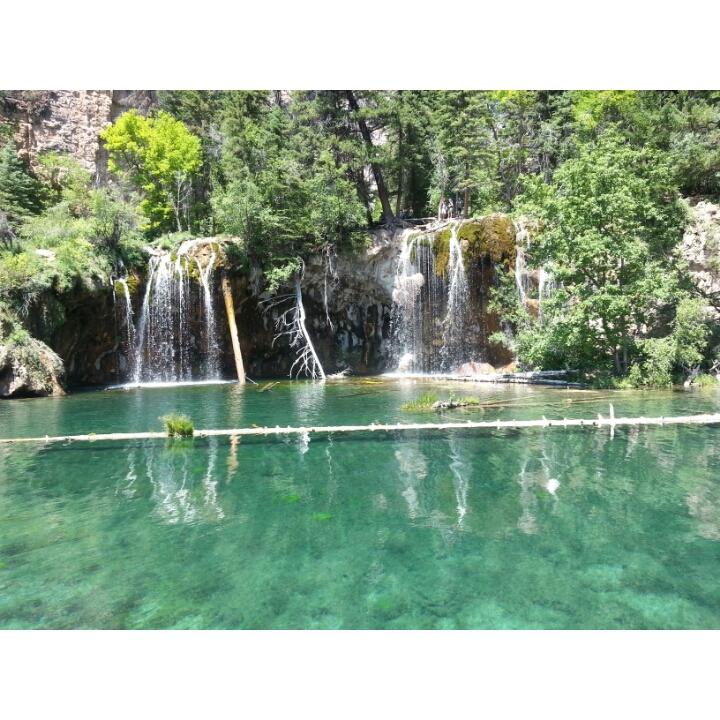
Since this was my last week, a bunch of Cornell students and I decided to go to Hanging Lakes. I will truly miss the beauties of Colorado.

Major: Biochemistry and Molecular Biology. Hometown:Ewa Beach, Hawai’i.