
Week 5:
Phu My Orphanage and Medical Clinic
July 22, 2014
This week was strange in that many of the kids that I work with were missing from the clinic. Several of the children were sick, and one child was so sick that he was in intensive care at the hospital. This was extremely frustrating as last week I had really begun seeing noticeable improvements in the children’s behavior and I am worried that after a week of missing therapy they will regress.
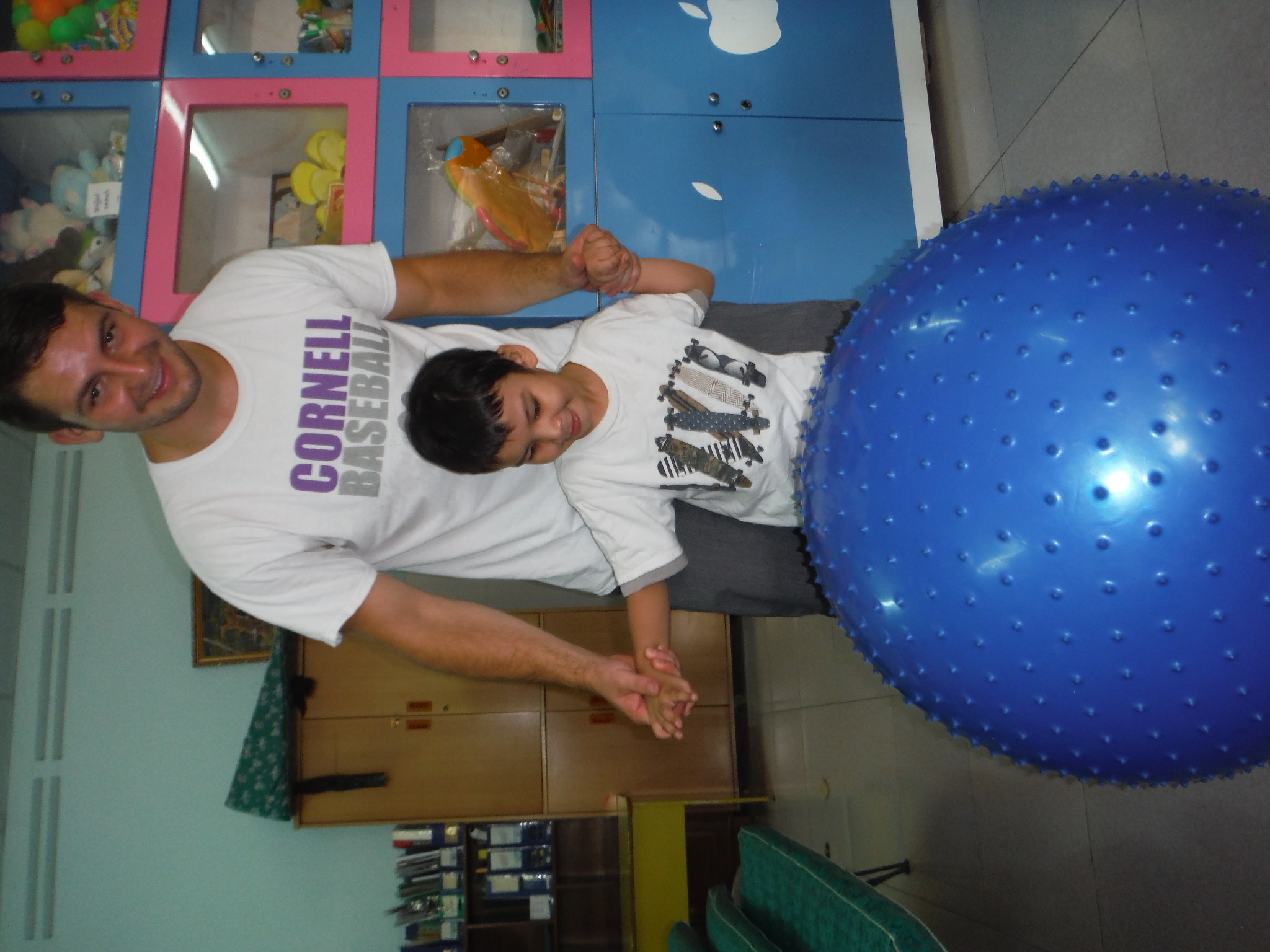
For the children who were at the clinic this week it was very beneficial for them as they had a lot of individual attention. Usually there are about 12 children that I work with during the day, yet this week I worked with about 3 or 4 children daily. One child that I had ample time to work with is a child with Autism, who avoids social contact and does not talk or make eye contact. This week, the therapist and I worked on proper social interactions, and eye contact and by the end of the week he would smile and make eye contact when we would say “hello” or said his name. This seems like a small step but after nearly 4 weeks of absolutely no reaction this seems like a great improvement. It is extremely frustrating as this child does not receive speech therapy, as he does not speak, but you can not neglect a child and expect them to improve.
Another child was sick nearly half the week. When he returned I was really worried that he would have forgotten the skills we taught him, mainly walking and social interactions. Yet when he returned he had so much energy, and was able to practice walking for nearly 30 minutes, rather than the previous 5 or so. Also now that he is gaining the ability to walk he is more likely to move toward others and engage in social actions.
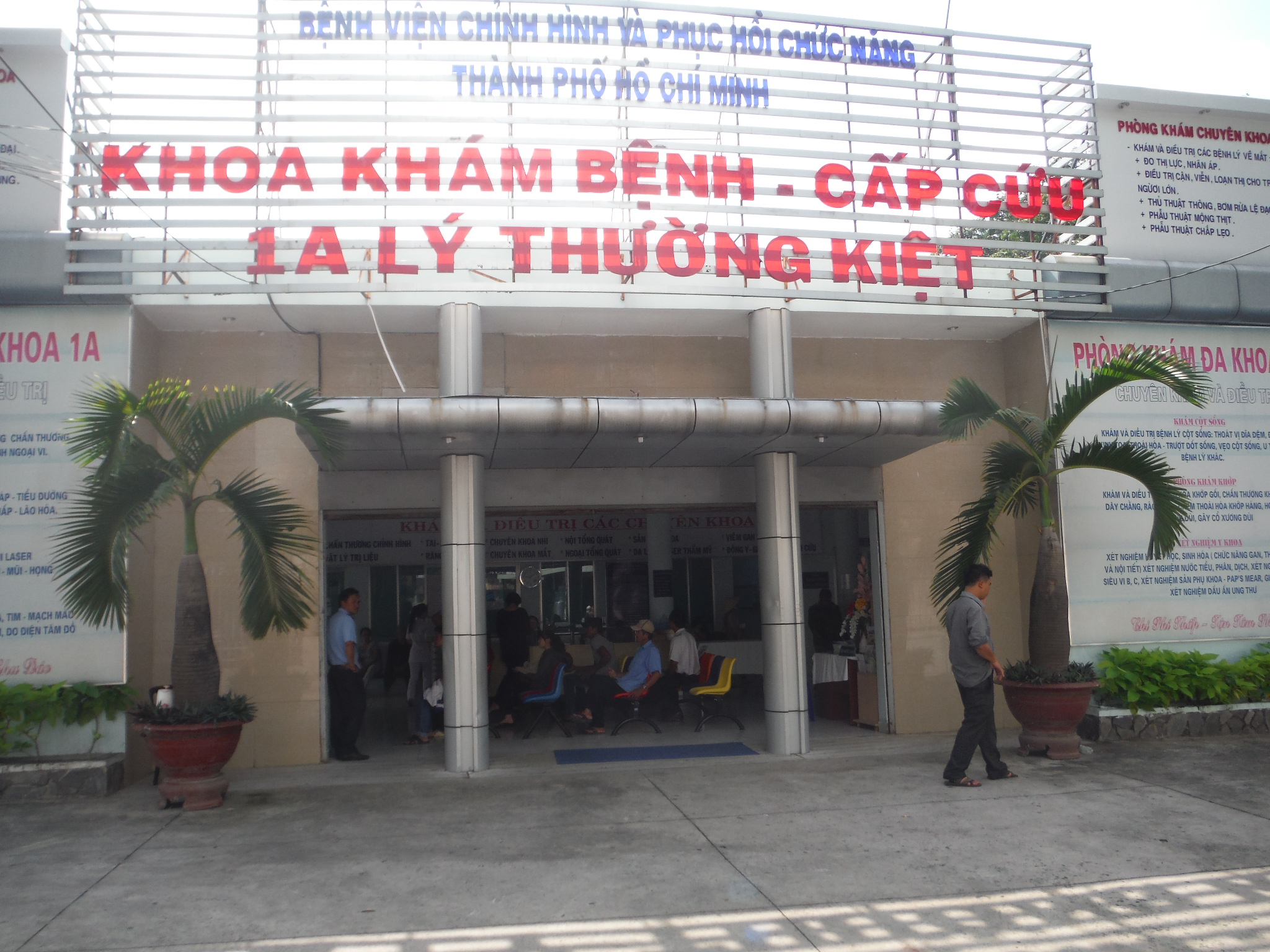
As the Clinic was a little slow this week the Physical Therapist invited me to his office in the hospital. There he treats adults, children and private clients. While I was there I was able to observe him working with a burn victim and a child with Cerebral Palsy. The child had just had surgery, in which his tendons had been stretched and realigned and the therapy was to help keep the tendons from re-tightening and to help properly train the muscles. This child came from a rich family who were paying to have “his affliction removed”. I thought that quote was enlightening as to how the Vietnamese view disabilities. The therapist worked with the child by first stretching the limbs, strength exercises such as squats, and balance exercises like standing on a balance board.
Also we had a new child come to the clinic, who is very clever but is such a trouble maker. He is also a bully and physically harms the other children and the staff. It is obvious that he is doing it for attention as he only does it when the staff looks at him. Using what I have learned in my courses I know that in order to extinguish his bad behavior I suggested that we reinforce positive behaviors, and give him attention when he is being good (basically cause extinction of an undesired behavior through positive reinforcement of another). As a punishment I was at a loss at what exactly to do, I know that the punishment should be immediately following the behavior, but what exactly to punish him with is hard. I cannot physically punish him, nor can I reprimand him as my Vietnamese is not good enough and the staff take too long in understanding that they need to tell him what he did was wrong, so I decided to use time outs. We will have to see how this works over next week.
I also suggested that the children could benefit from using a Token Economy, which is very type of behavioral modification that has been supported in recent research. In a token economy the children are basically rewarded for their good behavior with a token that they can use for something desirable and a negative behavior results in a loss of that token. I brought this up to the the therapists but they were unwilling to try it as the eldest therapist of the clinic does not want any change. The eldest therapist feels that what they are doing is working so there is no need to change. This is frustrating as what we are doing is working but only for some of the children. I have also found that in Vietnamese Culture the most important thing in a work-relationship is respect. Respect is earned in this culture, yet age automatically places you in a higher position of respect. So even though the therapists have had years of education they are not able to implement any changes as the older therapist (who actually has less schooling) says so. I feel that this creates a challenge environment as I would like to respect the culture but I also want the best environment for the children.

Major: Psychology. Hometown:Kamuela, Hawai’i.