
Week 4:
Preserve, Exhibit, Teach
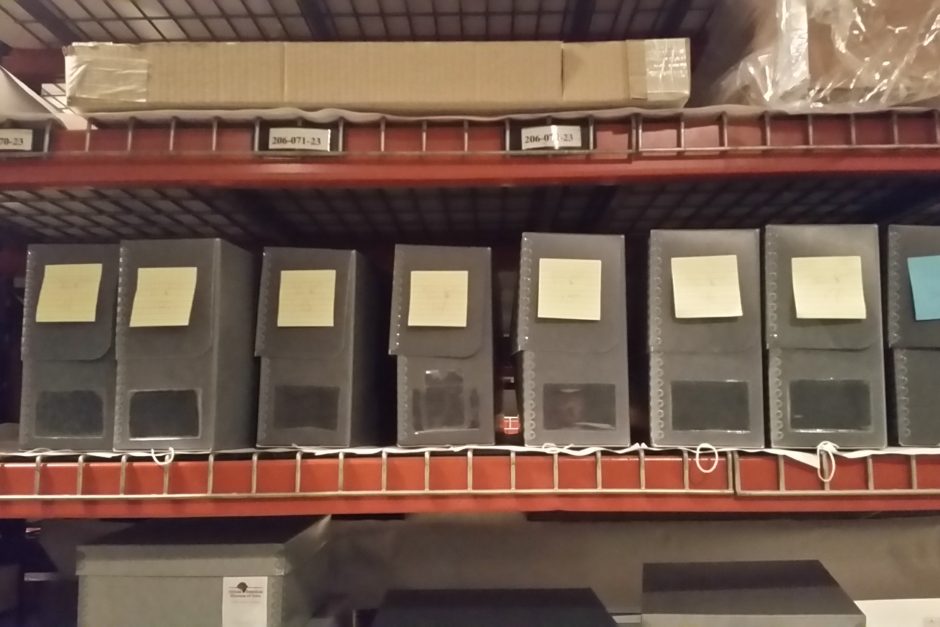
The boxes of photographs.
July 9, 2016
It was a solemn week at the AAMI with the tragic events happening across the country. With reports of protests, mourning, and frustration pouring in, no one at the museum really knew what to say. But we knew we had to continue our work to preserve history.
Baton Rouge, St. Paul, Dallas. Unthinkable atrocities happened in each city this week. Though the African American Museum is small, each event had a huge impact. And each one gave me an opportunity to reflect on the museum’s mission statement: “To preserve, exhibit, and teach the African American heritage of Iowa.” Everyday I get to see, touch, and be a part of the incredible story of perseverance and success of African Americans in Iowa. From slavery, to sit-ins, to breaking the color line in professional fields, this history is unparalleled.
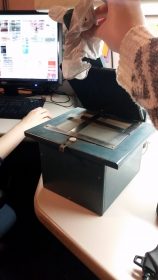
For the past week I have been diligently working on scanning and cataloging the thousands of personal photographs of one Mr. Virgil Powell. Born in Missouri in 1891, Mr. Powell was Cedar Rapids first African American police officer. He was a fixture in the community not only as an officer, but as a fingerprint expert, inventor, amatuer photographer, and author. His inventions included a fingerprint game, and other various objects for which he received U.S. patents. The AAMI has a number of his possessions including what we believe was one of his inventions. We have not been able to figure out exactly what it is, but we think it to be some sort of photo negative viewer.
Along with other items such as cameras, the museum received thousands of pictures. However, like the other items many of the pictures are damaged. After Mr. Powell’s death in 1989, his possessions sat in the garage of his neighbor until being donated in 2012. The effort to preserve these images has been immense, since Mr. Powell is so important to the area. There are ten archival boxes filled with folders of pictures. I have been scanning each one, giving each one an accession number and then cataloging them. Cataloging is a long process, and I can only get through about 30-40 pictures in two hours. I have to transfer the scanned image into the museums software, measure the photo for the record, and then describe the picture. Descriptions can be challenging, there are only so many ways to describe a tree!
But in all seriousness, when I look at the pictures I am blown away by Mr. Powell’s life. The first couple dozen I went through were his life as a police officer. In the 1920s not only was he the first African American on the force, but he was the only African American on the force. Yet it is clear from the photographs that he was well liked by his colleagues. And he was very good at his job. The other 150 or so photographs were largely vacation photos. Mr. Powell was well traveled, and well loved by friends and family. Several were also photographs that had been published in the Cedar Rapids Gazette, chronicling his success. Mr. Powell’s life was so full, and I am so glad I get to be a part of its preservation.
Right now the country is reeling from racially driven tragedies, and a lot of us might feel helpless in what we can do. But like me, you can learn. Take the AAMI’s mission statement to heart and do everything in your power to preserve and teach this history. The museum did see more visitors this week than normal, so I think many others have already had this idea in mind. What we do today will be history tomorrow, so let us make sure it a history we will be happy to share with future generations.

Amy is a history major from Carson City, Nevada.