
Week 5:
One Ocean
July 3, 2016
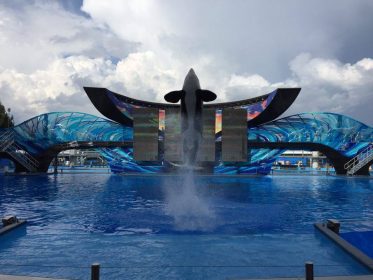
This week, I’ve had a lot on my mind. Working at SeaWorld is amazing, but it’s not exactly what I expected. There are some things that I believe SeaWorld does better than any other existing institution. For example, in the past 50 years, SeaWorld alone has rescued over 27,000 animals. One of the main reasons they have the ability to do this is because they are a for-profit institution, which allows them to dedicate more money to rescue and rehabilitation than nonprofit zoos and aquariums.
However, there are some things about SeaWorld that make me question whether or not I want to make my career there. Namely, because they are such an enormous institution, most decisions are made at a corporate level, without much consultation of the “lower-down” staff. As basically everyone with an internet connection has now heard, SeaWorld has announced that they are indefinitely discontining their killer whale breeding program. This decision was made mostly by employees at the corporate level, not by the individuals who work with these whales every day.
Clearly, I am not a killer whale trainer, and cannot speak for them all. But from what I have seen, a few trainers support SeaWorld’s decision in halting the breeding program. But others are against the decision, angry even, because they don’t believe that this is actually what is best for the whales. Logistically, stopping breeding could mean several things:
A) The whales are put on birth control, something that has never been tested long-term on large cetaceans.
B) The whales are separated when the females are in heat, which happens several times a year and is highly variable. This has several foreseeable issues, the most obvious being that separating the whales could cause great stress. Orcas are social animals that require constant interaction with their pods. In Orlando, Makaio, Nalani, and Malia have a great friendship and spend a lot of their time together. Being separated several times a year could be really stressful for them.
C) Furthermore, as referenced above, a female orca’s cycle seems to be highly variable. What happens if a female’s cycle is miscalculated, and she becomes pregnant?
These are only a few very simple concerns that will arise with halting the breeding program. Furthermore, the ability to mate and have calves is a pivotal and important time in any animal’s life. I found a letter that a killer whale trainer wrote shortly after SeaWorld announced the breeding decision. The letter was found on her Instagram (kaciek8), addressed to Takara, one of the whales at SeaWorld San Diego. She voiced her frustration that animal welfare activists seemingly don’t understand what actually qualifies as animal welfare.”I’m sorry,” she wrote, “I’m sorry it’s been decided that your daughters Sakari and Kamea will never have the ability to have their lives enriched with a calf of their own…You must know that the trainers will continue to love you and do everything they can to take care of you and your pod…especially the one that becomes the last one.”
Clearly, this is not a decision that was made in the best interest of the whales. This is a decision that was made to change public opinion about SeaWorld. And perhaps that’s a good thing. But it’s difficult for me to support a decision that I know in my heart was not made in the best interest of the animals.
On a lighter note, I do have faith that this decision will someday be reversed. Twenty years from now, when the general public and media recognize the invaluable work that SeaWorld does for our oceans, people will recognize that we need killer whales in captivity. We need the knowledge they can provide us so that we can help killer whales in the wild. We need the wonder that they provide to millions of people every year that inspires them to take care of our one ocean.
If you are one of those that believes SeaWorld forces these beautiful, intelligent creatures to perform for our own entertainment, I ask of you one thing: With an open mind, visit a SeaWorld park. Watch our trainers interact with the dolphins and whales that have become their very family. Watch Kayla’s perfect show-opening breach. Watch Trua dance with his trainers. Look Tilikum in the eye, and watch him look back. If you can walk away from all of that not feeling inspired, not having an even deeper desire to conserve and protect these whales and their habitat, I will eat my words. But until then, don’t believe the hate that’s spread through the media. Believe your own eyes, and your own heart.

Kira is an animal conservation major from Littleton, CO.