
Week 2:
Settling in at KAFS
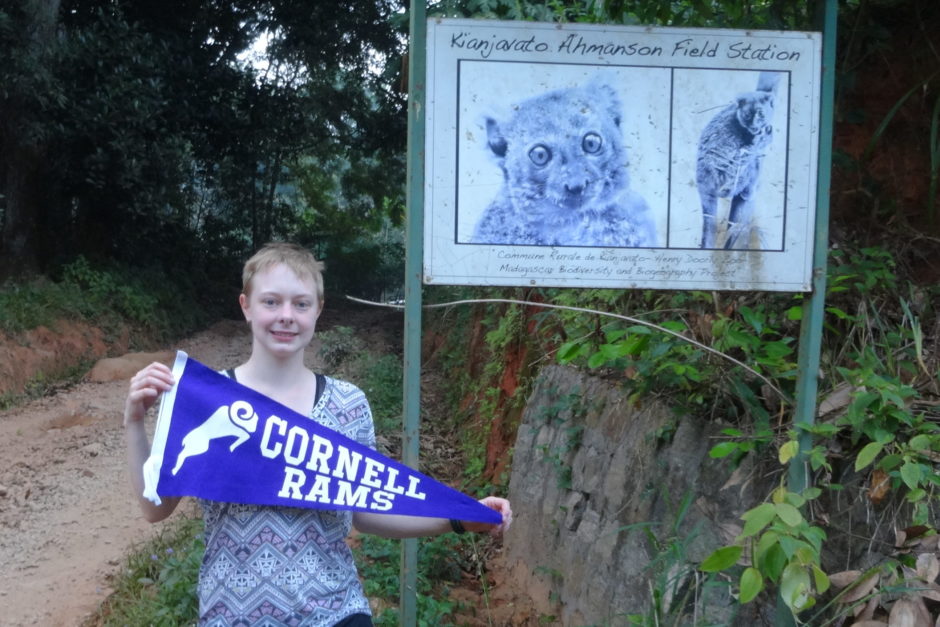
The entrance to the Kianjavato Ahmanson Field Station
June 2, 2019
Week 1 at KAFS!! Week 2 in Madagascar.
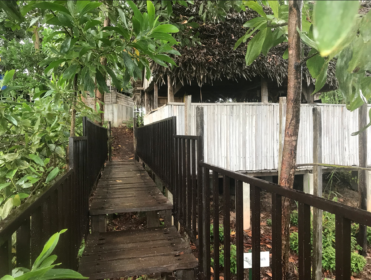
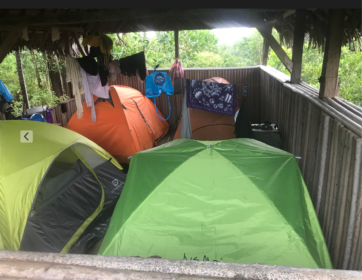
KAFS is a beautiful field station! I am in love with all the animals that just wander around. There are 4 resident turkeys, and who knows how many chickens and ducks! My tent site is a little cramped at the moment, but in a week when Angela leaves, there will be room for Jessica or me to move into the biger tent site.
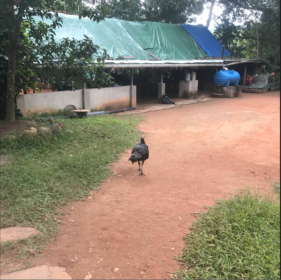
Madagascar has a lot of holidays. Any day that is a holiday is a day off of work. The first Monday at KAFS was an election day, and there was no work. We used the time to settle in at KAFS and, in my case, recover from the journey on Saturday. A pleasant surprise we found is a small shop at the bottom of the “driveway” (for lack of a better word) to KAFS called Joseph’s. Joseph’s sells comfort food items, not western comfort food, but it does the job. My personal favorite is the double chocolate bread!!

There are 3 main projects here that volunteers help with; Prolemur Simus (Greater Bamboo Lemur), Varacea (Black and White Ruffed Lemur), and Reforestation. Three of us were assigned to reforestation, and two more to each lemur project. Carol, Jonathan, and I are all on reforestation first. After five weeks, we will switch with the lemur team volunteers and train each other on our respective projects.
The reforestation project focuses on planting trees in areas that have been deforested due to logging, slash, and burn agriculture or place for livestock to graze. Pioneer species are the majority of what is planted at the moment, these tree species like sunlight and will keep the soil from eroding before the forest species trees can be planted and they will provide shade for the forest species which do not grow well in direct sunlight. The reforestation project has a goal of recreating forest habitat in a corridor from Vatovavy mountain to SangaSanga and Tsula mountains. This is a vast area to plant and recreate the forest environment, but after 10 years, significant progress has been made, and there is no sign of the project slowing down.
Explain to us what reforestation means and introduce culturally why there are single moms working at the nurseries.
Tuesday, we were supposed to meet the mayor before we started work. However, the mayor and the assistant mayor were busy all week, so we were given the okay to start training, but we would have to meet the mayor as soon as he was available.
We started training with Angela on Wednesday when the reforestation team did a big nursery check. The managers for the farthest away nurseries (about 4) come to us to pick up money on big nursery checks, which are every other week. A big nursery check involves paying the single mothers who work at each nursery, paying the weekly contracted workers, giving a few of the managers the sand and compost money, and delivering any small supplies that we can buy in town or that we have at KAFS. Nursery checks typically take place on Thursdays, but this Thursday was a holiday, so again, no work. The nurseries have weekly contracted workers because that way, there are multiple job opportunities for men in the local villages.
I never got a straight answer when I asked why there were so many single mothers, it could be that disease and injuries are more common among men who do all the heavy labor jobs. Another theory as to why there are so many single mothers is that the men will tend to travel between the towns for their jobs when the women do not, and some men will have several girlfriends as a result (one in each village). This was never confirmed or denied, when Jonathan was talking to one of the men working in reforestation he was asked how many girlfriends he had, so this is mainly why we came to the conclusion there are so many single mothers.
Friday was our first planting day!! We were planting at a site called KIA, on a hill that was quite steep and I almost fell backward several times! Each planting day typically has 2-3 planting events, which each happen at different locations. Most planting events are pioneer species, these are trees that do not grow too big but like direct sunlight and grow relatively quickly. The pioneer species help prevent erosion and create tree cover for the forest species, which are the trees that grow huge and are vital for creating the rainforest habitat.
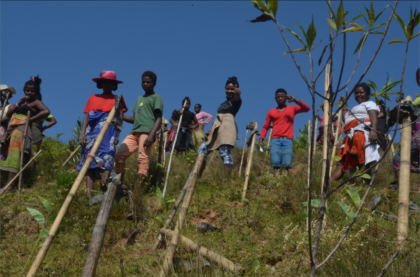
Forest species trees do not like direct sunlight when they are seedlings, as they are adapted to grow under the canopy and underbrush where less light reaches. A planting event of pioneer species has a standard number of 3,000 trees planted. There usually are two days of planting events a week, and if on each day there are 3,000 trees planted, there is from 6,000-18,000 trees planted per week!!! That is a lot of trees! The first planting event we were involved in was for pioneer species, and because it had rained the day before it was super muddy!! I am sure my pants will have red stains from the clay soil forever! All in all, with a total of three days when we did not work, it was slow and relaxing the first week at KAFS.

Kate is a biology major from Colorado Springs, Colorado.