
Week 7:
Re-Training Each other Part 1
July 6, 2019
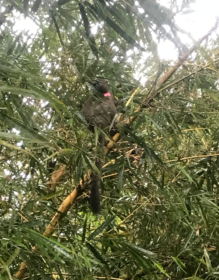
This would be the week we should train each other, then be entirely switched next week, but with the week we went to Ranomafana off, the schedule is a bit wonky. Well, the lemur teams want to have the next two weeks for training and then switch…but that will mean I get only one full week with my lemur team before new volunteers arrive, and I have to train them. However, the lemur teams have had two training weeks with the previous volunteers and 2 weeks with just them on the projects. With last week off, we switch one week later and have one week less on our second projects. I understand why we need two weeks to train and that it will not be fair either way if we switch early or after two training weeks. I am sad that I will not get more time on the Prolemur Simus project. Still, the whole experience of being here has been amazing thus far, and I do not want to go into the second half with a bad attitude.
My initial reservations about training proved to be wrong. I love the work in Reforestation, that is clearer to me as I wrote up the three pages worth of tips and guidelines for the reforestation trainees! I have gone out with the Simus team a few times and have been surprised at how relaxed the pace tends to be. I had expected to walk all over the forest to reach the lemurs and then walk after them as they move around.
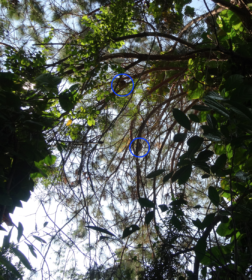
The first hour or two of a follow is usually spent watching brown balls in trees. These balls are the lemurs curled up sleeping, we wait for them to move so we can identify the individuals and decide who to follow for the rest of the day. I was also surprised by the method of identifying the individuals apart: the adult females have collars with pet ID tags of different colors and shapes. The adult males have the ATS collars (the radio collars).
Prolemur Simus, aka the Greater Bamboo Lemur, is unusual in its social structure, at least for lemurs, they are patriarchal, not matriarchal. The dominant two males usually are both collared. However, one collar is generally out of battery as they only replace the batteries in one ATS collar at a time.
We started training Laura-Bethia, Emily, and Jessica in the Reforestation budgets on Sunday, June 30th, because Emily and Jessica left on Monday to renew their visas in the capitol. For some reason, the British and Canadian Madagascar embassies do not issue 90-day visas, only 60-day ones, so Emily and Jessica had to get 30-day extensions for their visas. This meant that for most of the week, it was just Laura-Bethia we were training. This week was a big nursery check, so both Carol and I went with Laura-Bethia to explain how things worked.
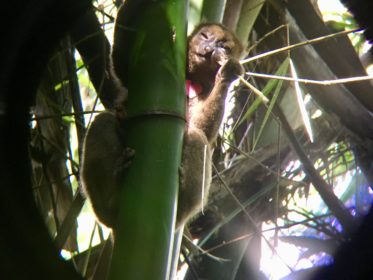
On Friday, I went out with the Prolemur Simus team and Evan, who is extremely enthusiastic about fieldwork. It is a good thing that we got permission to keep him on the Prolemur team instead of switching him to Reforestation with the other three girls. Reforestation does not need four volunteers working on it at one time, and only one volunteer for a lemur project would be okay. However, it would make data entry for the single volunteer extensive.
Emily and Jessica returned to KAFS yesterday. They had a relaxing time in the capitol, and I would have been more jealous of the warm showers at the hotel had we not recently been to Ranomafana. Next week will be the bulk of us training the new Reforestation team now that they are all present. We do not expect it to be too difficult, and I believe that the cheat sheets I wrote up will help, I know I wish we had had something like it when we started on Reforestation.
That’s all for now!

Kate is a biology major from Colorado Springs, Colorado.