
Week 1:
A Documentary About A Shelter
May 30, 2020
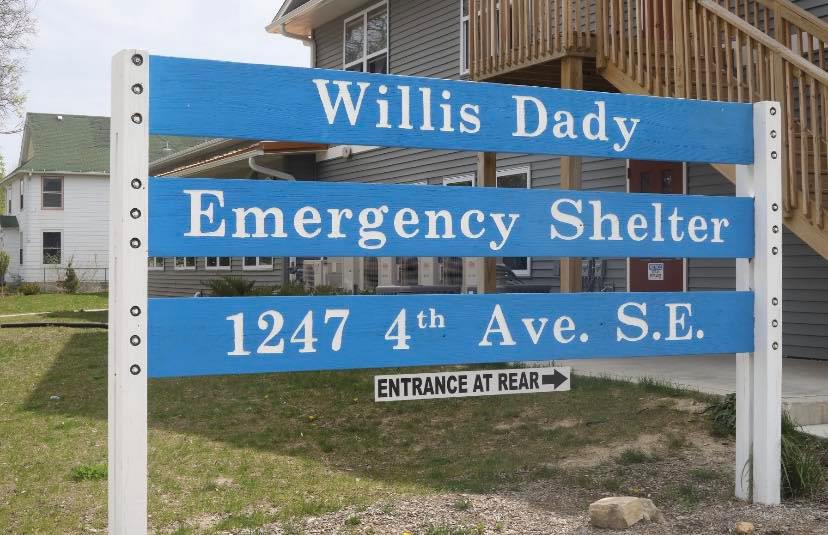
It is the end of week one and I am exhausted. My project for the summer comes with simple guidelines: Make a documentary following the staff and clients of a homeless shelter grappling with the effects of the COVID-19 pandemic. My patron and muse is Willis Dady Homeless Services, the only shelter for men in Linn County, Iowa. I will be living in the city of Cedar Rapids for approximately 8 weeks.
The week was spent filming long days and having meaningful conversations with staff and the homeless of Cedar Rapids. My first exercise was filming the lease signing for a man in his mid-50s who had been living under a bridge for 8 years.
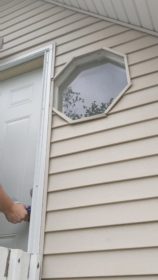
A client enters his new home for the first time.
The man and I talked about his journey. He had to cope with close family members who relapsed into drug use and had left him to pay rising rent and utility costs. Unable to handle the burden and take care of his children, he had become homeless some 8 years ago and was cautious to accept help. He was a political man unafraid to attend city council meetings, a lover of large dogs and a self-described “momma’s boy.” The client hoped to persuade others living on the streets to seek out Willis Dady services.
Many homeless individuals worry about relying on shelters. Shelters can be dangerous places where theft is known to occur and, for those staying there, the risk of losing one’s property can feel like life or death. I spoke with one client who had his I.D. stolen at a shelter (not Willis Dady) and therefore couldn’t apply for a job or receive social security benefits, including his stimulus check. It is unclear how long it will take him to amass the money and time necessary to get a new I.D. Being homeless is a full-time job. For others, a lost blanket or sleeping bag can come with threats of sickness or hypothermia.
During on-camera interviews, clients have remarked that Willis Dady is a safe, comfortable emergency shelter. The space itself is tightly controlled and monitored; there is always a resident assistant present (even overnight) and the rooming conditions are often compared to a hotel. As one man I spoke to, a client who found himself unemployed as a result of the pandemic, put it to me: “If this is rock bottom… it’s pretty nice.”
And Willis Dady is nice. But unfortunately, the shelter does not have enough space to weather the coming storm: This week the state of Iowa ended the moratorium on evictions. I filmed the front desk volunteer complete intake and after intake forms of residents in need of rent assistance and a concerned, passionate prevention team fret over the sheer number of households estimated to be facing eviction this month. The pandemic has changed life for not only staff but homeless individuals living on the streets. Some have faced increased police attention and harassment. Others struggle to make meaning from the popular mottos of ‘stay home’ or ‘practice social distancing’ while not having a home or having felt isolated from society before the pandemic arrived. Either way, it is clear that Willis Dady and the unhoused residents of Cedar Rapids are adaptable and resilient. We live in unprecedented times, after all.
I feel incredibly grateful to bear witness to what has and will unfold during my internship with Willis Dady, complete with camera in hand. My only hope is that I am able to tell people’s stories honestly and justly.
See you next week.
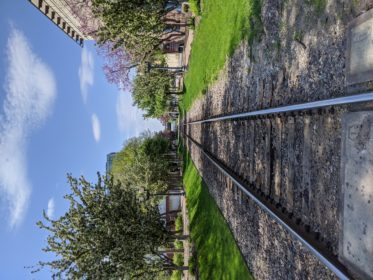
Downtown Cedar Rapids.

Kaci is a sociology/anthropology and religion major from San Francisco, California.