
Week 5:
R&R (for archival items, that is)
July 8, 2021
Investigating Details of Iowa’s Past
This week was interesting as I got to see a new side of the curatorial process that I hadn’t learned about yet. My first day in person was organizing some archival filing cabinets for a bit, and then the rest of it was spent internet stalking people. It sounds ridiculous but is pretty accurate. The museum has a few old Iowa newspapers from the 50s that they are in the process of digitizing. In order to do this, though, we must figure out if there is a copyright and if we can get the copyright owner’s permission to use it. However, it was quite difficult since these were old newspapers with very few editions, and the writers mostly wrote underground. I had to look at all of the people mentioned as being a part of the newspaper staff and, if they were no longer alive, look for their closest relative who might be able to give us permission. It was quite a long process that involved looking at many online family trees, obituaries, news stories, and other sources, just trying to find these people and figure out how to get in touch with them. In the process, I learned a lot about these newspapers and the people who created them, which was quite interesting. As I have probably mentioned before, there are so many little steps to create museum exhibits, which was a (legally) important one.
Curatorial Repairs
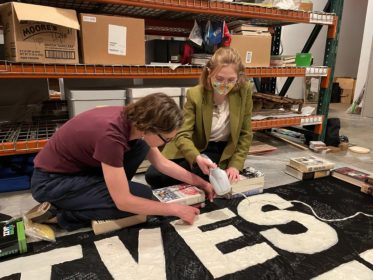
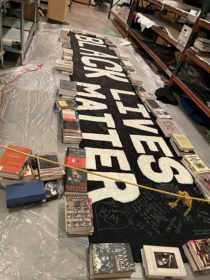
On my second day in person, a curator from Iowa State University traveled down to Cedar Rapids to help us restore a collection item. It was a piece that was donated recently and was related to the Black Lives Matter movement. It had been improperly stored by the people who had donated it to use and was in desperate need of restoration for it to be stored in the museum long term. This has been a project that has been in the works for a while now, and it was ultimately decided that we need a professional curator’s advice on how to go about this process. The process was prolonged as we had to slowly stretch out the fabric to unwrinkle it and use paintbrushes to fix and clean up smaller details. Between the 5 of us, it took most of the day and is still far from finished as it will be a prolonged process over the next few months. It was fascinating to talk and learn about all the fine details of conservation. Although it seems obvious, I did not realize how much work went into this field of work. She had talked about how to even get the degree. It was a requirement to take chemistry to properly understand how different materials react to others. There were just so many little things that I would not have even thought of, like using the correct type of paper, brushes, and even water. This very tedious process was all worth it, though, to realize that this is an item of history that needs to be properly cared for so it may be appreciated by future historians and museum-goers.
(surprise) More Research!
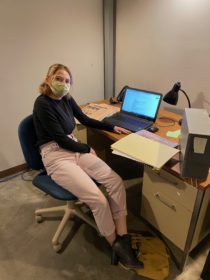
The remainder of my week was spent doing the usual research and transcribing oral history interviews that I have been doing since the start. This week has especially been one of learning new things and learning about what it really takes to do everything to run a museum. And even still, there are so many aspects that I won’t have time to learn about.

Erin is a history major from Lakewood, Colorado.
PreviousWeek 4: Attack of the Shelving Unit (and some other museum business)
NextWeek 6: Giant Suction Cups and Organizing