
Week 2:
Service and Outreach, Relational Power, and Not Winning Too Quickly!!!
July 9, 2021
This week has been particularly exciting, challenging, and empowering. As I have now settled into my new role, understood my responsibilities, and am performing my duties. I have started experiencing grassroots organizing. And Reveille for a New Generation by Gregory Pierce has been my academic guide into the formal and informal interactions I have experienced this week. In grassroots organizing, relation building is key to establishing enduring and sustainable coalitions that address a community’s issues. The Summer Meals Outreach augmented by the evening meal service, including my vibrant interactions with the larger church community, has immersed me in relational power.
Edward Chambers, in his article Relating to Muslims et al, elaborates how relational meetings changed the power equation, an equation that would otherwise have facilitated the harassment of Muslims, as in other cities, in Chicago. Chambers reflects that relational meetings touch our depths in unique ways. Because here, we are constantly asking all the “WHY” questions. It isn’t selling or pushing an issue or membership, or task in an organization. It is not that. Instead, it is about listening and sharing, not offering solutions. It explores the feelings as well as the priorities of the person one is interacting with. It is powered and reinforced with succinct questions, for instance, why do you say that? Why do you care?
The practice of these relational meetings, beginning long before 9/11, paved the way for successful, peaceful, and productive interactions of Muslims with non-Muslims. The relational meetings are an entry point to life. Chambers considers it the mixing of the human spirit. It is about transcending ordinary everyday conversation and connecting with the other in a deeper, meaningful manner.
For me, one-one relational meetings do not only allow the mixing of the human spirit but the distinct worlds humans bring to the table. These conversations, interactions, and deliberations must occur regularly in all communities transcending barriers of religion, race, or gender. Because that is why Muslims, even brown and South Asian, like myself, found hope of connecting with the America they were living in.
I am profoundly grateful to have able to develop the kind of relationships I have. And no, it’s not always about changing the world, electing the next president, or how to respond to the new healthcare challenges. I have cherished the subtle and humorous conversations about why Alfredo’s Pizza is better than Pizza Hut’s, why Burger King is healthier than McDonald’s, or why someone likes to add whip cream to their coke. To change the world, we must begin building a relationship free of prejudice, populated with genuine respect, and mutually enforced through proper listening. That’s what the past week has instilled in me.
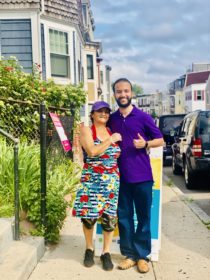
This is Miss Annie. She cooks hundreds of meals every week for the evening meals program, is passionate about food, and speaks Spanish. Her presence fills me with much happiness, a motherly figure with many experiences and stories to share. She calls me her son.
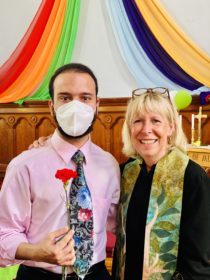
Reverend Debbie Duval had to leave this week, and it was surely an emotional time for the entire congregation, including me as a new member. Her cherishing and welcoming heart are what have touched so many- I had the privilege to meet her. (The flower in my hand is from when the Reverend welcomed me to the Church, and I had to improvise a quick introduction of my subtly unprepared self.)
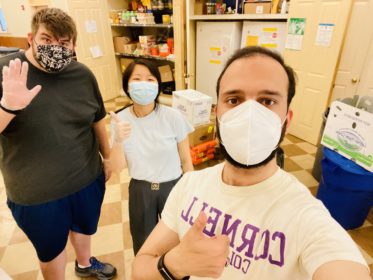
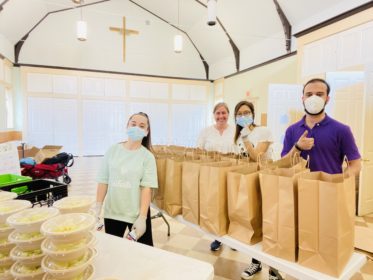
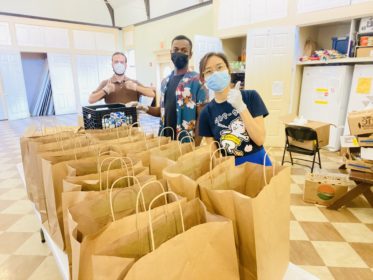
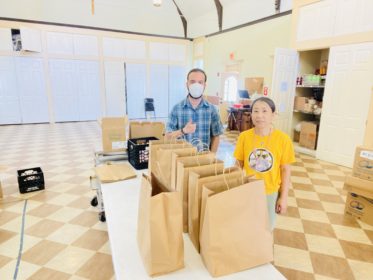
In addition, I continue to work with the evening meals program. I have increased responsibility and supervision of the program, such as managing the particular forms for each day. The greatest joy comes from actually serving the meals and meeting new leaders from the community. I met Tim, the guy in a black t-shirt, in the upper left. As well as Ergina, left in the upper right picture, and David, middle in the lower left. It is joyous to interact with these young leaders, learn about their life stories, and witness their passion.
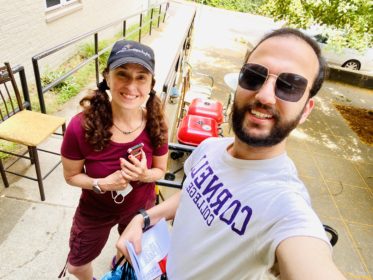
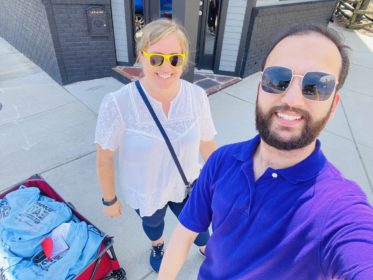
The Summer Meals Program, the biggest highlight of the summer at the Fourth, around the corner, beginning on the first of July. These are pictures from our community outreach, delivering packages to the prospective kids’ homes. I helped pack and deliver the gift packages to homes in different communities around the Church. (It’s safe to say I helped bribe the kids to attend the program. Rev Katie in the right, and Miss Betsy in the left pictures.)
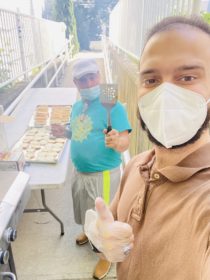
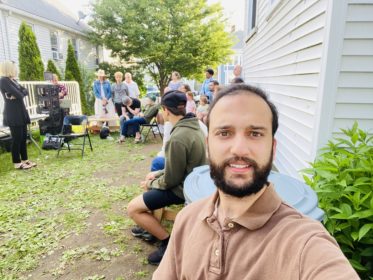
And, of course, our weekly cookout at the Fourth. I help with setting up the cookout and absolutely enjoy the fellowship that this weekly event offers. It is an incredible opportunity to just relax, share joy, learn from others, and build relationships.
Lastly, relational power and community organizing come with numerous responsibilities. In her excerpt, Alisa Glassman shares the true priority of broad-based organizing in her excerpt, Don’t Win Too Quickly. She explains that the central focus of organizing, and responsibility of an organizer, is not victory; the focus is power. And that we must ask ourselves after each campaign, movement, and program has ended. Are the structures that impacted people different now? How are leaders connected to their power, established through tiresome community organizing? Have we instilled in people the habits they need to build relational power? Do the repressive systems that created the conditions still exist? Or have they changed? I seek to foster my skill in community organizing to win and establish important structures that will help win after I am gone. We as organizers need to be mindful of winning too early, for true power comes from changing structures, not their effects.

Sunny is an international relations student from Pakistan.
PreviousWeek 1: A 44 hour bus ride, Ukulele choir, and few hundreds meals later
NextWeek 3: Meals, Leadership Networking, and Reading Citizen's Responsibilities