
Week 1:
Going Back to Basics
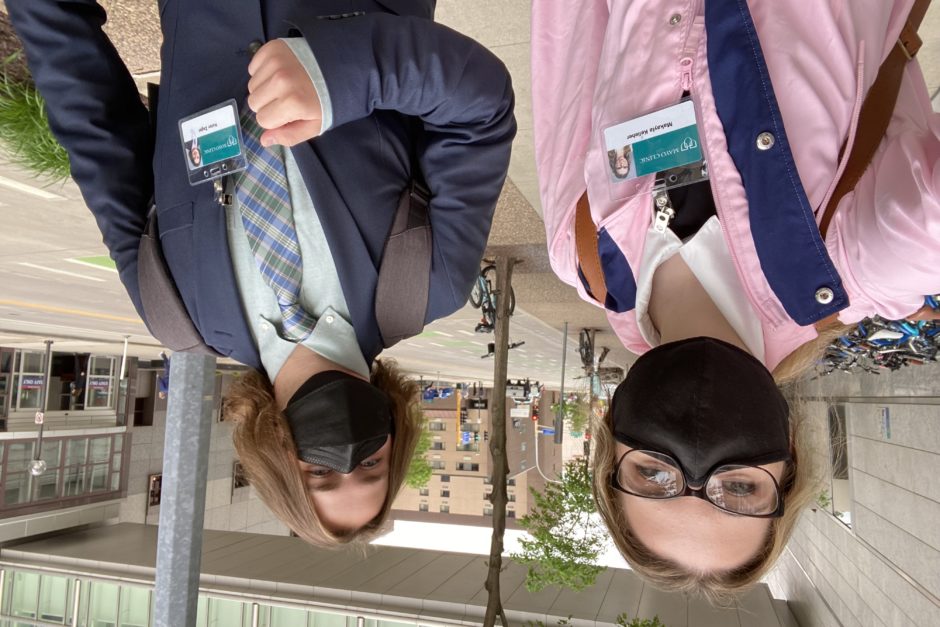
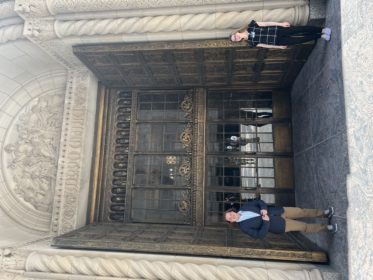
Makayla Kelleher and Nolan Zeger, Cornell Fellows at Mayo Clinic this summer
June 11, 2022
I arrived in Rochester to my residence for the next 10 weeks in a rainstorm at night. Happily, the morning perfectly juxtaposed the previous night, sunny and a perfect setting for what would be an enlightening first week at the Sleep and Neurophysiology Lab at the Mayo Clinic in Rochester, Minnesota.
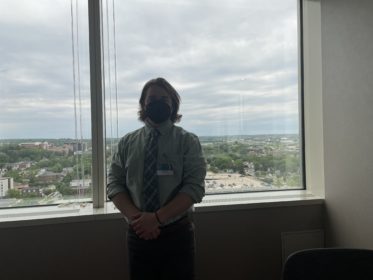
I found a room in a house just 15 minutes from the Gonda Building where the lab is. It is a cool walk there; both the pretty suburban houses and the more urbanized area of Rochester are on the route to the lab. My housemates are two doctors from Turkey and Egypt, also doing research at Mayo!
Both Makayla Kelleher and I will be working in the lab of Dr. Erik St. Louis. Our project will be in collaboration with two other students from St. Olaf College, exploring the connection between rapid eye movement (REM) sleep without atonia (RSWA) and narcolepsy.
RSWA is a condition in which muscles that should be paralyzed in normal REM sleep are not, resulting in muscle movements during REM sleep. A step up from this condition is REM sleep behavior disorder (RBD), in which patients act out their dreams. RSWA and RBD have been linked to the development of neurodegenerative diseases like Parkinson’s and Lewy Body Dementia. By studying the link to RSWA in patients with neurological disorders, it is hoped that earlier prognoses can be made and treatment can be made earlier.
Our project will be looking at RSWA and its link to narcolepsy, a condition that interferes with the brain’s ability to control sleep/wake cycles. To do this, the other students and I will look at patient’s polysomnograms (PSGs) and score them for RSWA. A PSG is basically a bunch of graphs. It displays the movement of the eyes, breathing, and heartbeat of the patient. The most critical thing it contains, however, is tracking of muscle movements. By scoring the muscle movements of patients with and without narcolepsy, then comparing the two groups, we can explore the link between the two conditions.
Before the rest of the team and I could really dig into the background science knowledge we would need, we had to get through administrative checkmarks, like getting our Mayo Clinic access cards and usernames and passwords for the computers. We also took online courses on both the Mayo Clinic philosophy and how to properly conduct a study according to the International Review Board’s requirements.
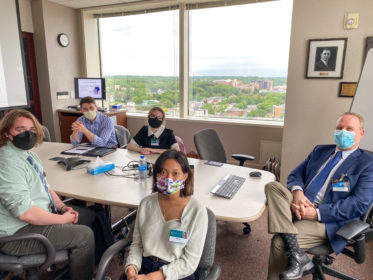
After those steps were completed, we could move on to Dr. St. Louis’s lectures about sleep, including the details about RSWA. Dr. St. Louis is incredibly knowledgeable about his sleep research, and I know he could talk for much longer than our two-hour (roughly) lectures allow. I learned a lot about the sleep stages and the brain in sleep as it relates to RSWA, as well as a whole lot of other concepts that would be too long to list.
While we were getting the background information on sleep, Dr. St. Louis also introduced to us the system of scoring they use to score the PSGs for sleep studies, which involves marking every muscle movement made during REM sleep, then the computer analyzes it for how much of REM sleep is spent with muscle movement. All the undergraduate team members began practicing scoring with the training PSGs, in preparation for the test called the Gold Standard to see if the scorer is ready to score a real patient file.
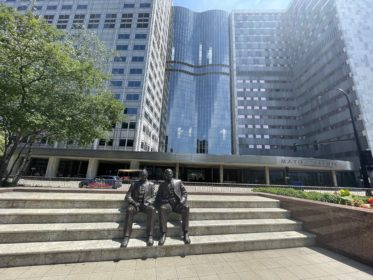
One of the coolest parts of the week was getting to tour Mayo Clinic’s campus. It was so big; I was blown away. The clinic is connected to the downtown area with tunnels that can take you almost anywhere in downtown Rochester. We saw a bunch of statues, as well as visited the Mayo Museum room in the Plummer building. It was a fascinating informal tour to take, and I look forward to exploring Mayo and Rochester even more in the coming weeks!
Nolan is a biochemistry and molecular biology major from Omaha, Nebraska.