
My second week at the Chautauqua Institution was just as busy as the first, maybe even more so! Similarly to last week, I attended as many fine arts events as I possibly could; I attended piano recitals, an Amy Grant concert, a lecture about adapting Kwame Alexander’s 2014 novel The Crossover into a musical, the opening reception of a new art exhibit, a ballet performance of Wuthering Heights, and a symphonic orchestra concert consisting entirely of Dolly Parton songs. I absolutely love being introduced to new forms of art and expression, and I found myself constantly in awe of all the beauty and talent that exists in this community.
While Chautauqua’s theme of the week was Artists Against the Odds—and that theme was still very much present!—I found myself identifying again and again the themes of self-reflection, exploration, and healing within interpersonal relationships. I particularly noticed how these practices can be done through the process of creative writing, which I found to be incredibly valuable. Take this week’s writing workshop, for example. I took Kristin Kovacic’s class “My Life as a Child: Childhood Memoir,” and she talked a lot about how memoirists and personal essayists oftentimes have to fabricate or fictionalize certain details from their lives in order to both fill in the gaps of their memory and present an authentic reimagining of their childhood. The challenging part of this work is not just choosing what details to highlight or omit, but accepting that other people will remember things differently, and that all a writer can do is write their version of the truth with the intention of understanding, not harming, themselves and others. I conducted an interview with Kristin after our first class together, and we had a more in-depth conversation about the ways in which we as writers can honor our own stories while respecting and protecting the people who are featured in them. One such way, she argued, is to make that real person a characterized version of themself, a sort of archetype that represents not necessarily the real person that the writer is describing, but rather the role that that real person plays in the story. This creates distance between real people and the character available for consumption. She explained how this has helped her—and many others—in their memoir and personal essay writing.
Graphic memoir writer Tessa Hulls, author of Feeding Ghosts and our visiting writer of the week, discussed how the process of writing her memoir helped her resolve some tensions within her relationships with her mother and grandmother, the latter of whom was a Chinese immigrant struggling with mental illness and paranoia. After taking decades of her life to travel the world independently and research her family history, Tessa confronted the ghosts of her pasts in the hopes of improving her relationship with her mother, which she claims to be successful in.
Later in the week, I attended a lecture by author and professor Sarai Johnson, who discussed some of the nuances of no-contact relationships and healing interpersonal wounds through writing fiction that pulls on lived experience. In writing her debut novel Grown Women, Sarai was able to explore the tensions existing within a Black family across generations, helping her better understand her own relationships with herself and others. While she and her mother are currently no-contact, Sarai has found happiness and fulfillment in her relationships with her husband and children.
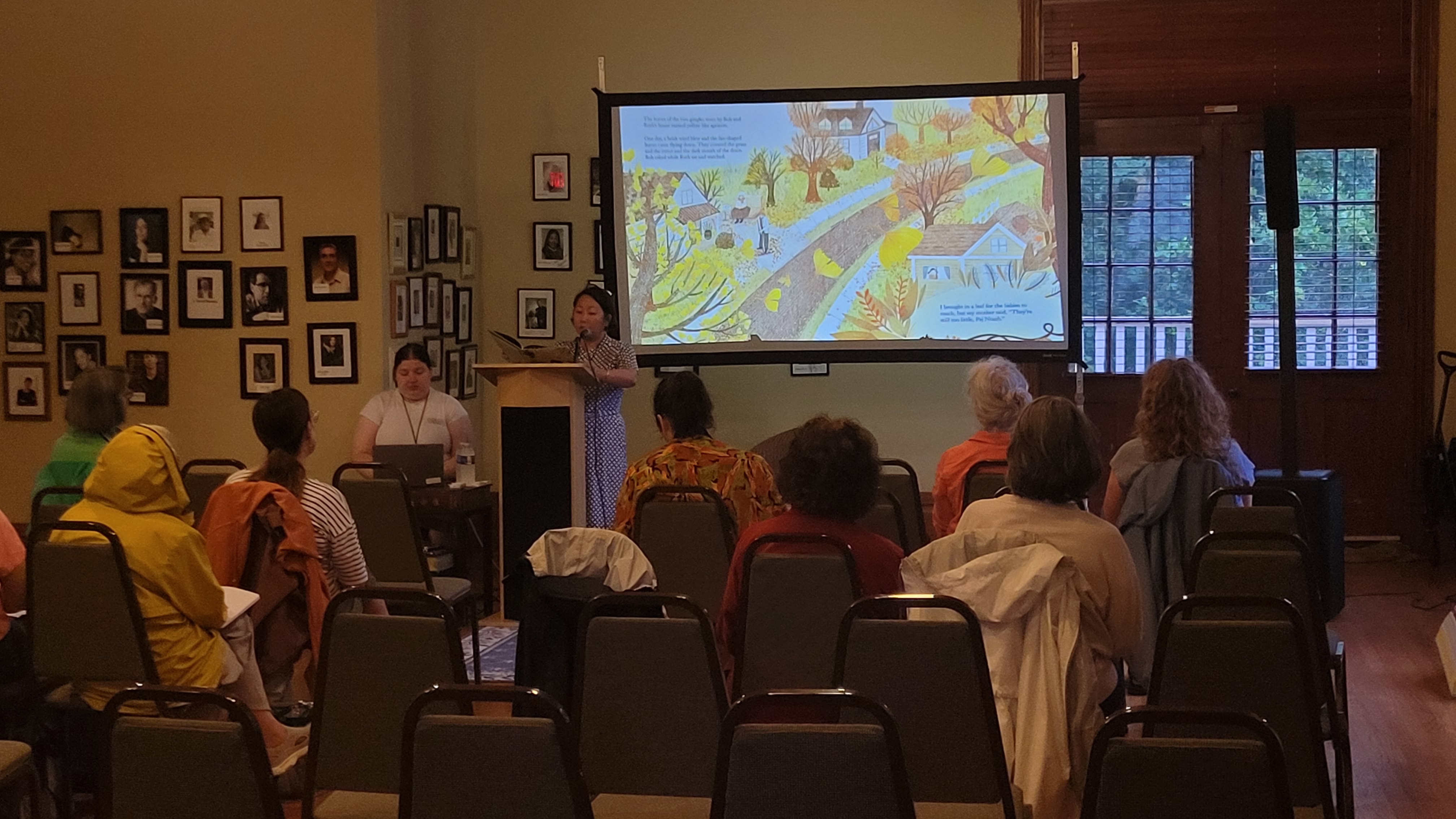
I also attended two masterclasses this week, which again showed me the value of exploring tensions and personal struggles through writing. Children's book author Kao Kalia Yang taught me how being vulnerable with ourselves can translate into helping others who are experiencing similar struggles, so long as we put our work into the world. And poet Jillian Hanesworth showed me how to find hope and community when writing about social issues.
Again, the biggest takeaway from this week was just how powerful writing as an art form can be in exploring yourself, the experiences of others, and the relationships that bind us all together. It’s been so incredible to see this theme emerge within the conversations I’ve had with so many writers this week, writers who differ greatly in their lived experience. As I continue interning at the Literary Arts Center here, I look forward to continuing these conversations and developing my craft. These experiences I had this week have truly shown me just how much of a difference I can make within this art form, in both my life and in the lives of others. I’m so excited to see what my next week at the Chautauqua Institution brings!