
Week 7:
The Children’s Hospital
July 10, 2013
This past week has been one of the most exciting weeks so far. After a fun-filled 4th of July, I went in the next morning to watch surgery…for the first time! I was so nervous before I went because I was not sure how I would react to seeing surgery up close. I have known for a while I was interested in becoming a doctor, however, I had always thought I wouldn’t want to work in a surgical specialty in the future. I had shadowed other doctors in clinic in the past, and I always enjoyed that setting so much I just assumed a clinic-based specialty would be right for me. To my surprise, I found surgery absolutely fascinating, and I enjoyed the intense atmosphere in the OR (and no, I did NOT faint or vomit or anything of the sort!) This experience has forced me to reconsider a possible career path that would include surgery. Orthopedics is an interesting specialty because the doctors see patients both during clinic and also perform surgery, meaning the doctors are assigned a variety of tasks. I can’t say for certain at this point that orthopedics would be the right career path for me, but I can say that this experience has caused me to consider it more heavily that before.
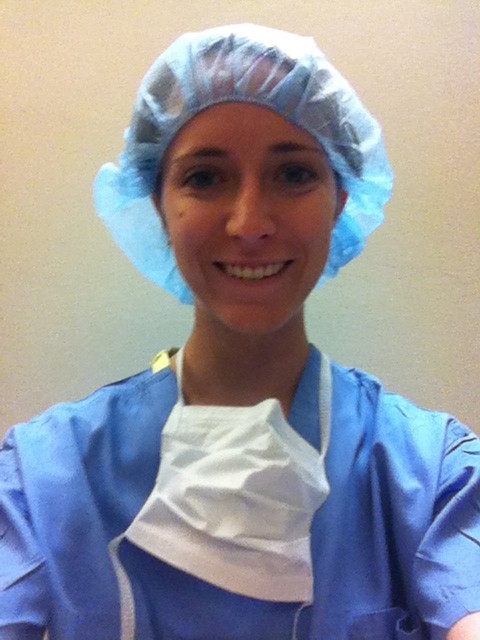
The day of the surgery, the patient was brought in to the OR with a slipped capital femoral epiphysis, or SCFE. This refers to a fracture through the growth plate near the head of the femur. This results in slippage of the overlying epiphysis (the head of the femur should sit squarely on the femoral neck). The doctor informed me that this type of fracture is especially common in obese adolescents. At the start of the procedure, the doctor inserted a screw in the affected leg to stabilize the fracture. This was done through a tiny incision. During the next part of the surgery, the doctor had to make a fairly large incision in order to reshape the bone (osteochondroplasty). This portion of the surgery took quite a bit of time. Although the patient only had a SCFE fracture on one side, there is a pretty good chance the patient will obtain a second SCFE fracture in the other side. Since there is such a high likelihood of a second SCFE fracture, the doctor placed a screw on the other side to stabilize the patient’s leg in an attempt to prevent future problems.
Below are x-rays showing a typical SCFE, before and after surgical intervention.

Major: Biochemistry & Molecular Biology. Hometown:Maroa, Illinois.