
Week 7:
Carver College of Medicine
July 8, 2014
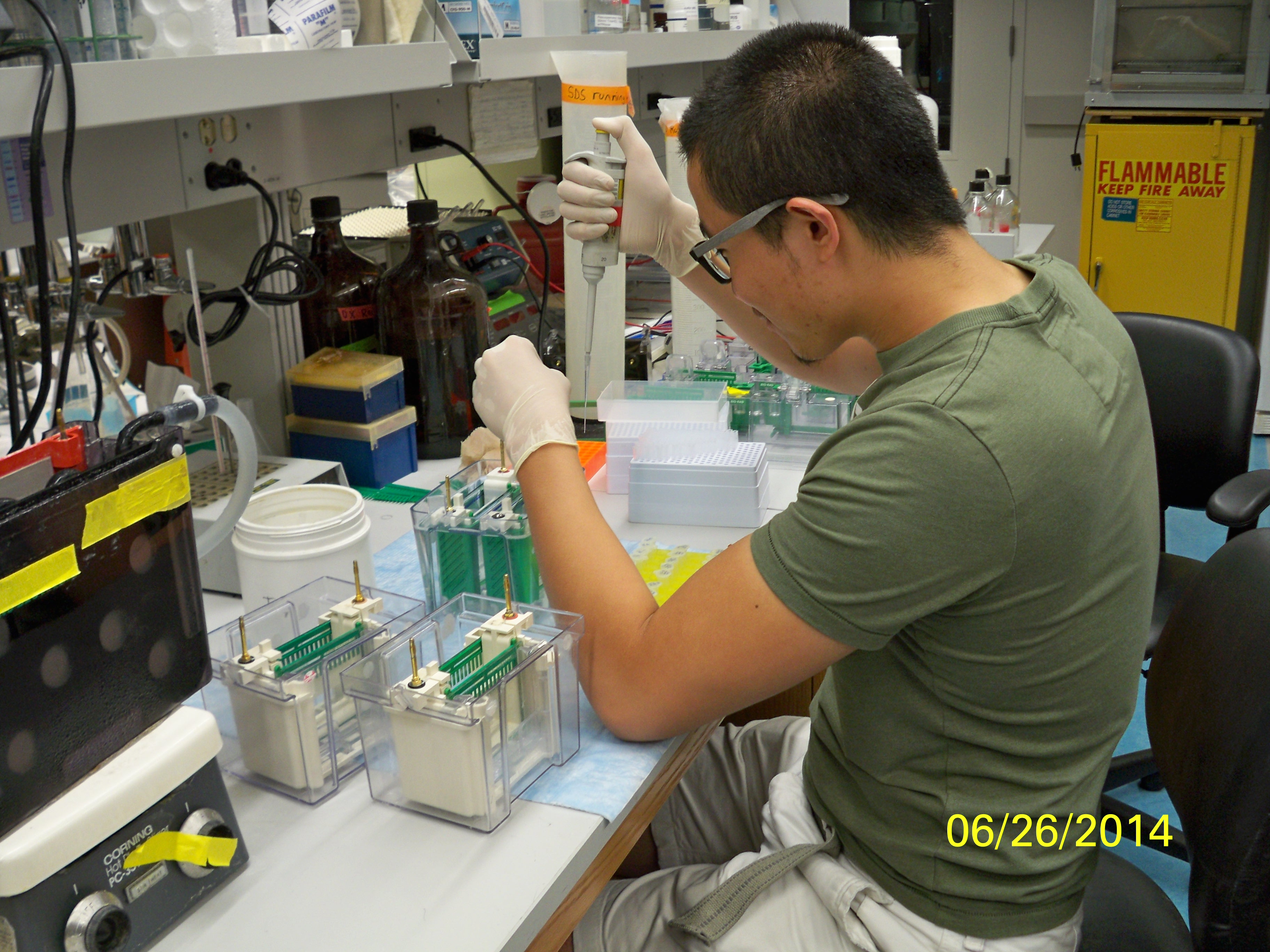
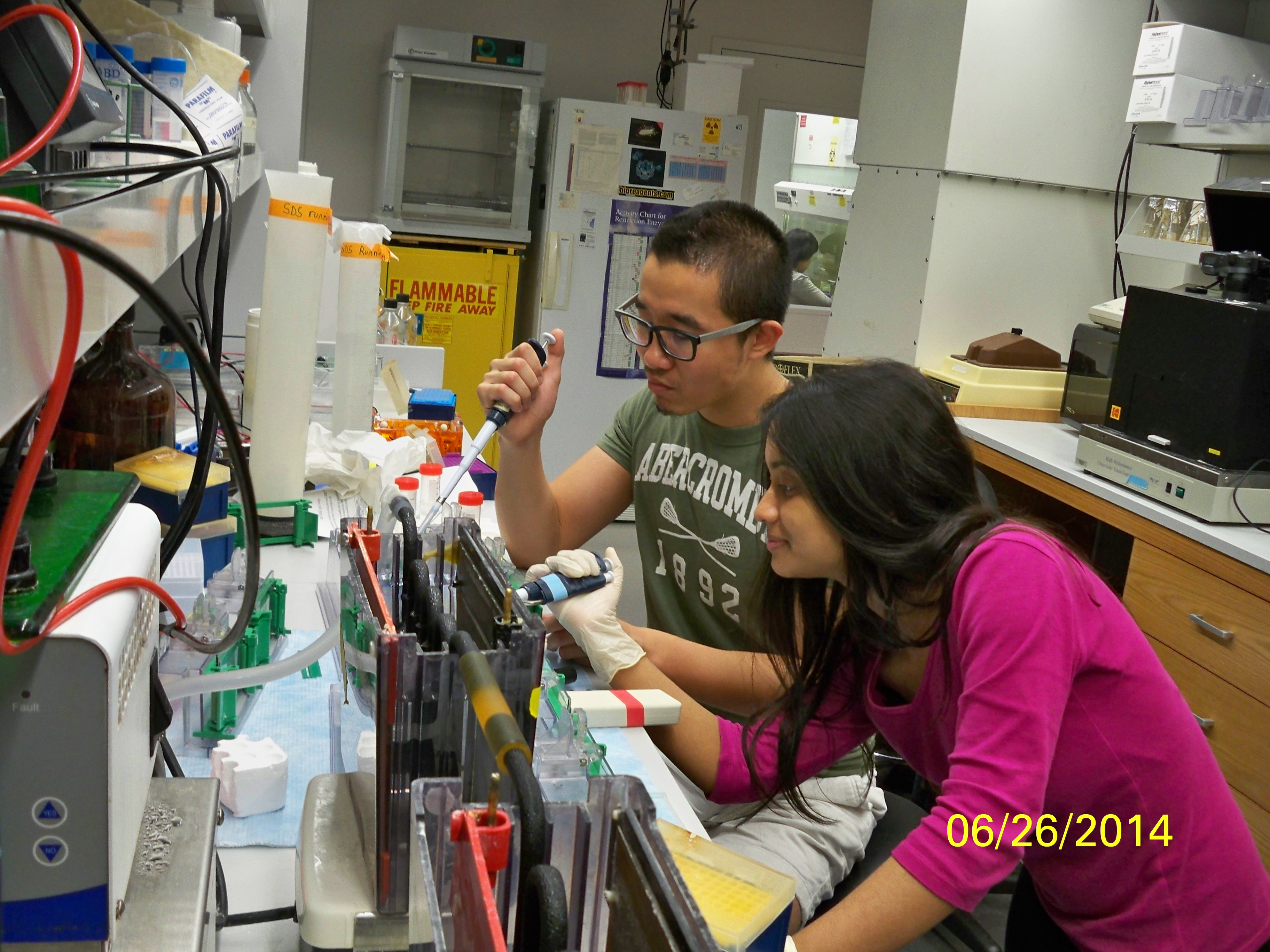
I made some 0.75 mm gels this week for the Western blot. The running gel with 10% acrylamide contained 12.5 mL of 40% acrylamide (contained 2.6% crosslinker, which gave a monomer to crosslinker ratio of 37.5 : 1), 12.5 mL of 1.5 M Tris (pH = 8.8), 24.0 mL of cold, distilled water (to prevent overheating when the gel polymerized), 500 µL of 10% SDS, 500 µL of 10% APS (ammonium persulfate), and 50 µL of TEMED. TEMED was only added prior to pouring the gel since it was the catalyst and polymerization of the gel would begin as soon as TEMED was added. The 4% stacking gel, which would sit on top of the running gel, contained 2.5 mL of 40% acrylamide, 6.3 mL of 0.5 M Tris (pH = 6.8), 15.7 mL of cold water, 250 µL of 10% SDS, 250 µL of 10% APS, and 25 µL of TEMED. First, I pipetted in the running gel between the two glasses that were 0.75 mm apart followed by a line of isobutanol. Isobutanol was added to flatten the top of the running gel so that the running and stacking gels would form a straight line in between. After the running gel solidified in about thirty minutes, I rinsed out the isobutanol with water and completely dried the water. Then I pipetted in the stacking gel and put in the comb right away. After about another thirty minutes, I pulled out the combs carefully to not disrupt the nice-looking wells in the gels where I would be loading samples.
This week I also did some poly-L-lycine coating of the plates which would be used for cell culture. The coating was done so that the cells would stick to the bottom of the plates instead of floating around in the media. First, I made some borate buffer with boric acid and sodium borate (borax). Before usage, I filtered the mixture of borate buffer and poly-L-lycine solution through a bottle-top sterile filter to conserve the sterility of the culture plates. After the mixture was added to each well, the plates were incubated in the incubator overnight to get ready for the cell culture. The next day, I washed the excess poly-L-lycine off with sterile water and dried the plates before treatment of cell culture.
Besides these I also did some nucleus morphology assays this week with another set of eight transfections of neurons. These were the exact same transfections as I discussed before, but I did it again to increase the reliability of the data in order for it to be published. I also did more of the luciferase assays with Gaussia and NanoLuc luciferases this week, also with the same exact method as I talked about before.
Major: Chemistry. Hometown:Centuria, Wisconsin.