
Week 6:
Audobon Center at Francis Beidler Forest
June 25, 2014
These summer camps are hard work! This week we had over twice the amount of children to teach and the average age was a lot younger too. Matt and I had to spend a lot more time making sure the kiddos were listening and behaving. Although, if I were that young and surrounded by 19 other six and seven year olds, I would probably be challenged to concentrate when the teachers were talking too. Let’s just say that I have a lot more respect for grade school teachers now. Tennis is easy to teach to children because they get to burn energy and run around a lot, but engaging children as a nature educator is a different challenge completely. Good grade school and middle school teachers know how to engage children and teach them valuable lessons; a skill we might not recognize enough in the US and one that I am still perfecting.
The theme of camp this summer has been “science.” So the goal was to show our campers the different ways in which we do science with the main idea being that the more we know about the animals that live in and around the swamp, the better we can manage and protect it. For instance, mayflies, a common insect at Four Holes Swamp, spend their larval stage under water in the benthic layer and will not survive in polluted water. It is one of the first things to die off when water pollution begins to reach its habitat. So if we see a decline in mayfly populations then that indicates that some kind of pollution could be seeping into the watershed somehow. For camp, we did a lot of activities to demonstrate how to find animals and the signs they leave behind.
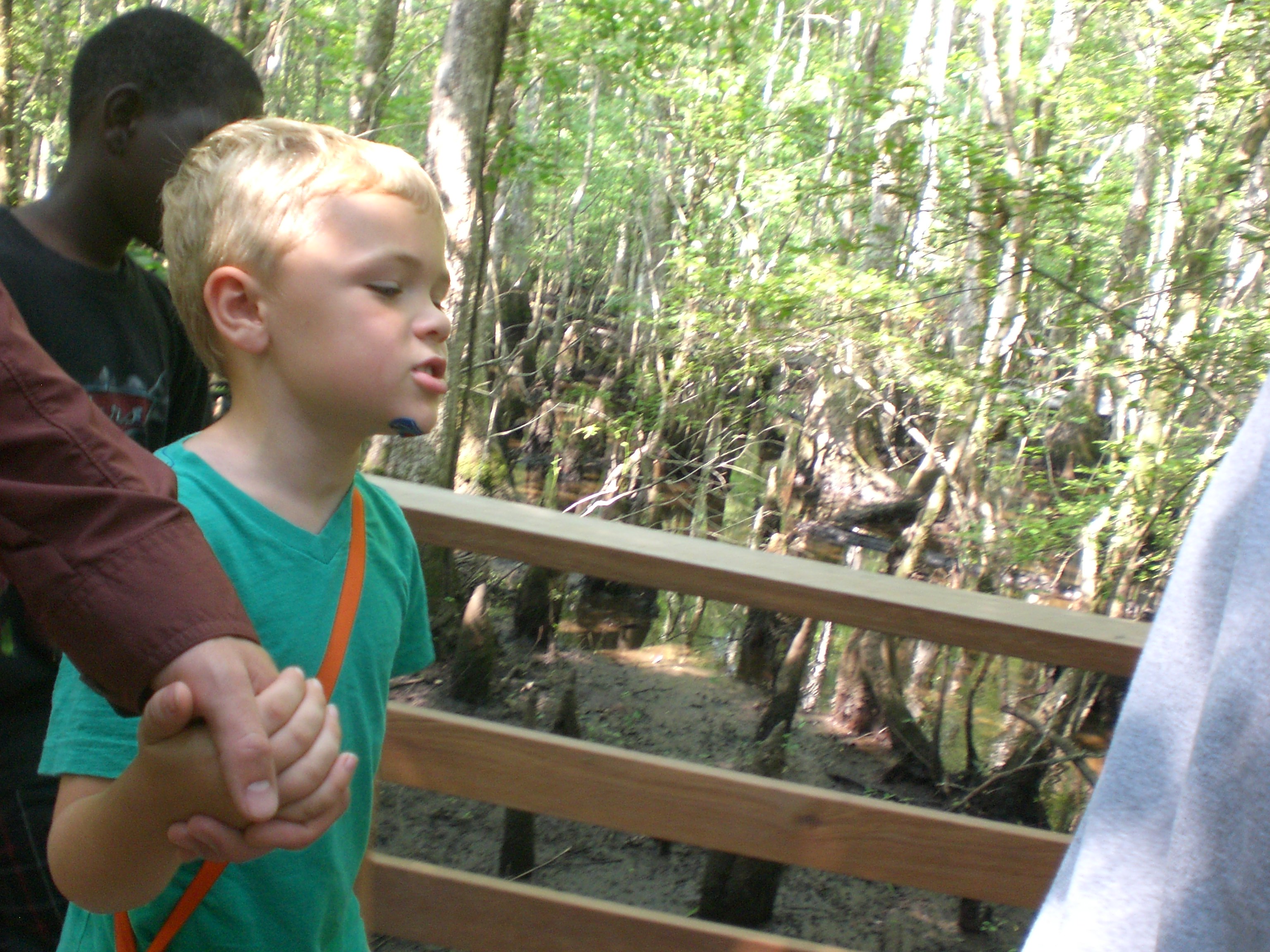
Birding with the kids was a fun and relaxed activity. Both weeks we went out we saw a Yellow-crowned Night Heron walking along the boardwalk. I personally enjoyed seeing wildlife during camp because I got to teach the kids about the importance of silence when observing wildlife. Even so, without fail, someone would scream the second they saw something cool, “SQUIRREL!!” We saw a completely majestic Barred Owl once and a camper, who will remain nameless, immediately started “HOOT HOOT”ing as loud as he could. I have found a new pet peeve… Luckily the owl didn’t fly off immediately. They generally don’t care about us humans unless we are being extremely obnoxious. But whenever we came across a fawn or doe and a camper bellowed out its existence, it scurried off every time.
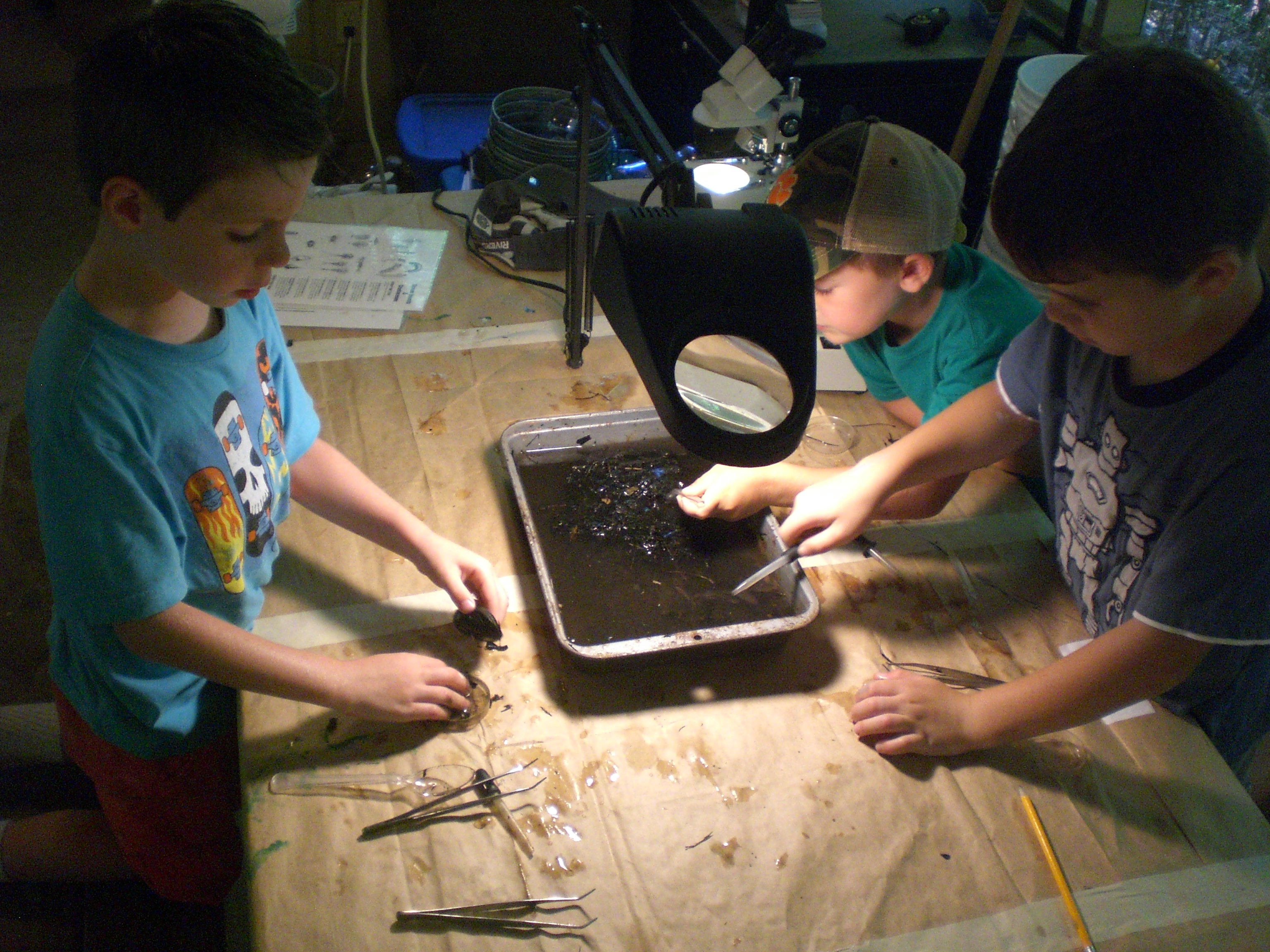
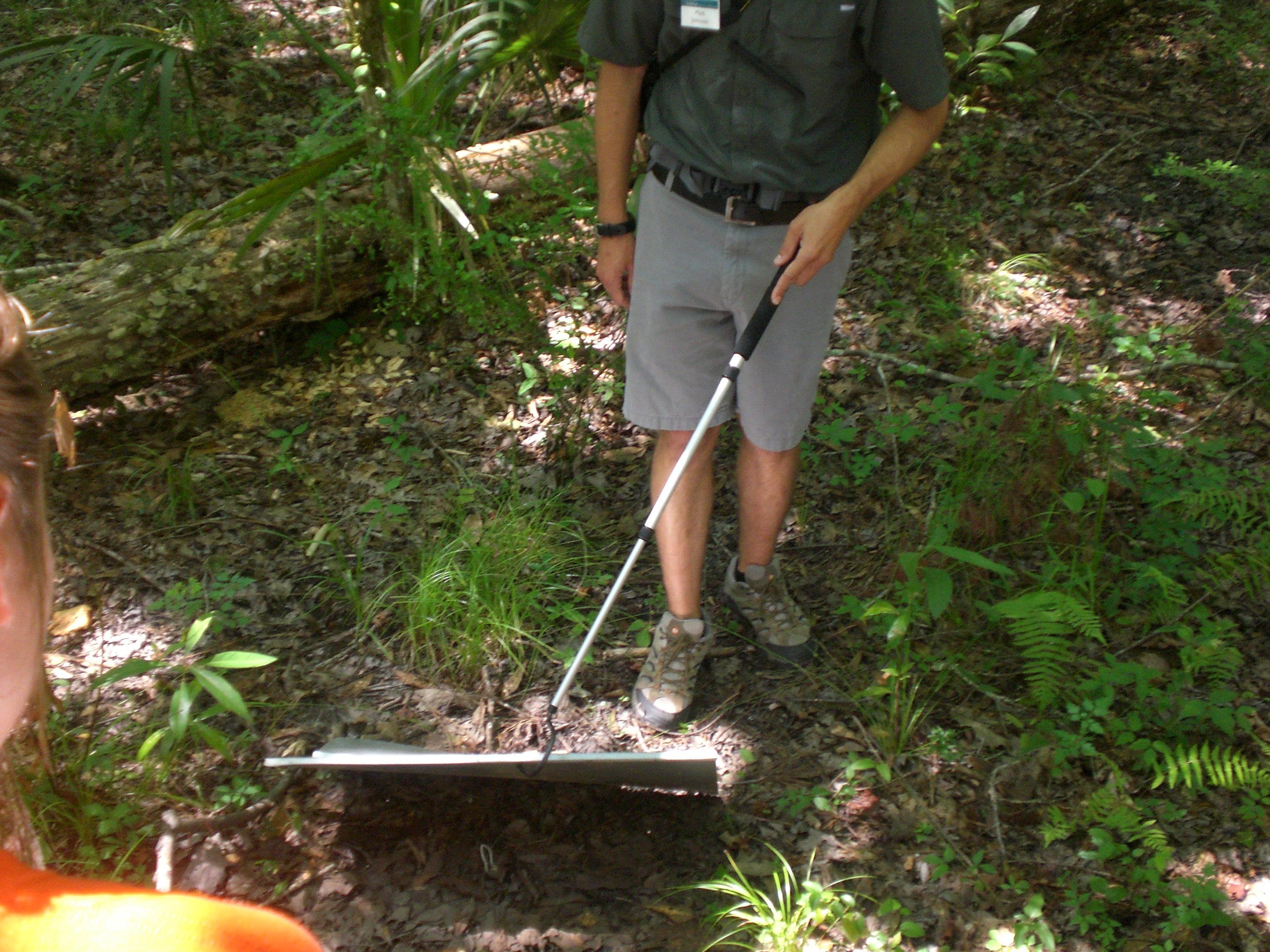
Another activity we partook in was benthic sampling. Matt got off the boardwalk and scooped up some leaf litter, mud, and tiny twigs from the bottom wet part of the swamp while the kids watched. Then we filtered it and laid it out on metal pans for the kids to pick through. I was surprised every time by how much life was in each scoop. From large motionless mussels to wriggling larvae to frantic crayfish, you could make a pretty strong hypothesis that the swamp was pretty healthy and full of living and growing creatures.
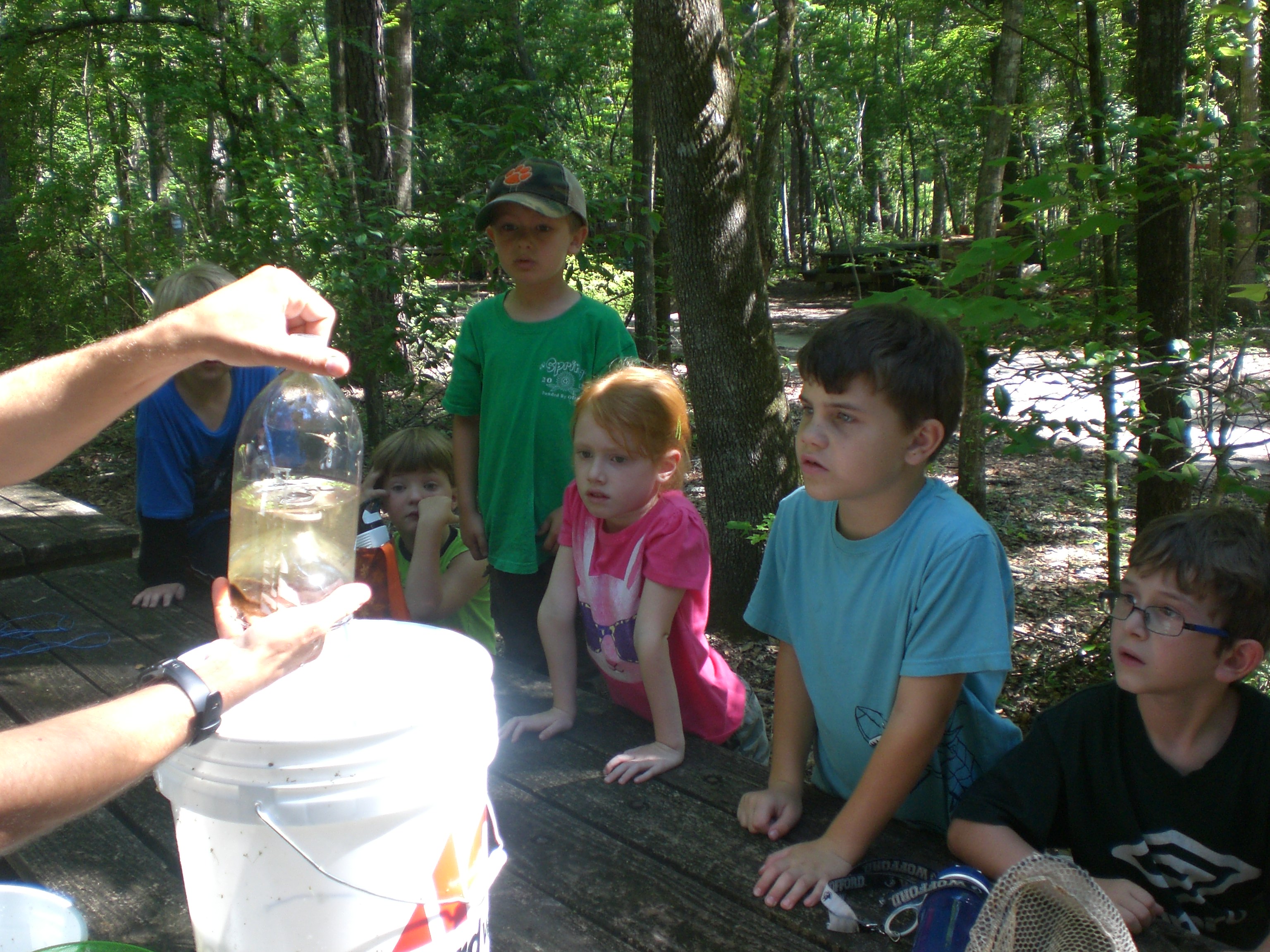
Some other things we spent time doing were trapping minnows, catching dragonflies and damselflies, and capturing pictures of wildlife on a night camera. All of these activities wrapped into our theme and helped us explain the importance of monitoring wildlife in sanctuaries like this one. At the end of the week, we invited the kids’ parents to eat lunch with them where we had a little graduation and each camper got a fancy certificate.
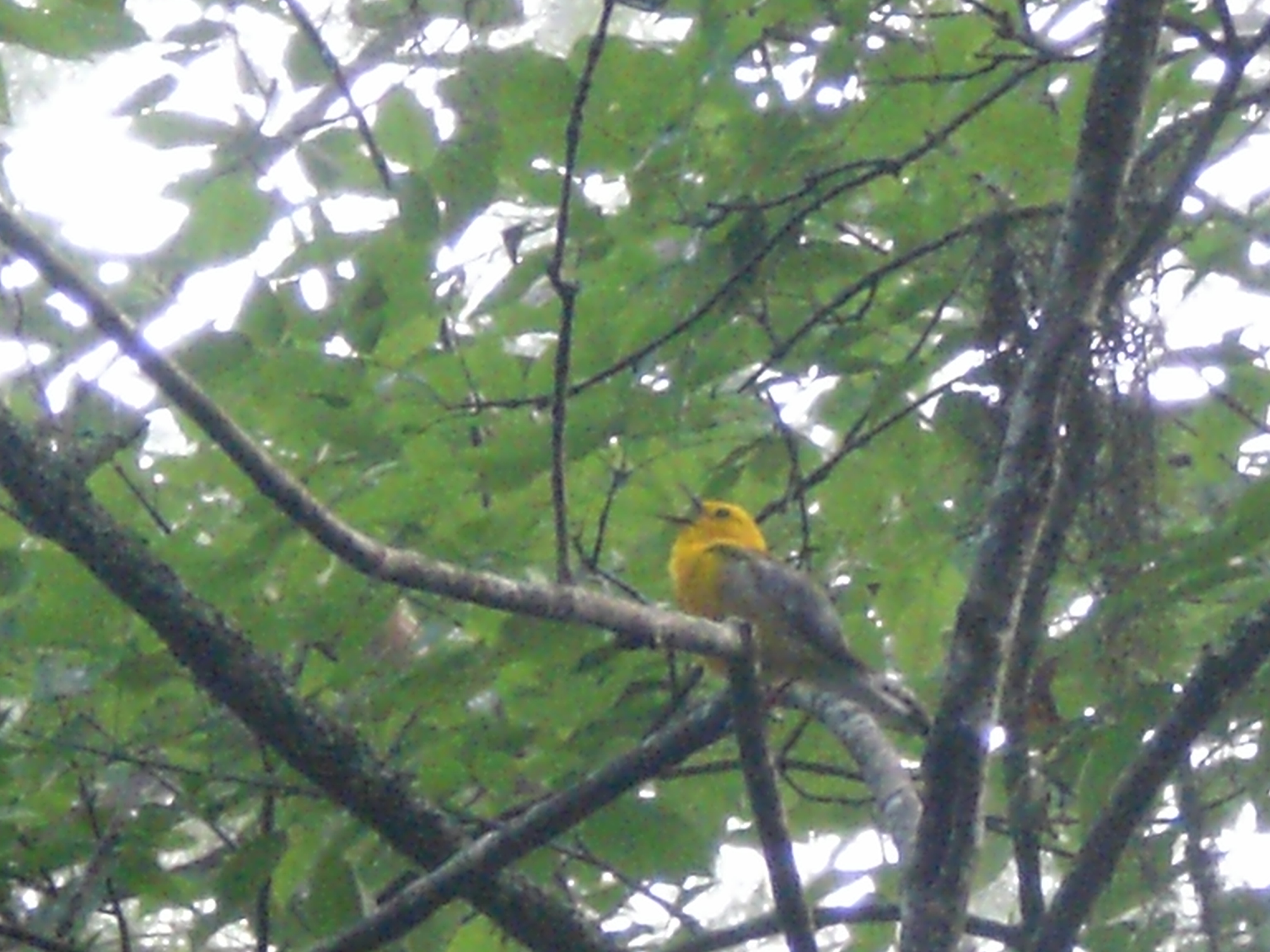
Update on the Prothonotary Warbler monitoring: it really has taken the background these past few weeks but I am still mapping the sightings on ArcGIS that I have collected from the boardwalk. I am finding that I wish I had more time to walk the boardwalk alone to collect more data points. Whenever I hear a Prothonotary singing while we’re doing something with the campers I have to fight a massive urge to leave the group, binoculars in hand, and find it.
Major: Biology and Environmental Studies. Hometown:Downer’s Grove, Illinois.
PreviousWeek 5: Audobon Center at Francis Beidler Forest
NextWeek 7: Audobon Center at Francis Beidler Forest