
Week 6:
University of South Carolina
July 21, 2014
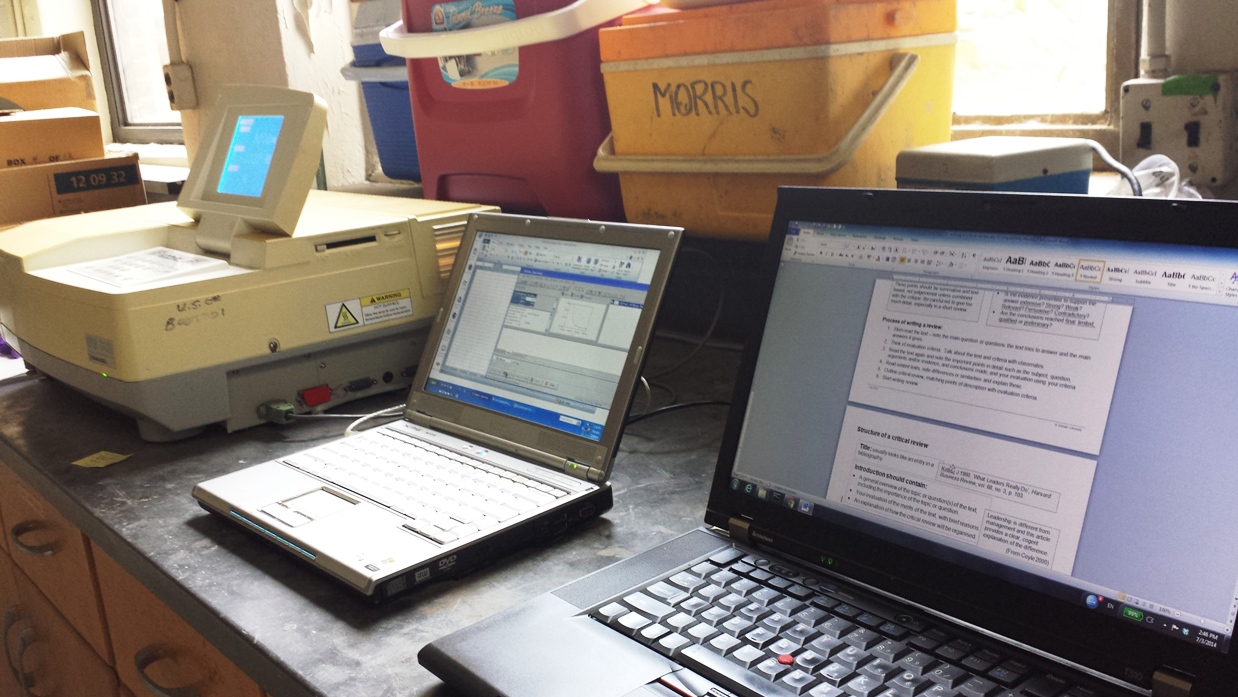
In the lab. Monday started and ended with running samples on Shimadzu.
I intended to finish all the samples, and so ended up staying until 10:30 pm in the lab. Today, on Wednesday, Dan and I realized that two samples (two vials with samples of pH=2) for dissolved organic carbon analysis (CDOM) were missing even though the samples for Nitrogen and Phosphorus as well as DOM analysis were prepared (Nitrogen and Phosphorus and CDOM analysis will be analyzed by Dan for further projects). Because we dump the remaining field samples after getting the needed amount through filtering, this is unacceptable. Fortunately however, one of the missing vials was a duplicate sample, and for each of them, I saved an extra sample for DOM analysis just in case. But, that is not the point. These are post-factum measures that happened to work out in this case. From the beginning, thoroughness must be the principle. I don’t think multitasking was an issue, because I had free minutes in between filtering and running the samples on Shimadzu. Although I was constantly telling myself to be slow but sure, I guess it was not enough.
Overall, I am satisfied I got to do around 100 runs, each of which takes 10-15 minutes, for 56 samples. I overcame the monotonies of running samples and existential oddities of being alone in lab, with not even a single face of a construction worker in corridors (our floor is going through renovations this summer, and sounds of construction makes the environment feel livelier).
Sense of meaning. I have been thinking about Adam Smith’s response to the “romantic” fantasies of some philosophers in the 19th century who were overwhelmed by the implications of specialization, which tends to alienate people from the importance of their work, because they are not able to see the net end-results of their labor directly impacting others’ lives. Indeed, one can cite innumerous examples of people who work office-related middle-management jobs who soon lose their sense of motivation in what they are doing mostly because of the hierarchical nature of decision-making and implementation. That is probably why people who run coffee shops, shoe repairs, fashion or bike shops look more satisfied day-to-day, as they are in direct correspondence with the fruits of their work, with their consumers and their feedback. Similarly, this is one of the reasons teachers like teaching; they directly impact people’s lives, and it gives them a sense of meaning and contribution. So, the above-mentioned philosophers proposed that we go back to an artisan economy where citizens make their own clothes, produce their own food, etc. But Smith argued that workers simply need to be cognizant of how their individual endeavors fit into the bigger scheme, and how they are helping other people and society. In research too, one should always be mindful of the significance of his/her questions and topics without getting distracted by its everyday struggles and realities. Enough self-didacticism.
Green and greener.
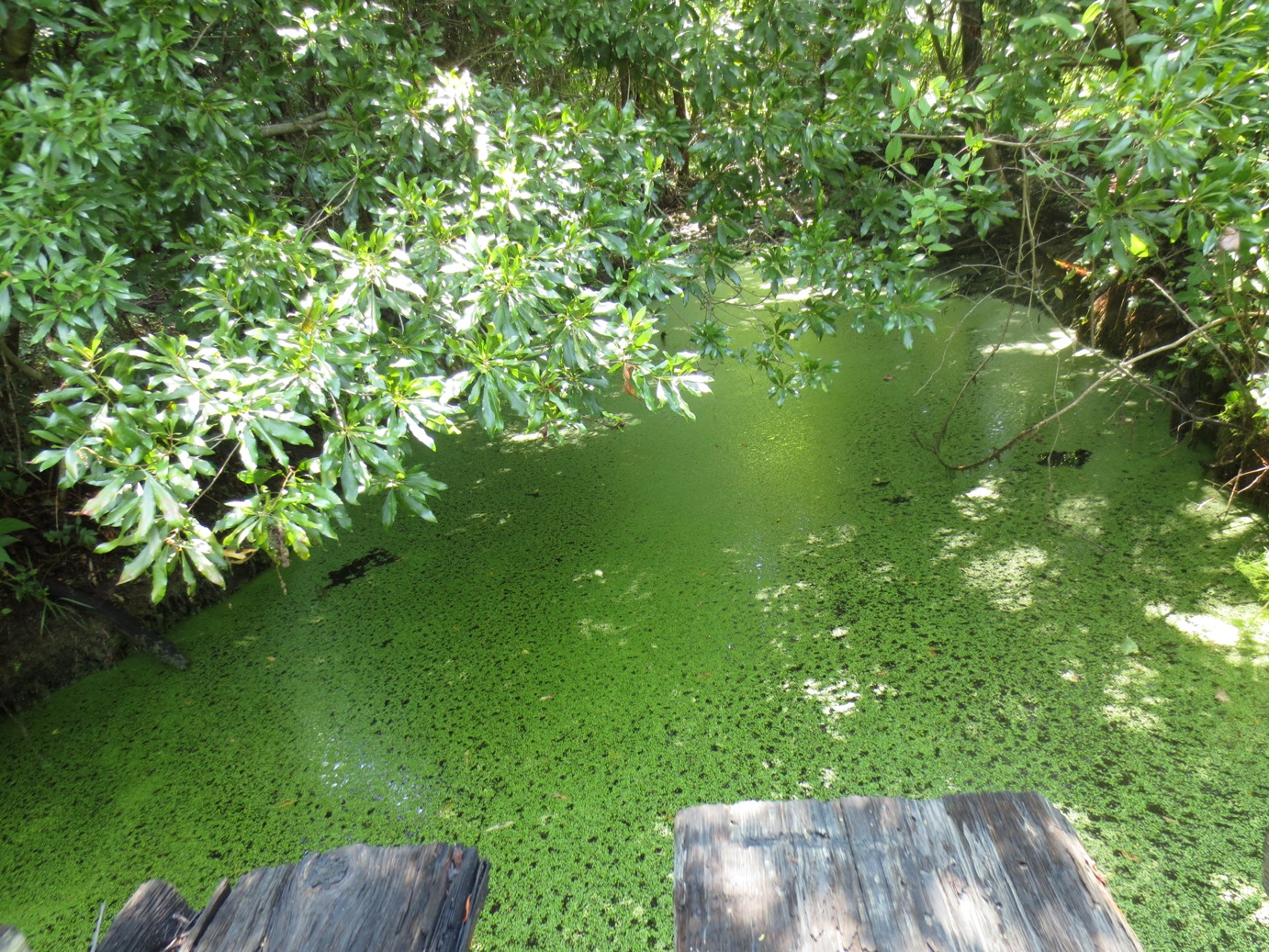
I am swaddled in green. Not only do we travel in Dan’s chic green car to visit mostly green waters, South Carolina boasts around 60 percent forestland, sinking my eyes in greenery. I even live on Greene street (and I guess I could argue that I am becoming “green” by becoming a vegetarian). Still, grass is greener on the other side: I find myself in an opposite situation to those of many people I meet. In college, the general feel I get is that of breaking free from family pressures and societal expectations. Tanya said that most young people back at home (Punjab) are heavily instructed on what and how to do things that they never get to actually do them… until they leave for somewhere, study, and explore their interests. Therefore, Tanya and many young people express their wish to be in my shoes when I say I didn’t go through that. Having been brought by a single mother, who was herself brought by a single mother (my grandmother passed away when I was three), life has been akin to trying to find a stepping ground after being thrown into an impalpable void, with no axis of reference; like pushing in all directions while space receded back immediately with greater force.
My personal observations show me that it is easier to act and live in reaction to a stimulus, be it beneficial or useless. Having that initial push to bounce off from. No matter how one is talented, hardworking, observant, or persistent, a sense of direction from adults is essential when young. In that, I appreciate my professors and mentors at Cornell for their sincere feedback and suggestions.
Field work. Tuesday and Wednesday were spent driving and sampling in four counties: Orangeburg, Dorchester, Williamsburg, and Berkeley counties. Dan, Warren, and I completed our last field day with fair amount of fun and each his/her own share of stupidity.
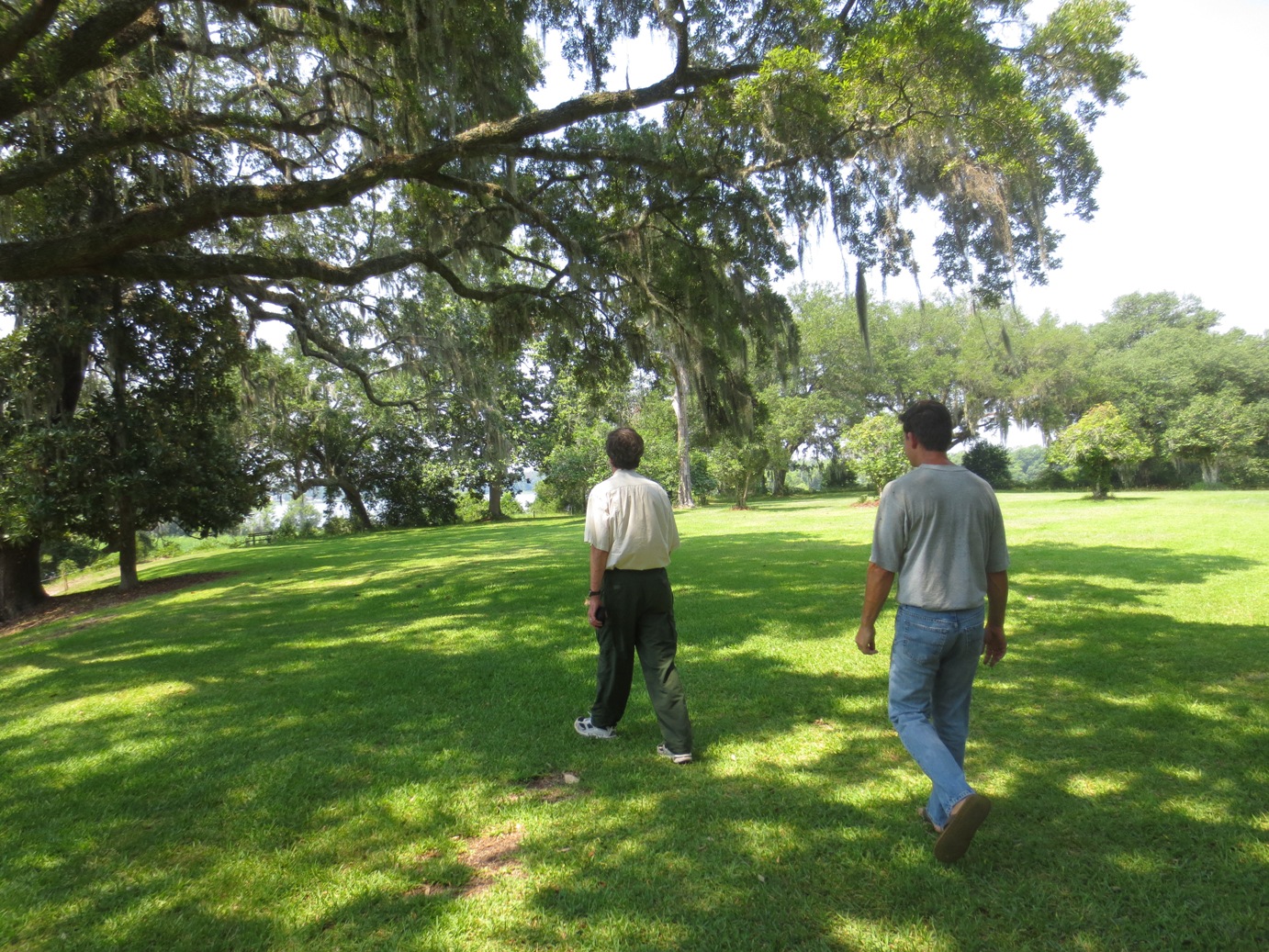
Among my friends, I am known for coming with rain. Putting aside our statistical intuition, based on our experiences of raining each time I was with them, we like entertaining the idea that Setsen and rain come together. However, in case with alligators, its seems like they are not to be spotted whenever I am present. After visiting several places where encountering alligators is a certainty, we saw none except a head submerged under water at Mepkin Abbey, a monastery retreat center located on the Cooper River. Of course, at the time, our eyes were mesmerized with tranquility of the gardens that the alligator hunt wasn’t of priority.
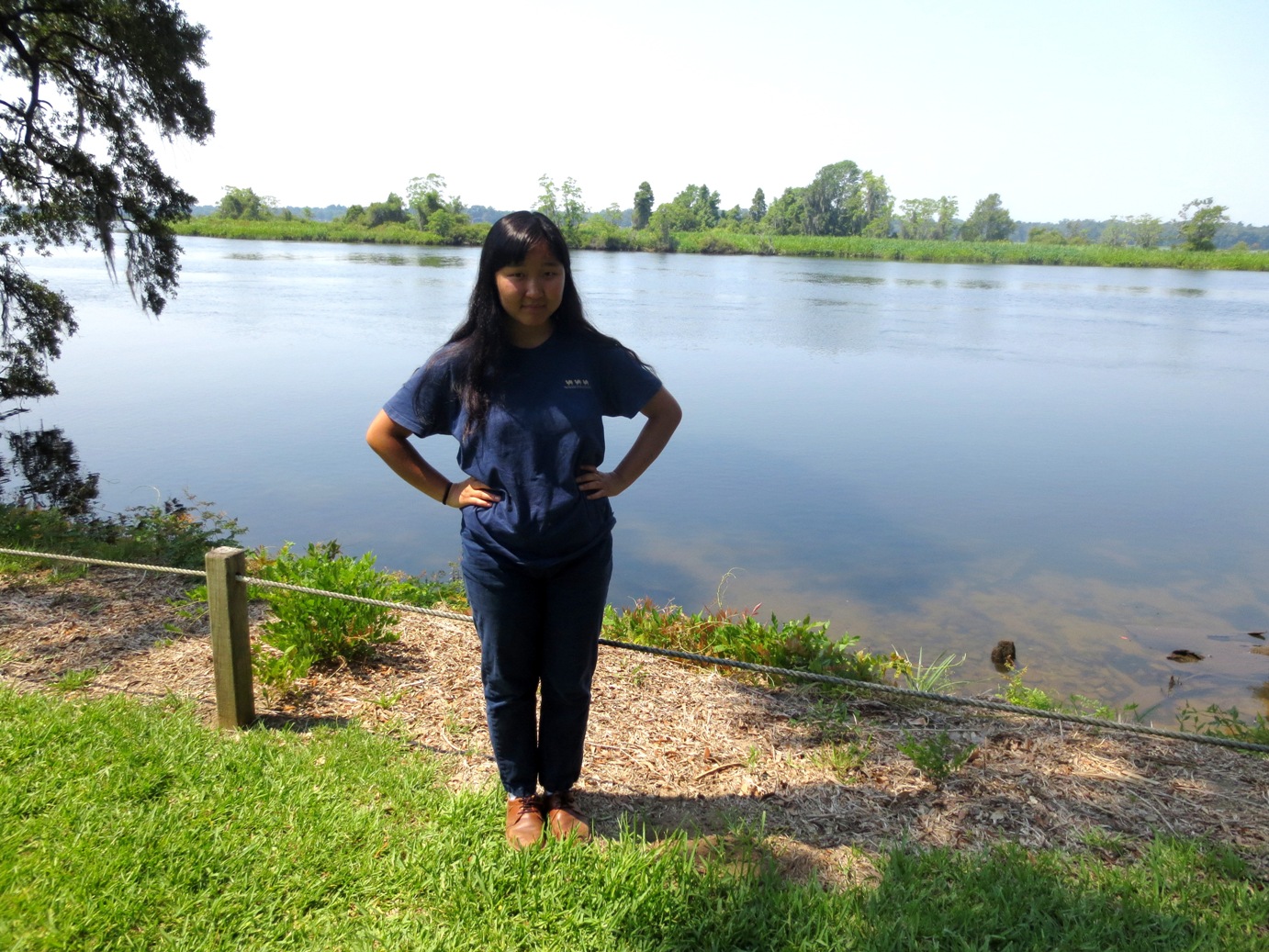
In the car, as I asked why there are barely any natural lakes in South Carolina, I dismayed my completion of Climates of the Ice Ages class, where we got to learn several paleoclimatic proxies, speleothems accentuated. For several minutes, I somehow didn’t get why having no glaciers have to be the answer. My momentary stupidity was in taking glaciers as mountain glaciers only. Simply, because continental glaciers did not reach the region during ice ages, the land isn’t carved with depressions to hold lake-level bodies of water.
After we left the dock of a restaurant we took samples from at Lake Moultrie Tailrace Canal at Monck’s corner, Dan realized he forgot our notepad where we keep our field notes. As we rushed back, Dan remembered putting it on top of the car by the back door. We found it intact on the road like a turtle crossing the road!
Later in the day, we had to take stream flow measurement at a channel under a bridge. We realized we didn’t have our meter. After finally figuring that out using a rope with markings, the battery of the instrument was found to be dead. Warren got back to the car to see if we had extra batteries, but brought wrong sized ones. So, Dan left with his car in search of a store nearby. Meanwhile, Warren and I managed to unscrew the screws using a coin because I wanted to try the technique of biting old batteries to harness the last remaining energy out of it. The batteries were too big and hard; or American batteries are different than Chinese batteries? Soon, Dan came back having found out that the store I saw was out of business. As we observed the flow starting to change its direction under tidal influences, taking flow measurement had to be aborted anyways. No matter how hard we try, obviously nature has its own whims.
According to a USGSC article, climate change and sea-level rise will purportedly affect availability of freshwater in coastal streams, because interplay of sea-level, thus tidal conditions, and streamflow govern the balance between freshwater and saltwater.

Setsen is a geology major from Ulaanbaatar, Mongolia.