
Week 5:
University of South Carolina
July 14, 2014
Let me start with the end of Week 4. On Saturday evening, I had an opportunity to meet with other students from India. My roommate organized a potluck at our house, and our culinary expert Tanya coordinated the cooking process. I had just taken my once-in-a-half-year long nap when the cooking started: At seven in the morning, I went running, which took an unplanned route as I decided to see the River Walk to the west of the Congaree River (the main part of the city is on the eastern side of the river), because the weather was breathtaking with recent rain. So, my thirty-minute run became a 10-mile adventure. That being the first time to cover this much distance by running, the aftereffects reverberated throughout my day, abridging it to running then dinner.
Of the five guests, four were PhD students (Manoj has just graduated) in engineering, genetic consulting, computer science, and international economics; and Vijay was a postdoctoral fellow whose minor comment added an entirely different flavor to my considerations regarding post-Cornell plans. Like many other rising seniors, graduate school is undoubtedly among the top of my list. Having come to Cornell reinforced my love of learning, and I am aware that I have been going against the conventional wisdom that one should have fun in college, because serious work comes during grad school years. I can’t help; life is too short even for a life-long learner, although I tend to take it too far as to save the printed papers I read in/out of class to reread later and so carry with me wherever I move. With other priorities I have, the piles of “Global recycling,” “Dombra in Kazakh communities of western Mongolia,” “Navajo art,” “Northern Hemisphere forcing of climatic cycles in Antarctica over the past 360,000 years,” etc. are starting to daunt me these days the longer they lie on my shelf. I know I must finish going over them before I leave for Mongolia in August, as I need to reduce my luggage. At this moment, I feel such a novice, having got just a modicum of taste of academia. I am up and willing to take on another serious academic pursuit. What makes me irresolute is that many college students I met seem to go on to graduate studies because there is no other promising venue right after college. Recalling that I have been under the roof of some sort of an academic institution for 20 out of my 22 years of life, which I enjoy of course, having a real reality check of more than three to four months of summer can be invaluable. This rambling can go on and on. Vijay’s attitude of “Don’t take any of these seriously” can help me sometimes.
Donors. On Monday morning, Dan and I had coffee with John Mark Dean ’58, a Cornell alum, who had just come from his trip to the Colorado River. He supports the Rogers Fellowship, and I want to take this moment to express my gratitude on behalf of all Cornell Fellows to all our donors, with the help of whose largesse Cornellians are able to take on diverse experiential learning opportunities and figure out what they would like and not like to pursue further.
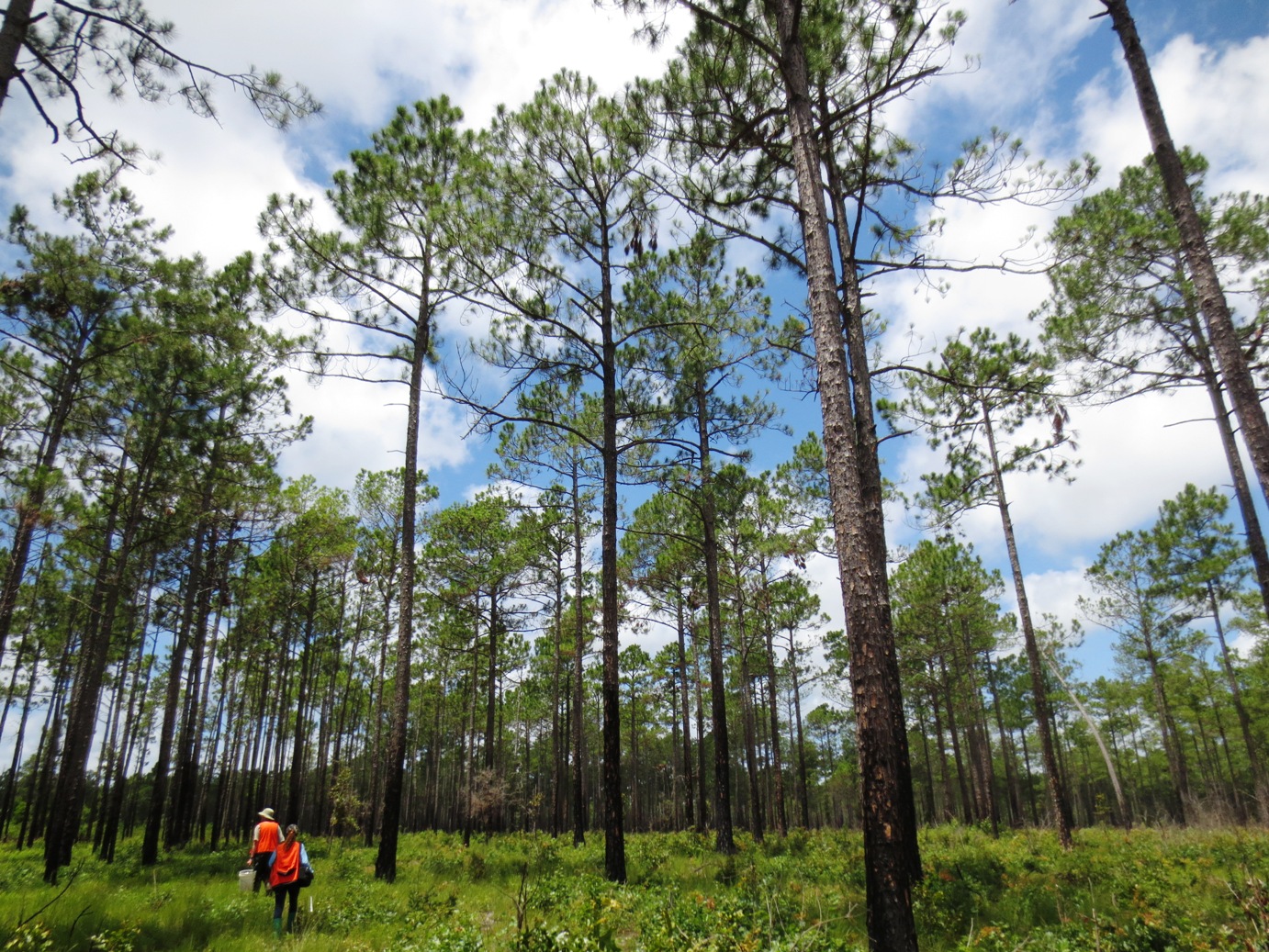
Sites. Our field trip was designated for Wednesday, and Warren was absent as he took a leave for the week of Independence Day. In turn, Stephanie joined Dan and me, and we headed on to sample from Waccamaw River watershed. All of it involved simply finding the bridge under which the canal ran, taking YSI measurements, and pulling water using our water sampler, which Warren flatters me as having “magic hands” with. It was pretty light compared to our previous field trips where we walked in heat for considerable amounts of time. For our third stop, we arrived at what looked like a wonderland of around 9500 acres: Lewis Ocean Bay Heritage Preserve welcomed us with innumerable longleaf pine trees shooting straight to the sky. This place is also known for its biggest black bear population in South Carolina.
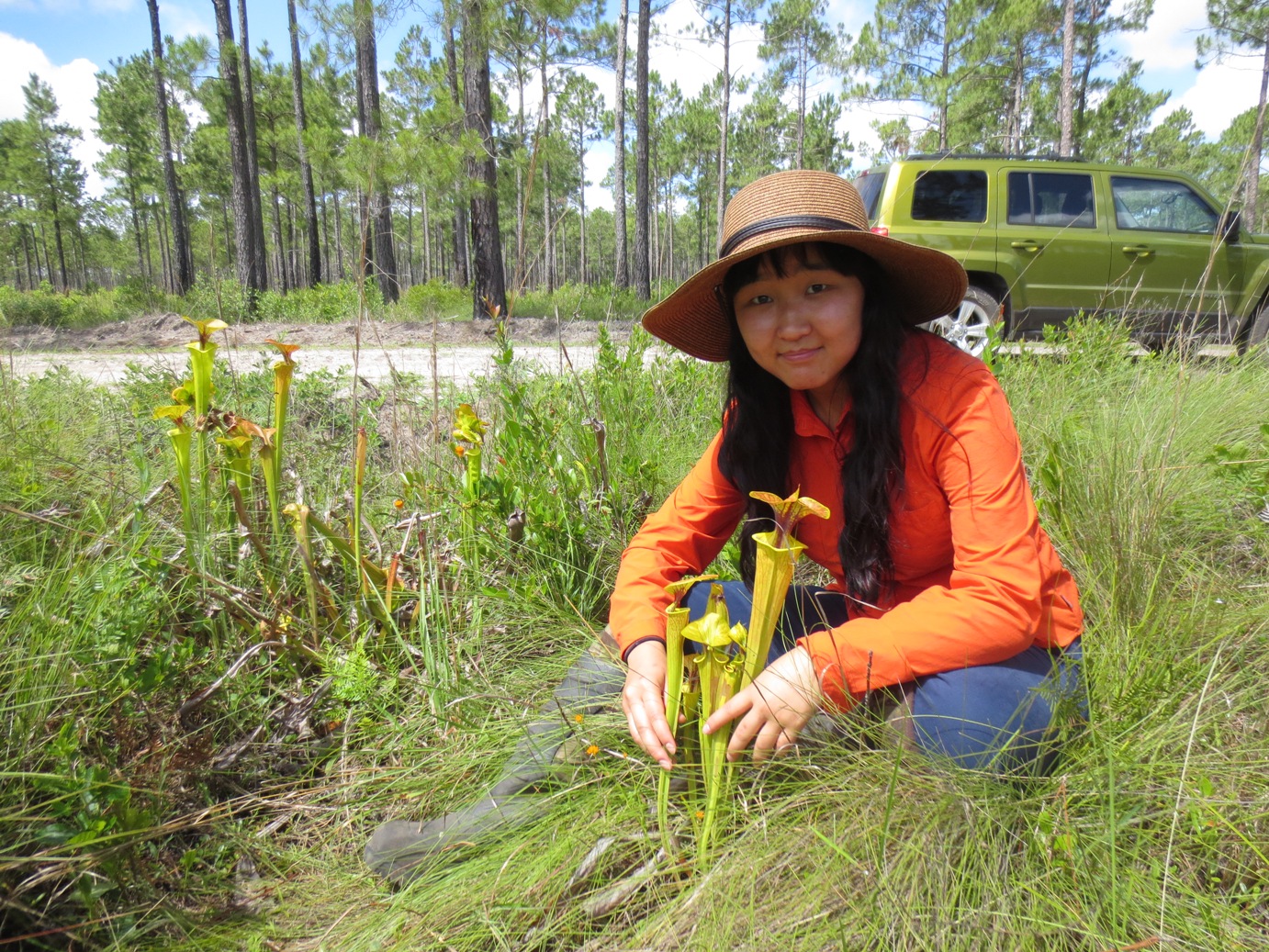
For the first time, I saw yellow pitcher plants. After walking in awe for a while, we had to penetrate the thickets to reach our sampling location. Even if I was carrying heavier stuff than I usually do, I took pleasure in every step. As we finally arrived at our stream channel, my jaw dropped one-and-a-half centimeters, although I seemed to be the most excited among the three of us. We literally came to a black water. It was impossible to see what was in there. Someone had to get in and take the measurements, and I happily got in. The feeling was comparable to that of seeing several scenes from the Life of Pi. At least for me.
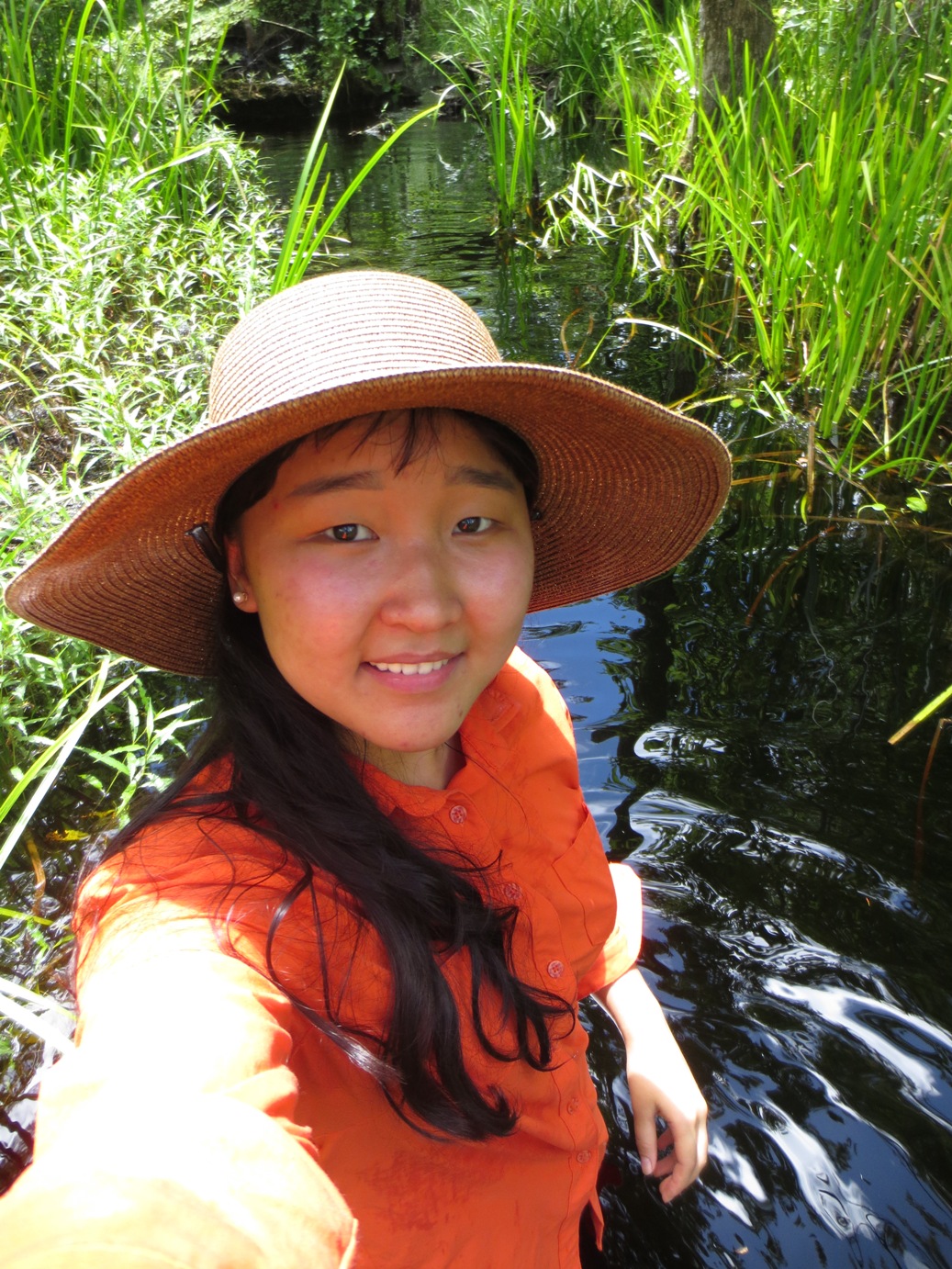
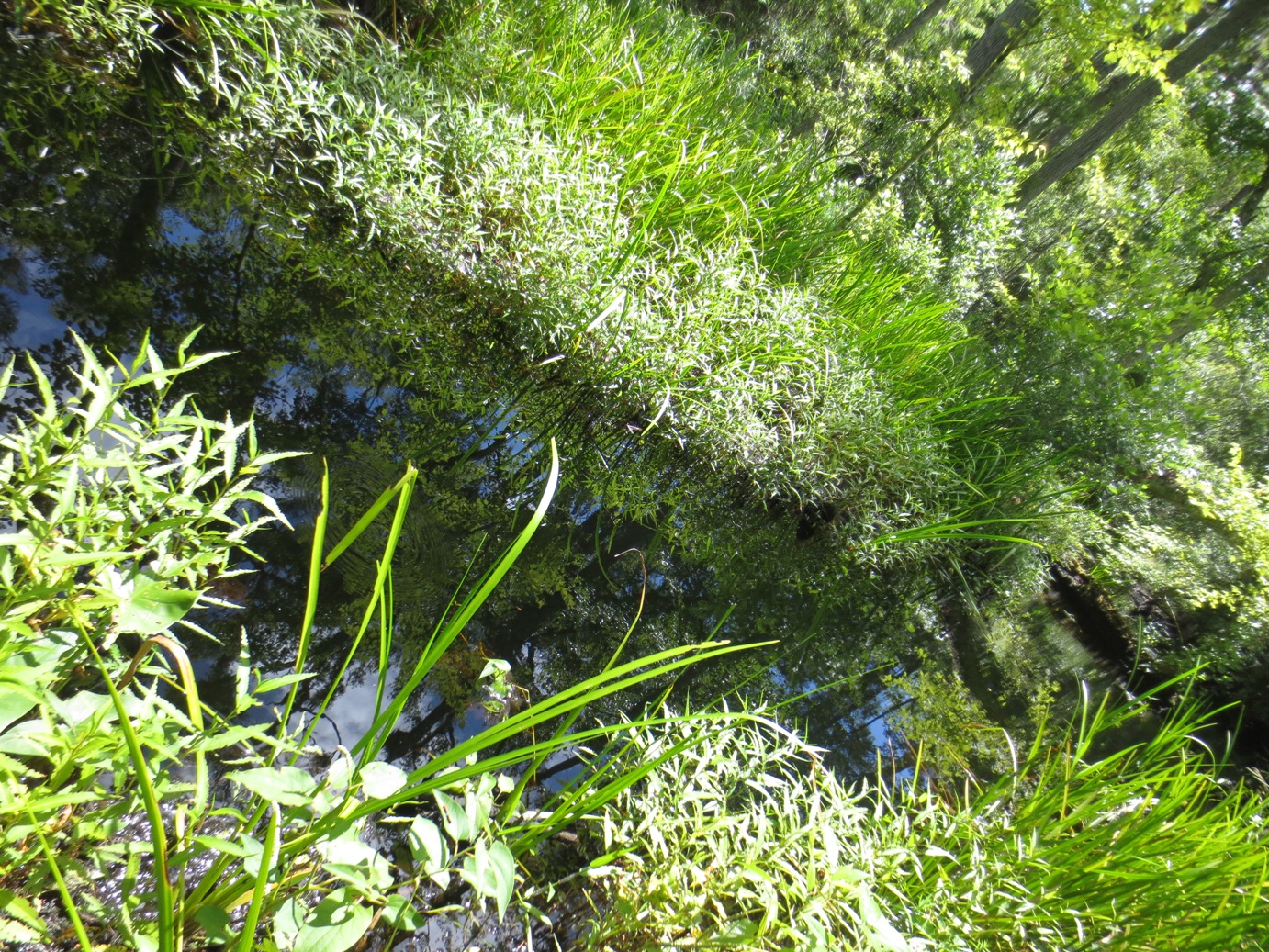
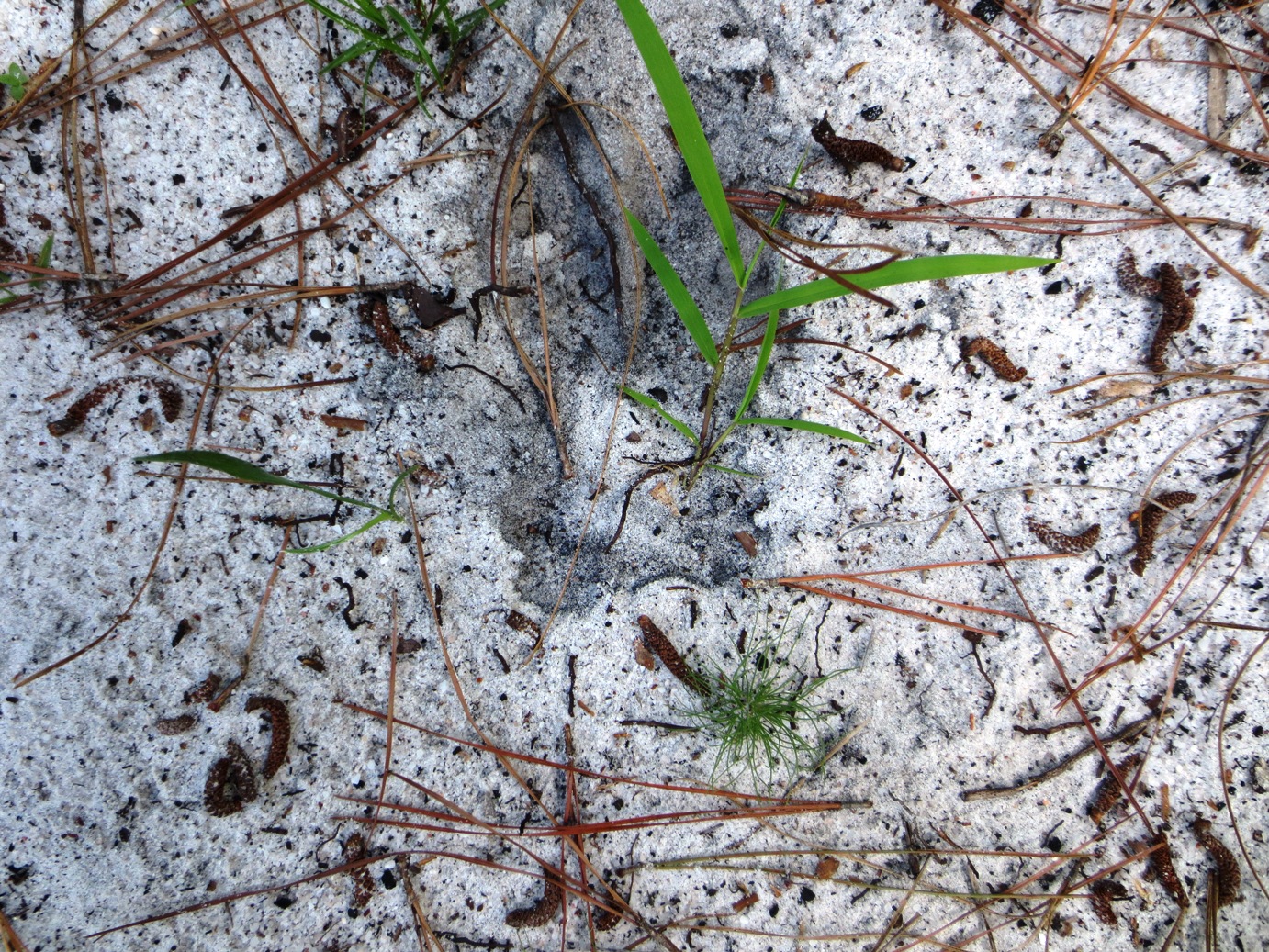
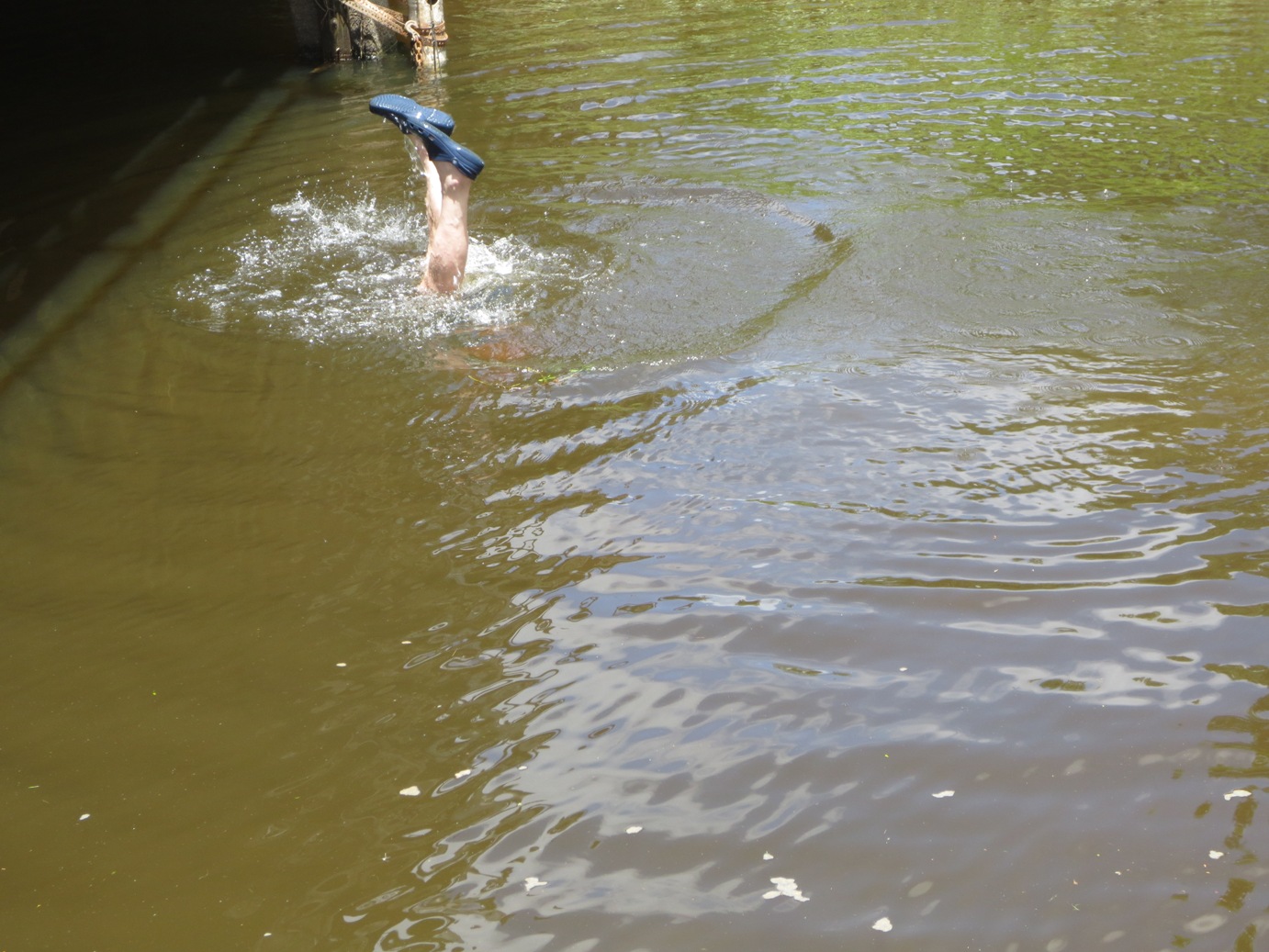
Since the site was within two miles of the coast, visiting the beach for 45 minutes was in our plan. We decided to finish sampling before going there.
Unfortunately, the elastic tube from the water sampler fell into the channel that smelled and looked like a sewer water. Because the flow was little, Dan got into the water to look for it, as he no doubt didn’t want to lose me in the yellow-green water. After several dives, it became clear it was not worth it. Soon afterwards, we were rewarded with the visit to the waters of the youngest ocean of our planet, where oceanic crust is generated and separates Eurasia from the Americas further and further. The ocean and the sky being of similar balmy faint gray-blue colors made the clouds look like they were sinking in water.
The day before July 4. Because it usually gets late by the time we arrive, we leave our samples in ice. Thursday was the day I had to filter my samples and start running the previously filtered samples, as the workings of Shimadzu UV-VIS spectrophotometer had been figured out. Basically, this machine shines ultraviolet or visible light into the sample, and graphs the amount of absorption of each wavelength. It all required a great amount of multitasking: Cleaning the individual particles used in filtering, drying them in the oven, preparing for the filtering process by assembling the filters, filtering, performing baseline with deionized water with Shimadzu, running a sample, then getting back to filtering, putting the filtered water into five different viles, naming them accordingly, adding acid, putting in the freezer, getting back to Shimadzu, running the same sample again to see if the machine is showing consistent results… then start the process again. I was telling myself that thoroughness should be my goal. My body got literally so heated that I couldn’t stand doing it more, as if I was having restless legs. Filtering was done much earlier during the day, as there were only 8 samples, thus two rounds, but somehow I got off work at 11 pm.
Lab again. Because Friday was the Independence Day, I decided to work on Sunday, so I ran Shimadzu most of the day.
Setsen is a geology major from Ulaanbaatar, Mongolia.