
Week 5:
A Lot to Digest
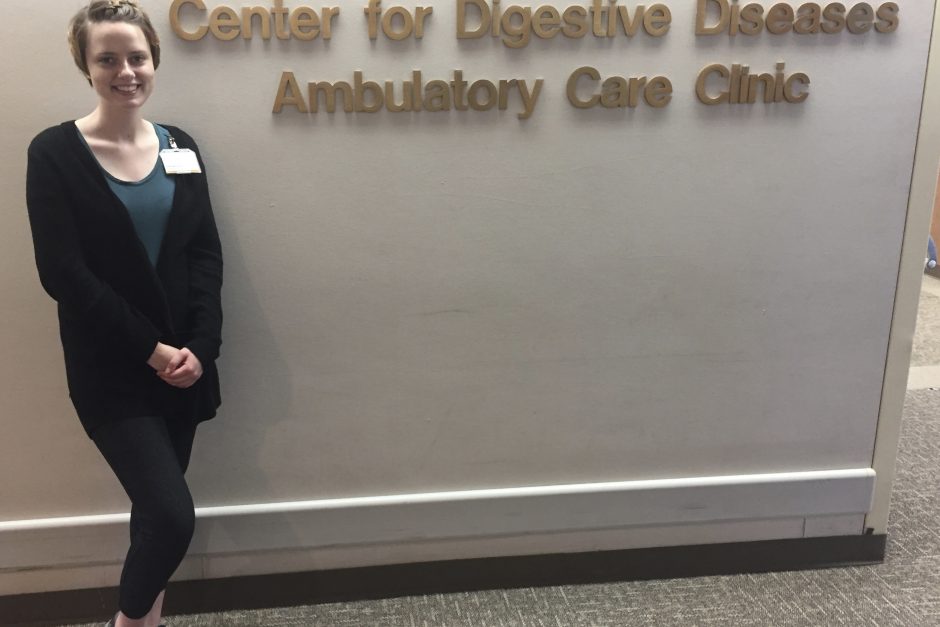
Shadowing at the digestive diseases clinic!
June 24, 2017
This week I was able to shadow a doctor in hepatology. I have some interest in gastroenterology, so this was a good opportunity for me. I saw how truly multi-faceted medicine is, no matter the department, because there are so many variables you have to look at. Even if you’re here to discuss someone’s liver, it is important to know about the other medical issues they may be having because everything is interconnected in the body. I learned about a new disease that I did not even know existed before- NASH. It means non-alcoholic fatty liver disease and is when droplets of fat are in your liver cells, and damages the liver much like heavy drinking does. NASH does not really have a lot of symptoms, and is not too concerning. Keeping a healthy weight is really all you can do to manage it.
I also learned that I do not have quite so much interest in hepatology, but more in functional gastrointestinal disorders like IBS, constipation, diarrhea, etc. While it is all interesting stuff, I’m very interested in bowel issues because they are so prevalent and can be distressing in so many people’s lives. Luckily for me, while I was shadowing in hepatology I got connected to a gastroenterologist that works more with functional GI disorders, and I will be shadowing her next week. I’m looking forward to it!
I met with Dr. Fiedorowicz this week to go over some suicide risk assessments. We always do these risk assessments with anyone in the study that scores a 3 or higher on the suicidality question on one of our interviews. In these assessments you must identify their overall risk (low, moderate, high), any factors putting them at risk as well as protective factors (what’s stopping them from taking their life), a plan to address risk factors, and the reasoning for the course of care you give the patient. Dr. Fiedorowicz has a paper about this that I have read and its main aim is at family physicians, who have a great opportunity to notice change in patients, but don’t necessarily feel prepared to identify suicide risk. Hopefully this risk assessment strategy will help physicians recognize suicide risk and save lives. This is a great example to me of how physicians need to be comfortable talking about anything, and physicians need to use their patients’ stories to help treat them. If you don’t dig deep enough, you might miss how depressed or how suicidal a patient is.
In life outside of the office, things are going well. My day to day life is simple and relaxed: get up, get ready for work (including packing a lunch), and then walk over to the hospital. Some days I eat at my desk so I can keep reading papers, others I walk over and eat in the children’s hospital and enjoy the atmosphere and big windows in the new building. After work I might exercise, or just go home and clean up and then relax. I have yet to master the art of getting all my groceries in one weekly trip; I need to work on that. I’ve also made a major realization that I do not have all that much time. I always thought that without homework, I’d have plenty of time to do everything and anything I wanted to. However, it doesn’t feel like it. Living on your own, being an adult, involves a lot of responsibilities. Cleaning an apartment, cooking, grocery shopping- that stuff takes a lot of time out of your life. Nonetheless, I enjoy the independence and it has been a great learning experience so far.


Jennifer is a double major in philosophy and biochemistry and molecular biology from Cherokee, Iowa.