
Week #1:
Bears, Bears, Bears…Oh My?
June 6, 2017
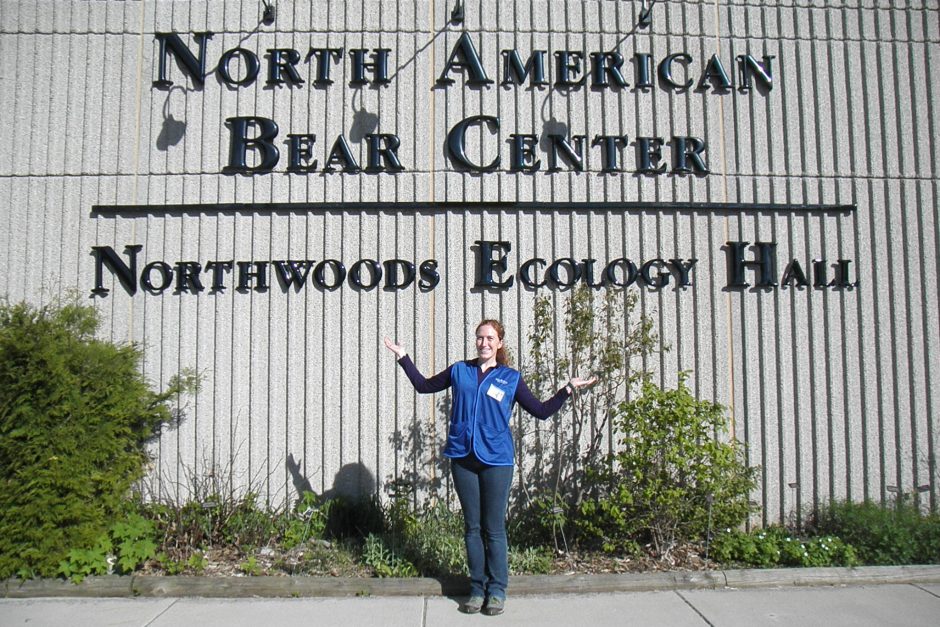
Ely, Minnesota has changed a lot since I last visited it in January when I was taking a course on Wolves and North Woods Predators. It has changed from this waist-deep snow, icicles everywhere, winter wonderland to this luscious green, “hey, there was a lake under that snow” summer paradise.
It was through my Wolves and North Woods Predators course that I was able to find out about the North American Bear Center (NABC) and how all of its information is based off of Dr. Lynn Rogers’ 50 years of black bear research. The goal of the NABC is to replace the myths and misconceptions of black bears with scientific fact.
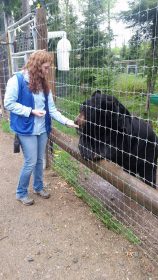
So, for my very first day the North American Bear Center, Sharon, the bear curator, wanted to show the new interns how “ferocious” these black bears really are. We hand fed them peanuts and trail mix. Their mouths and teeth never touched us, only their long (6-8 inches) sticky tongues touched our hands as they picked up their treat. One bear in particular named Holly would even pick out the pieces of trail mix she liked the best off of our hands and then leave the rest. It quickly became obvious that these were gentle bears.
We then learned how to prepare their meals, clean their enclosures, and provide stimulating enrichment. Inside the bear center, we read all about black bear ecology and more specifically we learned about our four ambassador bears at the NABC.
Bears Lucky and Ted have been with the North American Bear Center since it has opened in 2007.
Ted is the largest and oldest black bear at the NABC. This week he weighs 588 lbs, and it is said that at the end of the summer, before hibernation, he will weigh around 700 lbs. Ted is also 20 years old. To put that in perspective, wild black bears tend to live to their late-teens, but captive black bears can live to be in their 30s. Since he is an older bear, he has developed some arthritis in his front legs. To combat that, it is our duty as interns to grind up his arthritis medication and hide it in some canned tuna so he can’t taste it. Ted is a gentle giant who was born to a captive mother and has been raised in captivity.
Lucky is the youngest male bear at the NABC. He is 10 years old, and was just a cub when he arrived at the North American Bear Center in 2007. He was born to a wild mother, but was found wandering across some yards alone in Wisconsin. He was brought in to be rehabilitated, but the Wisconsin Department of Natural Resources determined he could not be released back into the wild. Unfortunately, that meant Lucky had two choices- to find a forever home or to be euthanized. At the bear center, we like to say that Lucky got his name because we are lucky to have him and he is lucky to be here.
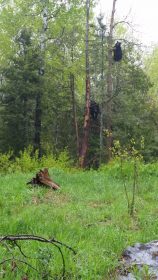
Holly is the oldest female bear at the North American Bear center. She is 4 years old and like Lucky, was also born to a wild mother. When Holly was a cub, she was separated from her mother by a large wildfire in Arkansas. A man found her and took her in since she was too small to survive on her own. He nursed her wounds and took her as a pet. Officials found out and she was sent to the Appalachian Bear Rescue in Tennessee to be rehabilitated. It was determined that she could not be released back into the wild and she was sent back to Arkansas. She was kept in a 3×5 box and given only water for 15 days as her fate was being determined- that is when the NABC heard about her situation and took her in. Holly arrived at the NABC December 2013 and went straight into hibernation and she has been with us since.
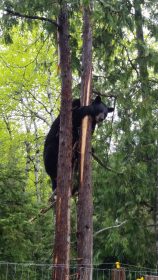
Tasha is the youngest female bear at the North American Bear Center and is only 2 years old. She will have officially been at the bear center for one year on June 6th. Tasha was also born to a wild mother. She was first found nursing on her dead mother who had been hit by a car in Kentucky. A man picked her up, realizing she wouldn’t be able to survive on her own. He took care of her and even had 50 acres of land that she could roam and he did the right thing and released her. Later, he heard about a bear causing mischief in a park. He drove down, and sure enough it was Tasha and she hopped into his truck and he took her home. Shortly thereafter the Kentucky Fish and Wildlife took Tasha since the man did not have the proper permits and licenses to keep a bear on his property. The North American Bear Center learned of the situation and Tasha has found her forever home with us.
We were able to learn their backstories, but in these coming weeks we will begin to learn each bears individual personality and form bonds with them. At the same time, we will be learning all that we can about black bear ecology. This is so we can tell stories to visitors, answers questions, and hopefully dispel some misconceptions they may have previously had about these gentle creatures.

Kelly is a biology major from Burlington, Iowa.