
Week 2 – Mating Season- Lucky Trying to Get Lucky
June 10, 2017
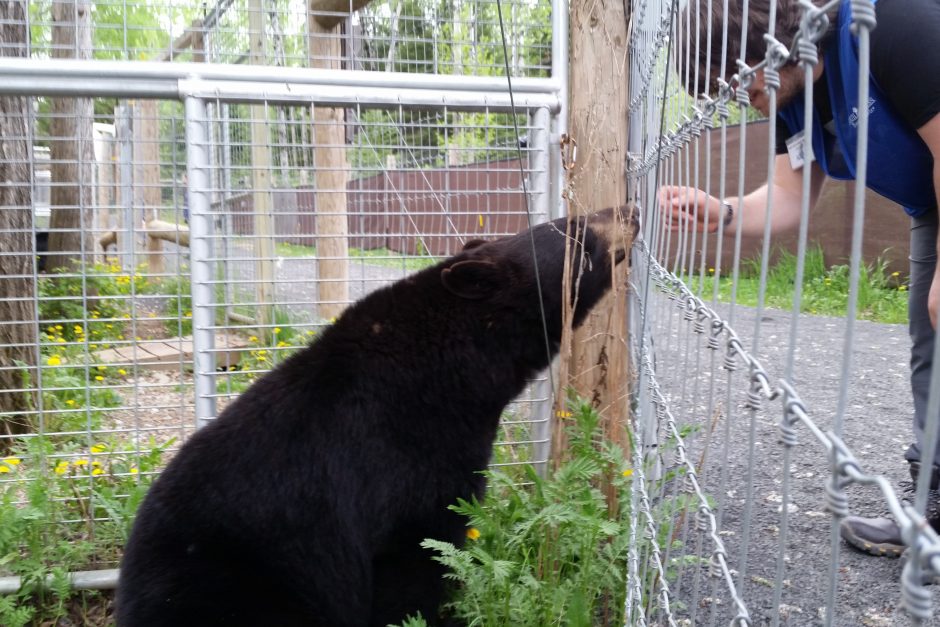
Week #2 has given us more responsibilities at the bear center. We learned about the backgrounds of the bears the first week and now we are leading behind the scenes tours every day without the help of our bear curator, Sharon, or our director of education, Judy.
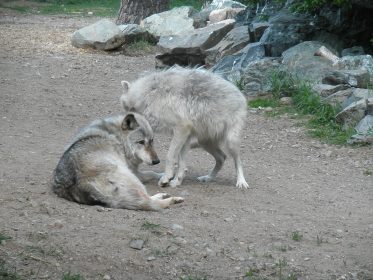
It was this past weekend that we had the last of the six bear interns show up, and as a bonding activity we went to the International Wolf Center to see the wolves be fed deer and beaver carcasses since they are only fed once a week to simulate natural feeding behavior. It was a treat to see their five ambassador wolves- two of which were arctic wolf yearlings. We also got to meet the interns at the International Wolf Center and got custard with them later in the week.
I also found inspiration at the International Wolf Center for my project at the bear center. The International Wolf Center has been open for 30 years and has this fantastic museum and the part I really liked was the folklore about wolves from different cultures around the world. The North American Bear Center has a small section about this and mentions the Ainu Bear Cult of Japan. The Ainu Bear Cult regarded bears as the mortal form of gods visiting humans and to return the god to his/her land they would hold a festival and sacrifice the god’s mortal body- the bear. The bear center also mentions how black bears are portrayed as either cuddly like Winnie the Pooh, ferocious like in hunting magazines, or as a “brother” in Native American culture. What I am going to research is the specific folklore of different countries and cultures and how they view and portray bears.
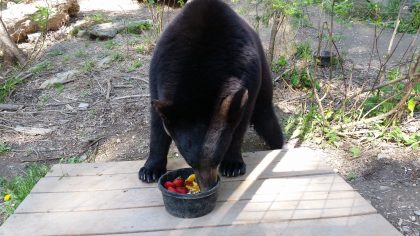
One thing we celebrated this week was Tasha’s one year anniversary at the North American Bear Center. She arrived June 6th last year. We will be celebrating all of the bears half-birthdays next week, so we didn’t do anything special for her anniversary. However, the interns celebrated by giving her a few extra treats and serving her favorite food at dinner: oranges. The oranges are so juicy that you can hear her suckle on them as she eats them.
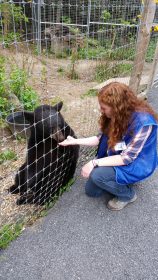
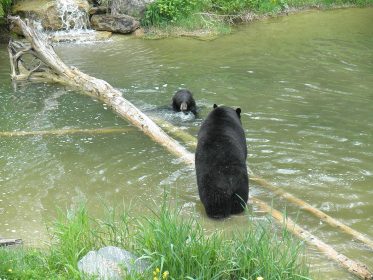
Another thing we have been noticing more this week is that it is mating season for black bears. We saw some mating behaviors last week, but it has definitely increased since the peak of mating season is in June. A little about mating season for wild black bears- it is a matriarchal society and the females are the ones who are territorial and choose their mates. This has made for interesting social dynamics among our captive bears. Holly is our 4 year-old female and female black bears are considered fully mature between the ages of 4-6. However, she first entered estrus when she was 2 years old. For the past two years, she has chosen Lucky to be her mate. Lucky is 10 years old this year, and male black bears are considered mature between the ages of 10-12. He is a castrated male and that was done when he was 4 years old in an attempt to curb his dominance tendencies over Ted, our older male bear.
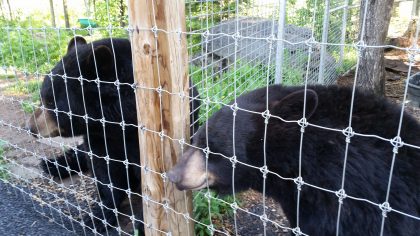
In a turn of events, Holly has rejected Lucky when she entered estrus this year and instead has chosen Ted to be her mate. Ted, however, is not interested in Holly. He seems much more interested in eating and sleeping than mating. This results with Holly being frustrated with Ted and Lucky being frustrated with Holly. Tasha, on the other hand, seems to be too young to have entered estrus this year and is still figuring out her place among the other bears.
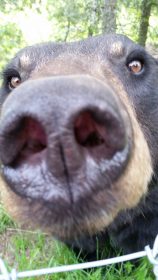
We started doing “critter time” this week in the North Woods Ecology Hall portion of the North American Bear Center, and I find it funny that I came to Ely to work with black bears, and I am still working with turtles! Okay, not ornate box turtles like I did last summer with Dr. Andy McCollum, but painted turtles. I teach the visitors about the turtles native to Northern Minnesota. Other interns caught wood frogs and mink frogs for the exhibit and we also have a large aquarium full of native fish species.
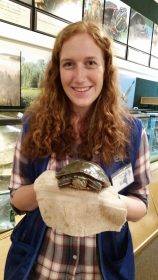

Kelly is a biology major from Burlington, Iowa.