
Week 1:
Into the Jungle
June 23, 2018
Amazon Learning
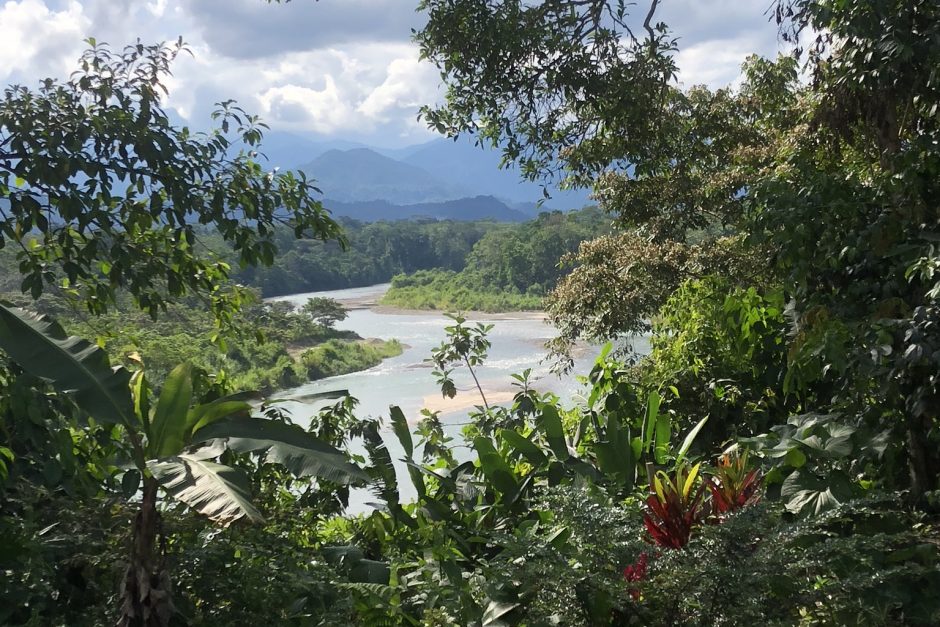
As someone who wants to work with herbal medicine, there’s hardly anyplace more exciting than the Amazon rainforest. Twenty-five percent of western pharmaceuticals come from Amazonian plant compounds, and there are many more to be discovered. Thanks to Cornell Fellows and the Amazon Learning ethnobotany internship, I’m in Ecuador’s rainforest, learning from shamans, midwives, and expert rainforest farmers, including my host dad. For the first week, I am settling in, and learning a little more Spanish every day, and preparing for the work ahead of me.
“Orient”ation
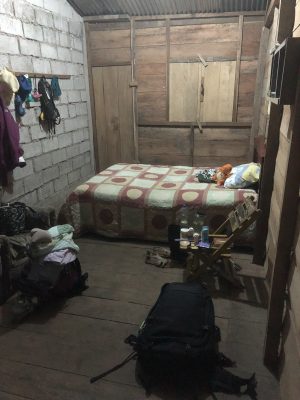
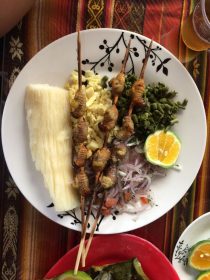
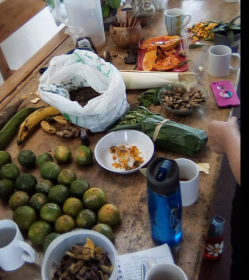
Amazon Learning is based in the city of Tena, in the orient (or east) region of Ecuador, which houses the country’s portion of the Amazon rainforest. Though Tena is a concrete, mostly tree-less place, our orientation leaders, Andy Gavilanes and Mika D’amico gave us a thorough taste of the jungle around us… literally!
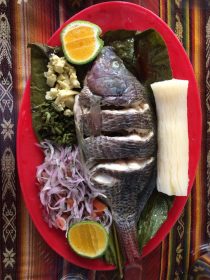
Other orientation activities:
- Discussions about Ecuador and the Amazon
- Explored Tena and the neighboring town of Archidona in a scavenger hunt
- Discussion of the stretch zone, where one is brought out of their comfort zone to grow from challenges, but not challenges difficult enough to enter the panic zone
- Discussion about risk management and the culture of the people here
- Tools to deal with culture shock
- How to avoid getting the “white savior” complex; we are here to collaborate and share cultures with the Kichwa people, not to rescue them
Favorite Moment Yet
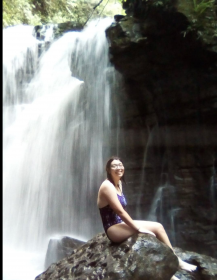
On the second day of orientation, we entered the rainforest for the first time, led by Carmen, a Kichwa staff member. Our destination was a waterfall several yards wide, enclosed by walls of black rock, and pouring into a pool at the bottom that trickled away in a stream. It didn’t seem that loud at first, but then I got closer, and the cascade overwhelmed all of my senses. The chilly mist blowing onto my skin was a stark contrast from the hot sweat that appeared on the way there, smelling fresh and dazzling my eyes, the sound of pounding water filling my ears. It was as if I were held there, spellbound with awe, and it seemed to me that the waterfall was alive. It was at that moment that I understood the appeal of the rainforest, even if I had known it in my mind before.
Kichwa Life
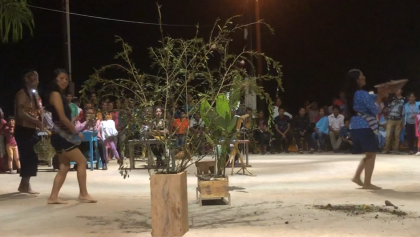
After three days packed with information and experiences, it was time to go to our host families and begin our internships. My family lives in the small town of San Louis, but we found my host dad, Clemente, speaking at an event in a neighboring village with his wife, Elena, and his 7-year-old daughter, Sofia. It turns out that it was the town’s beauty queen contest, a Kichwa tradition, and I got to see various dances in traditional clothing and hear a lot of Kichwa music.
The next day, I went to my host dad’s chakra (forest garden). These gardens are the epitome of sustainable agriculture in the tropics, and Clemente’s is famous for its size, variety, and skillful arrangement. To my western eye, used to seeing neat monoculture rows, it looked like it had hardly been arranged at all, simply a forest cleared of a handful of trees to allow the undergrowth to flourish. In reality, nearly everything in it had been planted by hand, according to what conditions and what neighbors each plant needed.
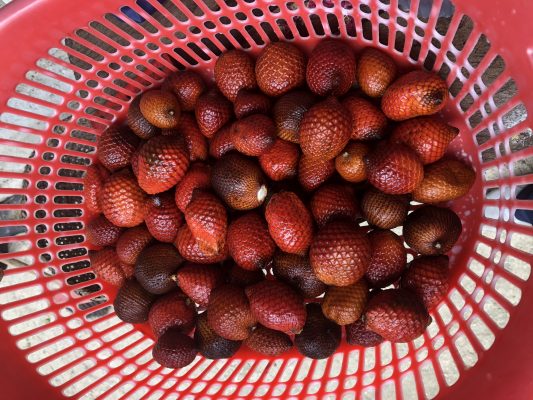
When we had gathered everything we needed, Elena gave me two strange fruits to try. Both looked like they were covered in small dragon scales, one red and one brown. The insides looked like garlic cloves, and the brown one tasted like strawberries, the red one tasting like candy.
Elena carried the gathered produce in a large basket hanging on her back by a strap on her forehead. She and/or Clemente make the laborious 20+ minute trip back from the chakra every day. “It hurts my head, my neck, and my back”, my host mom told me when I asked her about the weight of the basket. With a frown, I realized that most of this pain and effort could be avoided with something I thought basically everyone owned: a car. But given the fact that their new “flatscreen t.v.” appears to be your standard desktop monitor, I guessed that cars were out of Clemente’s financial realm for now.
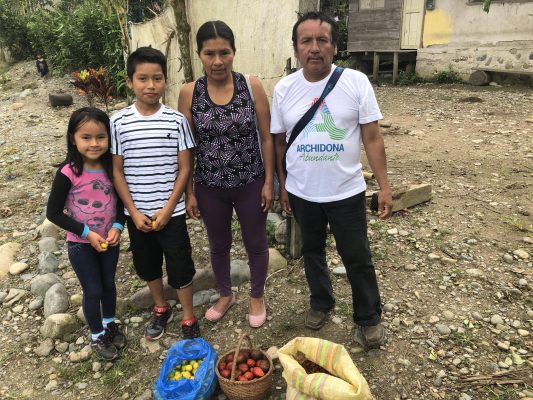
Clemente is an entrepreneur, hoping to create a rainforest product that he can market worldwide and support his family with. Because of fees and price drops imposed by middlemen, it’s hard for farmers in the area to make decent money, even if they have as much to sell as Clemente does. As he teaches me about the rainforest plants, I’m hoping that I can bring him knowledge of the traditional medicine market in the United States so that he can choose a product that will make it in the growing herbal trend.
April is an herbalism major from Hanover, Minnesota.