
Week 2:
Adopt the Pace of Nature, Her Secret is Patience
July 2, 2018
Title Quote by Ralph Waldo Emerson
Ecuadorians often don’t have the best sense of time. If someone here says that they’ll be somewhere at noon, you can expect them at 12:15 if you’re lucky, more likely 12:30 or 1 pm. If you’re unlucky, you’ll be waiting longer. I was particularly “unlucky” this morning when I woke up from a nap at 10:30 am, expecting my ride to show up at any moment and take me into Tena. However, I ended up waiting until 11:45 for him to get there, another hour as he introduced some potential collaborators to my host dad, and even longer as he ran some errands and asked for help loading quite a lot of material into his truck. It was around 2 pm when I finally set off into the streets of Tena, searching for lunch.
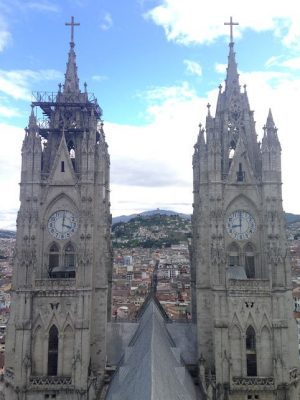
Tena is a rather large city, or at least it seems so on foot. Nearly every street is lined with shops, and for someone with as poor a sense of direction as me, it’s easy to get lost. People on the street are almost always friendly enough to give directions, but Ecuadorian directions tend to be as precise as their sense of time, even when you can understand all of the Spanish. It requires patience and a clear, calm head to navigate successfully here.
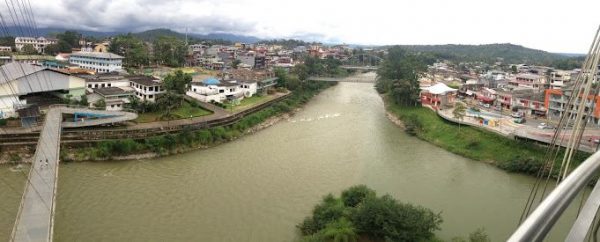
When I get home from being in the city, sometimes I find that my family is out and the doors are locked. The first time this happened, I waited for two hours for them to get home from the market. I checked to see if my hanging laundry was dry (nope, will be damp for another day), I pet the dog, I splashed myself with water from the “sink” to erase the midday sweat, I tried to tie my hair up with a strip of a leaf… now I leave my window unlocked; even when it’s closed, so I can hop into my room through there when I get locked out. My host family and I had a good laugh about the first time I “broke into the house” that way.
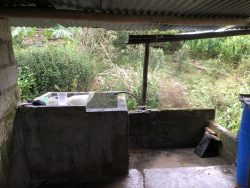
Then there is the slowness of rural living, which can be infuriating if you have a western mindset. I always want to be efficient and get things done and find myself frustrated with the extra time it takes to get to a shop or even to a cell signal, the extra time it takes to get to hand-wash and air-dry clothes, and the unhurried pace of the inhabitants. A few days ago, the stove blew out and my host mom had to cook dinner over a fire (thankfully, there is an area prepared for this purpose, which my host dad calls the second kitchen). We won’t eat until midnight, my host mom joked. But dinner didn’t end up being much later than usual and tasted as good as usual too.
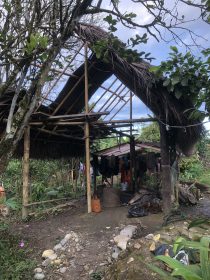
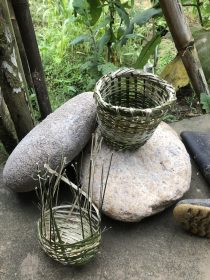
Learning also takes patience. My first basket made under my host mom’s teaching ended up looking more like a boat, and would not stand upright (it wouldn’t float either). The second basket, I had to start over three times. But it seems third time’s the charm.
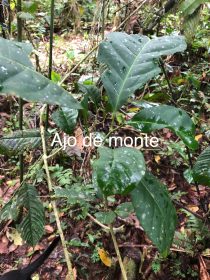
The rain has kept us from going out to the forest garden much except for doing the essential harvesting for my family to make a living, so I have only been out on a learning excursion once so far. We walked around the forest for around two hours, stopping every couple of yards so Clemente could tell me about a new plant. I took some pictures and labeled them with their names, but the sheer number of useful plants was overwhelming, and I can tell that it will take many more excursions for me to take everything in, with voice recordings to translate and make notes.
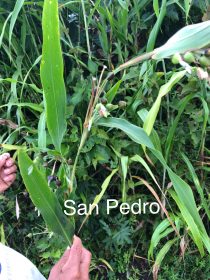
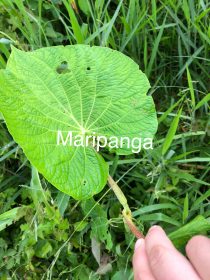
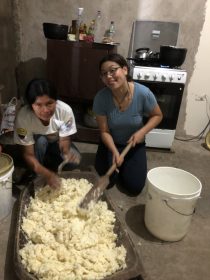
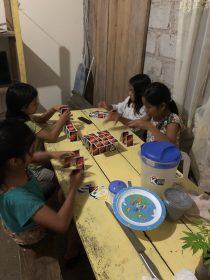
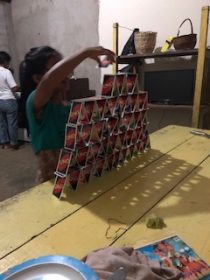
This week, most of the things I’ve done are not related to my rainforest medicine project, but they have been equally valuable. I’ve chatted with locals, helped with cooking, and taught my host sister and her young relatives how to play Uno (afterward, one girl made a card house using the whole deck!). And most of all, I have been testing my patience. Thankfully, I have passed the test, and am confident that I can make it through the rest of my time in the rainforest without going crazy! All good things come with time, and I am excited for the dry season, which is supposed to be around a week away.

April is an herbalism major from Hanover, Minnesota.