
Week 4:
The Healers
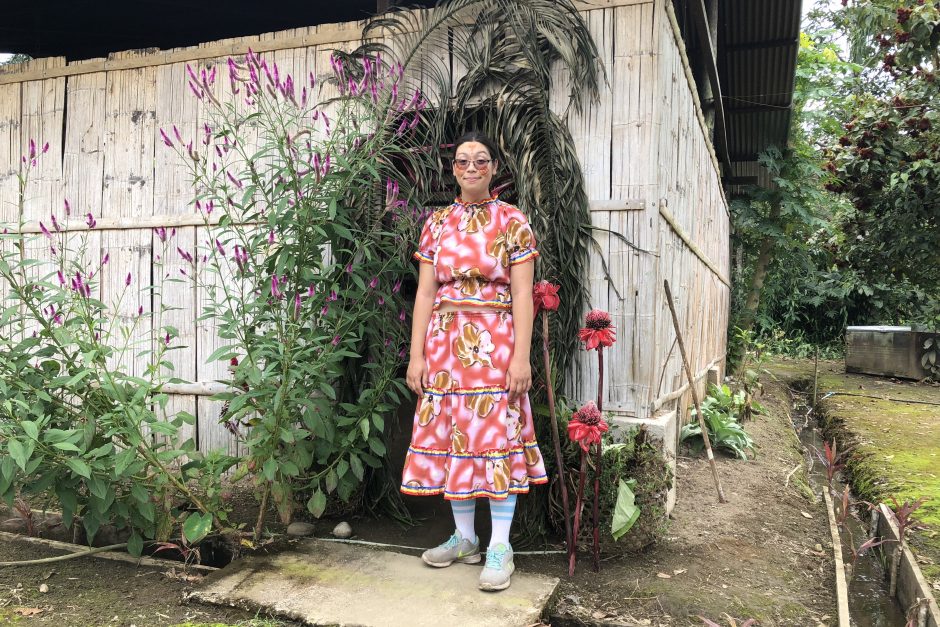
Me dressed up in a Kichwa outfit for a tourist event at Amu Pakin
July 15, 2018
This has definitely been the best week here yet! I got cleansed by a shaman, made salves out of Amazonian plants, started volunteering at the local midwives’ association, and made friends with my host sister and her niece.
Shamanism runs in the family. My host mom Elena’s brother and my host dad Clemente’s two brothers are shamans, and their son Roger was also trained by his grandpa. I had a couple of meetings set up already, but they fell through. So my host parents asked Roger to come and perform an act of shamanism for me.
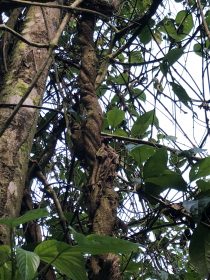
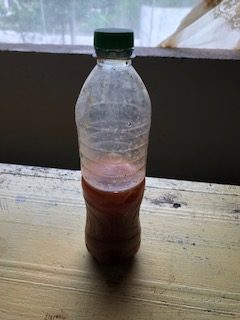
Amazonian shamanism revolves around one plant: ayahuasca. This spiraling vine has been used for centuries to induce visions that inspire ideas for the future, lead healers to new medicinal plants, and help heal both the shaman and the patient. I have wanted to see an ayahuasca ceremony since I first learned about it, and finally got to. Elena and I took segments of the vine and scraped the bark off. Then we broke them and pulled them apart like string cheese to make smaller pieces. These pieces we put in a pot of water with the leaves of two other plants (amiruka and charipanga) and boiled them for an hour. The result was a bright orange liquid.
Roger braced himself, downed the small cup with one swig, and exhaled slowly, grimacing. Ayahuasca is extremely bitter. He chased it with ventishinco, the local moonshine, and sat with his elbows on his knees, waiting. While we waited, Clemente explained more about shamanism. As with his family, it’s usually passed down from generation to generation, though people outside of shaman families may learn too. However, training is very difficult, as it requires LOTS of self-control. The student must diet, abstain from sex, and smoke tobacco every day.
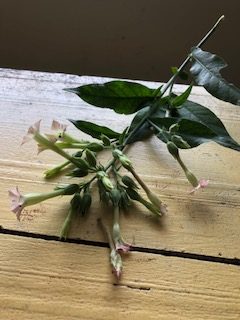
Clemente turned off the lights. After a few moments of silence, Roger took a bundle of dried leaves and brushed it over his torso. He began to shake the leaves, whistling in time with each shake, a steady tempo. He did this for a couple of minutes, then slowly lowered the leaves, rattling them and making a “shhh” noise. Clemente told me that he was asking the spirits of the mountain and the forest for help. Roger repeated his shaking and whistling twice more, and on the third time, he started singing in deep, trembling tones. When he finished his song, Clemente asked me if I wanted to be cleansed. “Si.” It’s for good luck.
Roger shook the leaves rhythmically above my head, singing again. Every once in a while he would brush the leaves over my torso and my knees. He did this for a few minutes, and I wondered how his experience was. Did he see any visions? How did he feel? I knew this was only the tip of the iceberg in my investigation of shamanism.
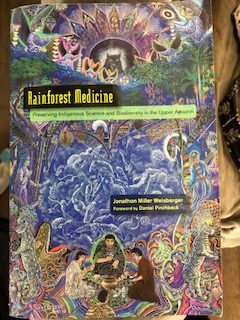
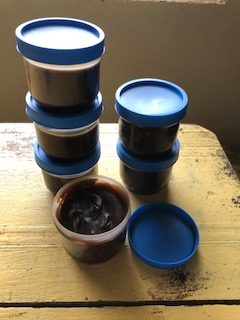
My next milestone is the exchange of herbal knowledge in the making of salves and tinctures (herbal ointments and alcohol extracts). My host parents know the medicinal actions of all the plants in the chakra, but had no way to market them because of the short shelf life. I know how to make herbal extracts, but don’t know what the plants here are used for. So, my host parents tell me what the plants do, and I make extracts with a shelf life of a year or longer that they can sell at the market. With the techniques I’m teaching them, they can continue to make money off of their chakra medicinals long after I’m gone, and I’m learning a lot faster now that I’m applying my new knowledge in a useful way.
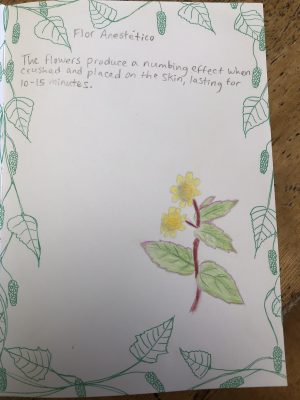
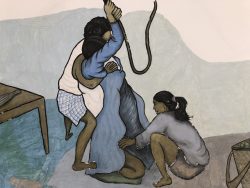
I’ve found a second place to use my medicine-making skills: Amu Pakin, a pregnancy/birth center supported by the red cross and run by Kichwa midwives. Traditional Kichwa births are especially unique because the mother will hang onto a rope coming down from the ceiling and the midwives try to hold her up off of the ground.
I was there visiting Alexis, a fellow intern through Amazon Learning, and she mentioned that Amu Pakin just remodeled their laboratory, and maybe I could work there. After some investigation, we learned that the laboratory was for making herbal medicines, but nobody knew how to make anything besides tea. They were delighted to hear that I have useful knowledge to share and some free time, so we arranged for me to come every Tuesday and Thursday.
While I was there, a patient came in. She wasn’t pregnant, but had a baby with her and was clearly in distress, her eyelids drooping and her hair messy. She had a fever, a headache, and her breasts wouldn’t give milk to her baby. The midwives recorded these symptoms on an intake form, along with “mal are”, or bad aura. They hurried to gather leaves for a cleansing, which also involved the head midwife spitting an herbal tea onto the patient, and a bowl of tree wax burning and sending pine-like fumes up over the patient. The midwives also gave her some ginger to chew and rubbed her breasts with an herbal cream. I’m excited to see how these women’s herbal knowledge differs from my host parents’ and to see in person how they use their knowledge to heal.
* * * * * * * * * *
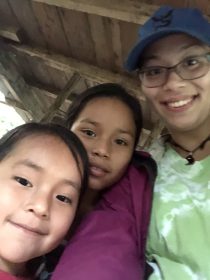
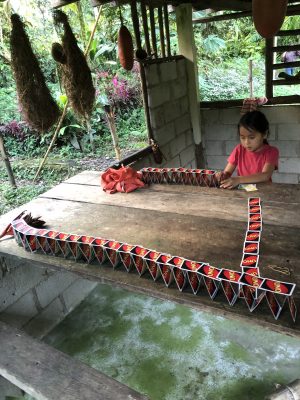
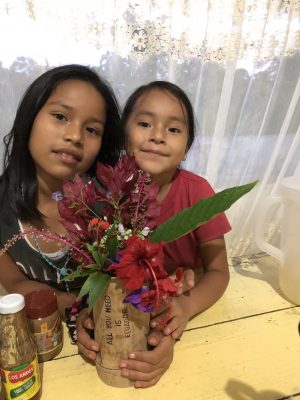
Meanwhile, I’m growing a lot closer to my host sister and niece. They remind me of when my own sister was little, and are always asking me to play Uno or dolls with them. I’m feeling very at home here and hope to cherish the rest of my time before I leave.

April is an herbalism major from Hanover, Minnesota.