
Week 3:
On the Trail
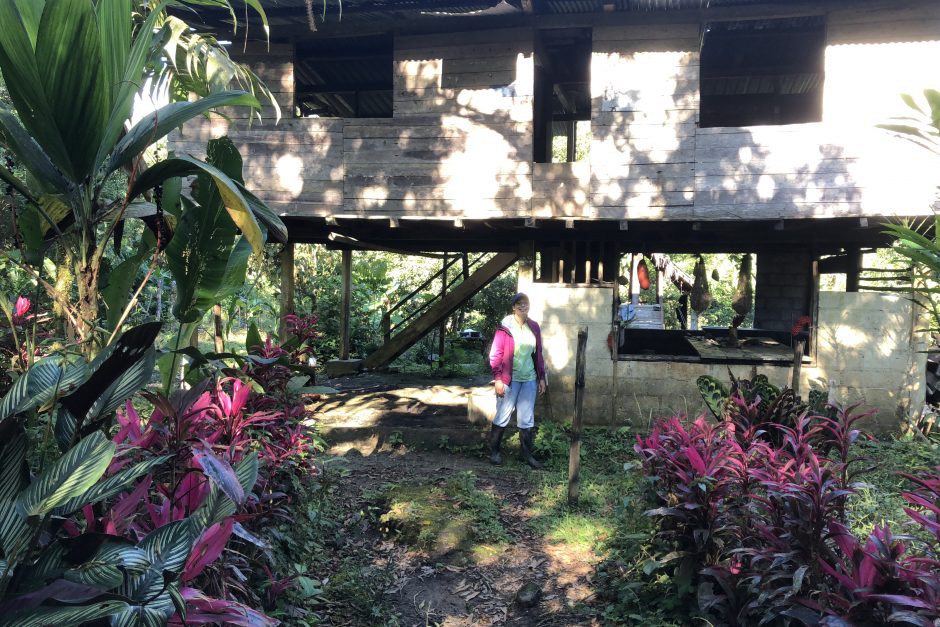
Me in front of my host family's old house, in their chakra.
July 9, 2018
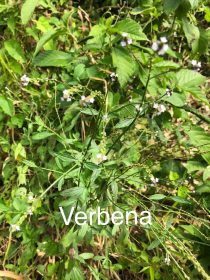
After a couple weeks of acclimatizing and patience, I’m starting to make some real progress on my internship projects, and have a good trajectory to keep accelerating. My main project is to make a little encyclopedia of the useful plants that my host family have in their chakra (forest farm). There is a medicine section, a food section, and a building materials/other section, and each entry will detail the use of the plant and have a picture. This will “immortalize” my learning so that I always have a reference to go back to when I forget about a certain plant and will be a good record for my host family to readily show what products they have. This is important because there are people interested in marketing Clemente’s (my host dad) products online, but when asked how many kinds of plants he has, all he says is “bastantes” (one of my host family’s favorite words, which often translates to “many”).
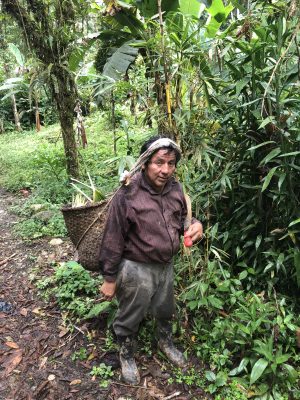
My host parents have introduced me to plenty of their products by now. They have tons of yuca (a starchy tuber), plantain, and naranjilla (which is really more like a tomato than an orange, as the Spanish name suggests). They also have many other foods, such as cacao, sala, Amazonian lemons (which look like limes on the outside), Amazonian limes (which are more like really bland grapefruits), and pineapples.
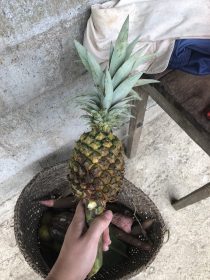
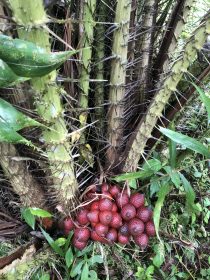
Besides food, there are several types of plants used for building or crafting, and dozens of medicinal plants in the chakra.
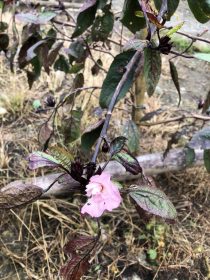
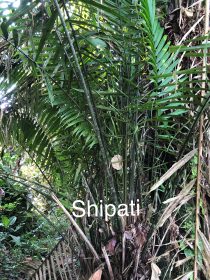
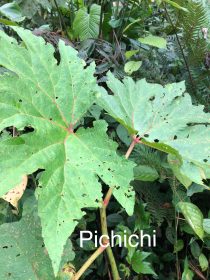
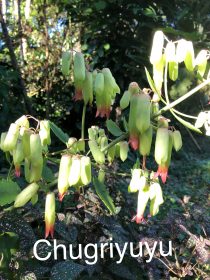
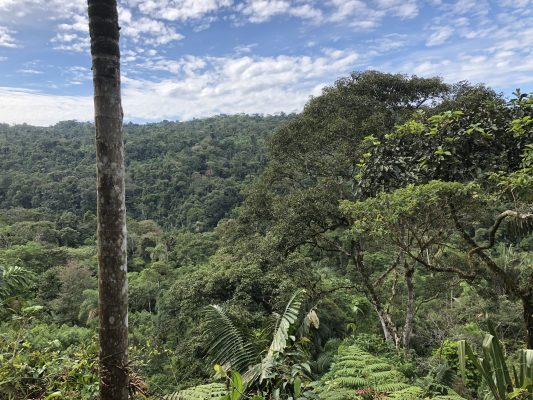
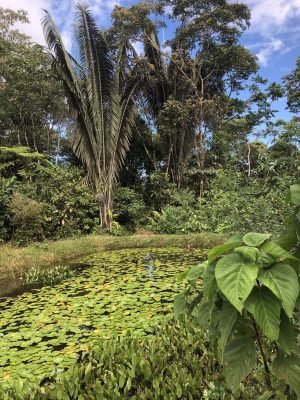
Clemente has spent most of his life working in this chakra, and the innumerable hours he has put into it translate into what any botanist would call a work of art. With a dozen hectares (1 hectare = 100m x 100m) in a large range of altitude, he has arranged everything just-so, but with plenty of strips of natural forest intertwined inside. Yuca, a highly sustainable crop (if not very healthy), is harvested and re-planted here every 4-6 months in four different plots, so that they have a year-round supply. After a couple of re-plantings, the plot lies fallow for 7 years so the forest around it can regrow and the bamboo leaves fall to add nutrients back into the soil.
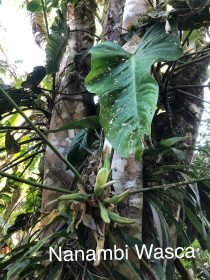
The chakra is managed on both a hectare-level and a tree-to-tree level. The number of other species of plants growing on one tree never ceases to astound me, and Clemente takes advantage of these inter-species relations by cultivating several types of vines and epiphytes (treetop plants), including vanilla.
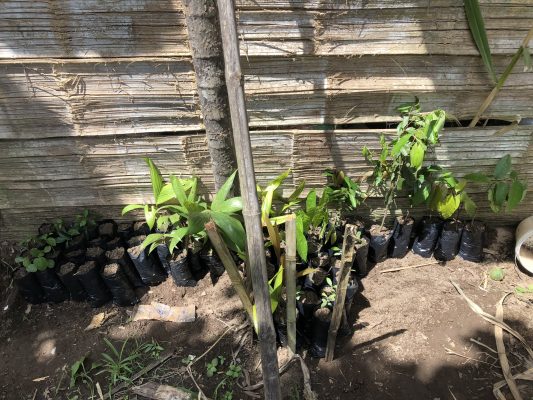
He also knows where to find all of the different trees, and has cared for most of them since they were just seeds.
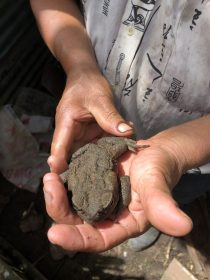
Besides plants, there are also a few fish ponds in the chakra, with different species of native fish. Sometimes they find tadpoles and baby frogs there and keep them in a small hut by the house until they’re big enough to cook.
Given the immensity of this food-filled paradise, I consider it an accomplishment that I can now identify many of the plants there. Although there are still dozens to learn about, Clemente is already commenting on how I’ll need to move on to a protected park or some other area to learn about more when I memorize all of the ones here. Thankfully, even if I do somehow become a local plant know-it-all before this internship is over, I have other projects. I have plans to meet with a shaman soon to learn about their methods of healing, and thought of ideas on how to make extracts from the medicinal plants that Clemente can market with his produce. I’m on the trail to a very successful internship experience, and learning about all the plants that grow along with it!

April is an herbalism major from Hanover, Minnesota.