
Week 1:
Return to Boston
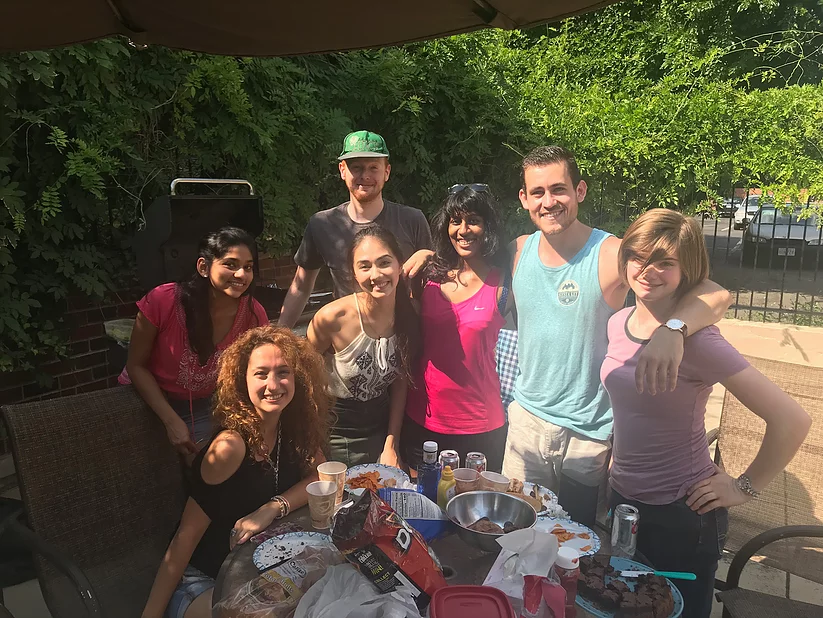
The members of the Nowarski lab (plus Max) enjoying our 2018 end-of-summer party. From left to right: Mukta Wagh (research trainee), Ökyü Ay (visiting medical student), Lauren Arcinas (research trainee), Max Klapholz (Anderson lab), Kisha Sivanathan (postdoctoral fellow), Joey Rone (lab manager), and Margaret Turner (me).
May 26, 2019
Back to the Nowarski Lab
In 2018, I was accepted to Harvard Medical School’s Undergraduate Immunology Summer Program. I spent ten weeks in Dr. Roni Nowarski‘s lab, where I had the unique experience of working with brilliant (but understanding) coworkers, cutting-edge biomedical technology, and hundreds upon hundreds of mice. Through the support of the Cornell College Fellows Program, I have returned to Dr. Nowarski’s lab to continue my work.
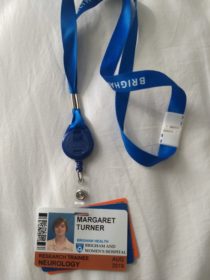
Coming back to the Nowarski lab felt like meeting up with a friend you haven’t seen in a long time. Seeing the signposts for Brigham and Women’s Hospital filled me with giddy excitement. I spent the first day struggling to keep a huge grin off my face. If this was a movie, a sweeping orchestral score would have started playing when I walked into the lab. It may sound cheesy, but there’s really no overstating how happy I am to be here.
My training from last summer has helped me hit the ground running this week. While our postdoc, Kisha is on holiday in Malaysia, it is just me and our lab manager, Joey at the bench. There is a lot of work to be done, so I am doing my best to pick up the slack. I find myself pleasantly surprised by how much I remember from last summer. An undergrad actually being useful in the lab may seem like an oxymoron. Of course, I still have a lot to learn.
Our lab studies inflammatory diseases with an emphasis on colitis. We map the chemical messengers (called “cytokines”) sent between the immune system and other body cells during inflammation. Through this, we can evaluate the role of each cytokine. Does it contribute to inflammation? Does it protect against inflammation? Eventually, these cytokines and their receptors may become targets for the treatment of these diseases. In future weeks, I’ll explain more about how our lab does this work.
Settling in
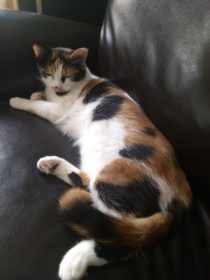
For housing, I am staying with Claudine, an industry scientist at the nearby research branch of pharmaceutical giant, Novartis. You might have recently heard of Novartis through the FDA approval of their gene therapy treatment for spinal muscular atrophy. Claudine has been happy to talk to me about career options for scientists outside of academia. She also has an eight-month-old kitten named Ethie.
I have spent the last two summers in research programs, and finding housing for three months has always been a challenge. I was lucky to find Claudine. Her insight into the research environment in the biotech and pharmaceutical industries is invaluable. Beyond that, she is a considerate and caring person. As every college student knows, moving in with a stranger is a roll of the dice. Fortunately, this one worked out well.
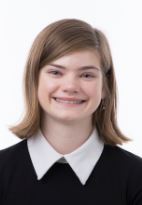
Margaret is a biochemistry and molecular biology major from Longmont, Colorado.