
Week 1:
A Pandemic Can’t Stop Me
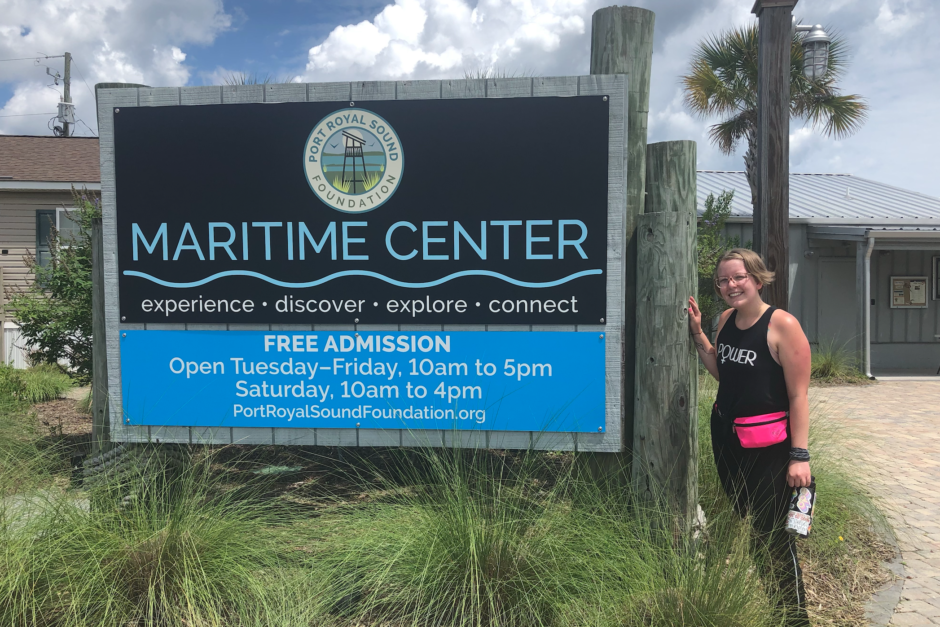
A picture in front of the Port Royal Sound Foundation after a sweaty hike through the nearby maritime forest
June 12, 2020
Most years, the Rogers Fellow in Environmental Studies heads to Columbia, South Carolina to work at the Baruch Marine Institute there. This year though, COVID-19 had a different idea. When I found out that this lab could not bring in undergraduate researchers for the summer, I was upset about losing the opportunity. Luckily, a team of wonderful professors, Berry Career Institute staff, and alumni worked with me to secure a new internship at the University of South Carolina Beaufort (USCB). I would be working with Dr. Pettay in his lab, examining primary production in estuaries, as well as assisting with numerous other projects he hoped to facilitate. This opportunity presented itself quickly and moved ahead just as fast, and while at first it was a little overwhelming, I was beyond excited to get started.
Before I knew it, I had driven about 17 hours from Iowa City, Iowa and was settling into my apartment in Beaufort, South Carolina. Even with the nerves of being in a completely new state about to start a brand new internship (and during a global pandemic no less!), I could not help but take in the warm, humid air while sitting on my porch and admiring the beauty of coastal South Carolina. In order to be as safe as possible, Dr. Pettay had me and Lindsey, the other USCB undergrad working in his lab this summer, spend most of the week working from home, ensuring everyone was feeling healthy after their travels.
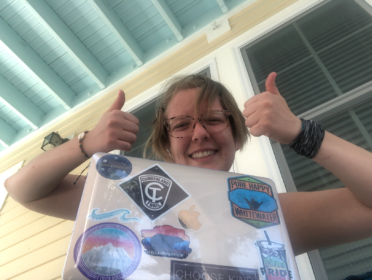
I read several research papers to give me a background on the estuary ecosystem in South Carolina, primary producers like microalgae and phytoplankton in these ecosystems, and why we would want to study them at all. While reading papers is rarely the most exciting aspect of research, it certainly helped to be surrounded by the very same estuaries and marine ecosystems I was reading about. Throughout the week, I had video calls with Dr. Pettay and Lindsey to discuss these papers and plan for the weeks to come.
Looking ahead to the rest of summer, Dr. Pettay hopes to have us assist on many projects involving water quality, primary production, and other important features of marine ecosystems in the area so we can experience a wide range of what research in the marine biology field looks like. I am particularly excited about our relationship with the Port Royal Sound Foundation this summer, a nonprofit organization that focuses on conservation, education, and outreach in relation to the Port Royal Sound area in which I am situated. Our big goal working with this organization this summer is to set up a citizen science program that uses volunteers to collect water quality data that will continue and expand in the years to come.
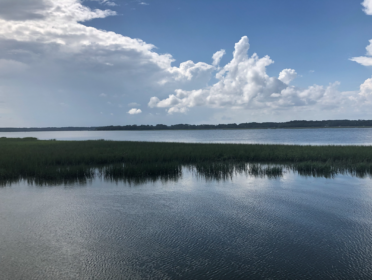
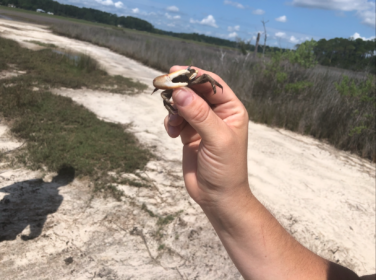
By far the most exciting day this week was when Dr. Pettay, Lindsey, and I got an exclusive tour of the organization. We first met up with the two naturalists there, Chris and Jess, who gave us a tour of the center and explained the work they do. This was followed by a meeting with the five of us, as well as the director of the nonprofit and someone from the board of trustees. Together we discussed how to go about creating the citizen science program, and it was very exciting and affirming to be included in this discussion. In the future, I would love to work in a nonprofit with similar goals and objectives, and to be able to get a behind-the-scenes glimpse of how they function was intriguing for me. To end the day, Chris and Jess led us on a hike through a portion of the 10-acres of maritime forest that the organization owns. This whole experience was beautiful and educational, but the thing that surprised me the most was the number of crabs scuttling around everywhere in this maritime forest and the salt marshes surrounding it. It was a challenge to not crush them with every step. That’s definitely not something I see in Iowa!
Overall, I am looking forward to beginning setting up the lab and starting field research in the weeks to come, but at least for this weekend, I will enjoy exploring Beaufort, South Carolina and everything it offers.
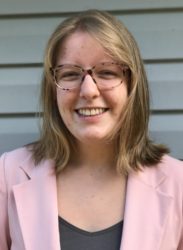
Kat is an environmental studies and Spanish major from Iowa City, Iowa.