
Week 2:
A Slow Start
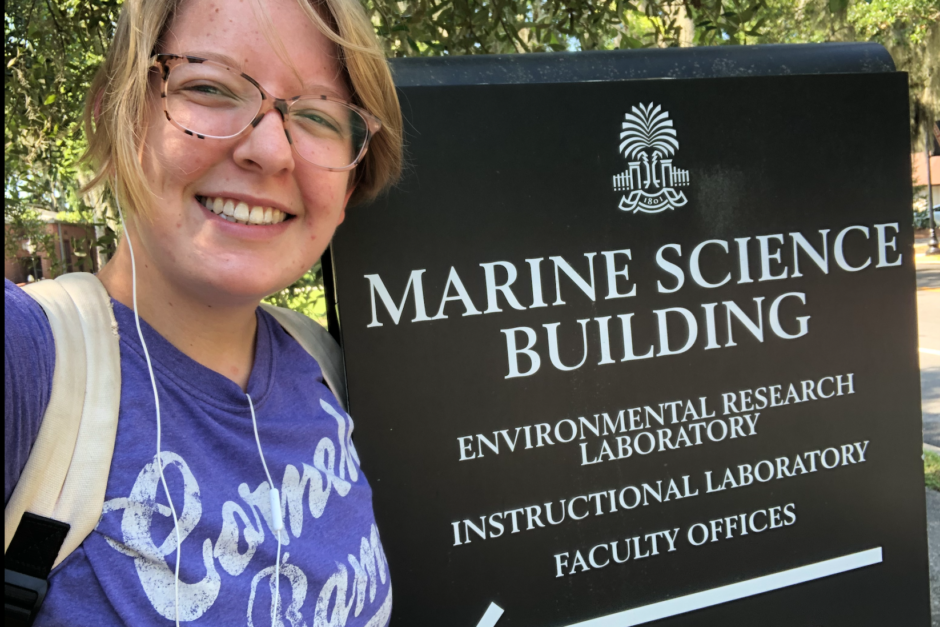
Proud to rep Cornell at the lab where I spent most of my week
June 19, 2020
This week I got to spend much more time with Dr. Pettay and Lindsey in the lab, which I definitely prefer over working alone in my apartment. Dr. Pettay is relatively new to the campus at USCB, and therefore his lab is just getting started. Most of our time was spent unpacking boxes, organizing materials, and setting up the lab. Most of this work was meant to be done in the spring, but the pandemic pushed back this timeline, and so now we are spending time ordering materials and preparing the lab before we can really dive into the field work and water sample analysis we are going to do. While it is unfortunate that it is taking longer to get into the field than we anticipated, it has also been a very authentic window into the behind-the-scenes reality of a lab. It has also given me some more time to read more research papers and discuss with Dr. Pettay about the ecosystem we are preparing to study, which makes the future of our research a lot more interesting and a lot less intimidating.
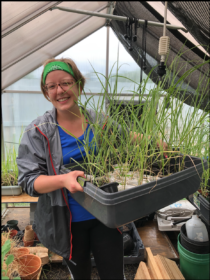
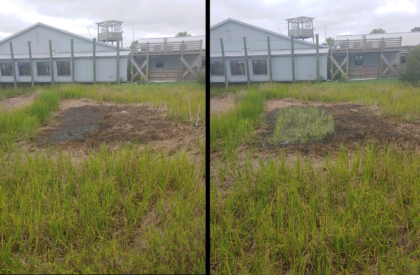
When we weren’t working in the lab, Lindsey and I got to spend some more time working at the Port Royal Sound Foundation. This week, our task was restoring spartina grass to the salt marsh. This work entailed trudging ankle-deep through the smelly mud to rake back layers of dead grass in order to plant new grass- aided of course by the many, many crabs I mentioned in my previous post. This is part of a program known as Seeds to Shoreline, in which elementary schools take seeds gathered from plants, start their growth, and then plant them again in an effort to bolster salt marsh ecosystems. This year, the students unfortunately could not be a part of this final step, but I am proud to be a part of this program that engages young kids with their environment and encourages them to care about the health of the world around them.
During this time at the Foundation, I also got to spend more time talking with Chris, one of the naturalists there. Lindsey and I spoke with him about careers in the scientific field, more specifically environmental science, and what his current job looks like. I learned a lot from this discussion, particularly by being able to put words to the type of job I would like to pursue in the future. As a naturalist at a nonprofit, Chris does some research and conservation in the area, but also helps to create programming for the community, do educational outreach, as well as whatever other odd jobs need done. For a long time, I have struggled to put words to what type of work I would like to do with my environmental studies degree, and this was a really encouraging discussion. I love the idea of continuing research-based work, while still participating in community as well. After all, a huge part of any kind of science is connecting knowledge to the communities affected by it. Now, thanks to this conversation, I have a much better idea of how to search for the types of job I am interested in and where to find them, as well as a personal connection to someone in the field.
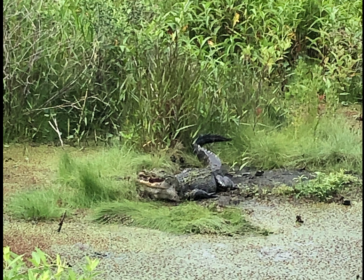
Finally, when I wasn’t working, I was embracing the opportunity to continue exploring what South Carolina has to offer. Maybe my favorite excursion so far was to the Cypress Wetlands, where I was able to see multiple alligators sunning, swimming, and eating in their natural habitat. While I will be working on and near water a lot this summer, our focus is on saltwater ecosystems, so I likely won’t encounter these freshwater reptiles outside of intentional trips like this- don’t worry Mom!
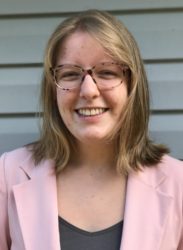
Kat is an environmental studies and Spanish major from Iowa City, Iowa.