
Week 4:
Handling Raptors
June 23, 2021
This week I spent a lot of time handling almost all of the raptors we have on-site. I really enjoy handling them. I learn something new about each raptor we have on-site each day. I learned how to hold each raptor in the following order: Omaha the American Kestrel, Little Horn the Eastern Screech Owl, Serelle the American Kestrel, Zorro the Gyrfalcon, Boreas the Red-Tailed Hawk, Wannago the Great Horned Owl, Fennamare the Barn Owl, Aura the Turkey Vulture, Saguaro the Harris’s Hawk, Duchess the other Great Horned Owl, Cypress the Barred Owl, and Killy the American Kestrel. Each bird is very different from one another and they all have their own personalities. The behavior and personalities of each raptor help us determine whether or not they are fit to take on programs along with how well they are trained.
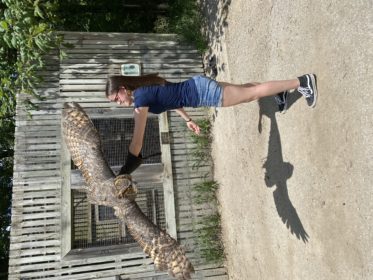
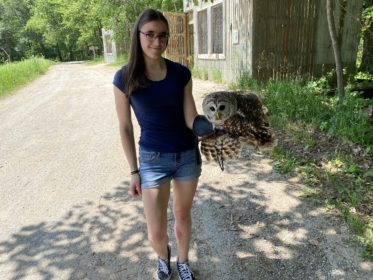
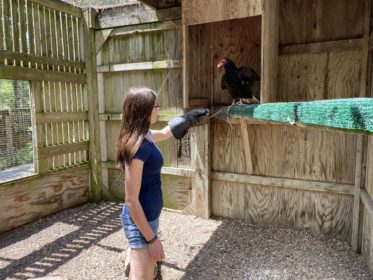
We went to two programs this week. The first program we went to was at the Fairfax library presenting the birds to kids and parents. While there, we presented Serelle, Omaha, Saguaro, Boreas, and Wannago. We also visited Prairie Elementary School to present our second program. At Prairie, we presented Zorro, Little Horn, Saguaro, and Fennamare. It was fun to see how excited the kids got when we brought out each bird. The kids at each program asked different questions about the birds. To me, this makes each program unique. A common question we get is whether or not the birds live together on our site.
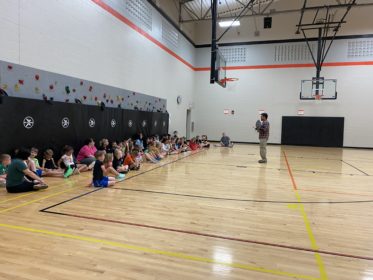
The raptors at the Iowa Raptor Project live in individual mews. We keep all of the birds separate from one another even if they are the same kind of raptor. These mews have not been updated for a long time. We are finally helping out raptors by starting to get funds for new mews. The rest of the week I worked on broadcasting our goldrush fund for the new mews. Lyndi and I drove around and handed out flyers about our fund to different businesses. We also broadcasted a link to the fund on social media.
The last thing I did this week was handle and present some of our raptors to visitors, including Tigerhawk, our Peregrine Falcon. We are working on getting Tigerhawk used to being on a glove along with being touched. We are essentially taming Tigerhawk so we can use him for programs when he is old enough and well-trained.
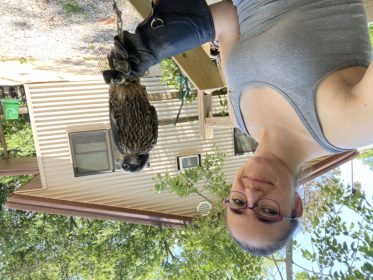
I have been learning more every day about each raptor we have. We have to know specific facts about each bird so we can properly present them and educate people about the birds we have. This includes knowing where they came from, their lifespan, their age, their habitat, their predators and prey, and more. Kids and adults can ask any question they have about each raptor and we have to be prepared with an answer. Sometimes we do not have an answer for a question in which case we inform the guest with an educated guess. I have enjoyed participating in all the programs we have had this summer so far and I have learned a lot. I learn something new at each program from both my coworker, Lyndi, and our director, Ryan.

Alina Moore is an environmental science major from Taos, New Mexico.