
Week 4:
Retrieving the Sensor and Starting a New Lab
June 17, 2021
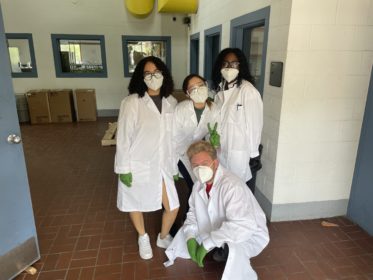
The start of the week was very slow, and I spent most of it relaxing in my room, however on Wednesday things began to pick up steam. It was the start of the COVID-19 lab. We started off by going to the water processing plant and collecting the water samples. There was a total of eight different wastewater samples from various water processing plants in the Port Royal Sound was collected and sent to USCB to be analyzed. The purpose of this lab is to check the prevalence and presence of the different COVID variants in the area.
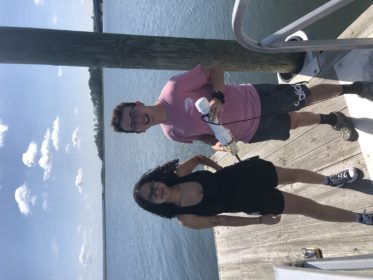
We started on Wednesday with three samples, the samples were first individually blended to make sure everything was combined and put into a centrifuge to get all the solids out. The samples then were filtered and put into the centrifuge for a second time; we took the remaining material and put them in a freezer of negative 80 degrees Fahrenheit. Next week we will be extracting the RNA and testing it for COVID-19 and if they test positive, we will test to see which variant is present. The same procedure for the COVID lab continued on Thursday, this time with five different wastewater samples (they smelled pretty gross this time).
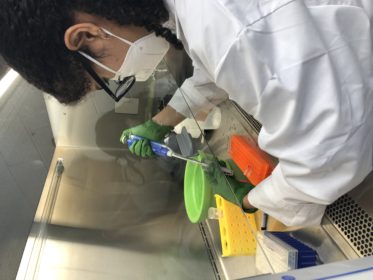
Since this was my first time working in a lab like this, I was pretty nervous that I would struggle, but luckily my lab mates were very good at guiding me. The hardest part was definitely switching between different pipets and making sure they were set at the proper amount. Other than that, the lab was surprisingly straightforward, and with the help of everyone went by in a quick and efficient manner. Next week, when we do the RNA extractions, I am very excited to see what that process will look like. For a long time working in a lab seemed so mysterious and like something only a hand full of people got to experience so I am very thankful for this opportunity.
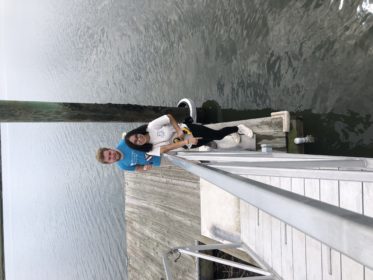
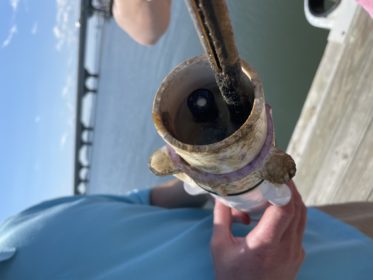
On Friday, we retrieved the sensor! It was covered in sludge and baby barnacles. We were all very excited to see if the sensor had been successful or not, so it was very disappointing when we returned to the lab and there was no recorded data. Somehow a wire got loose and disconnected and unfortunately, the first run was a failure. We had hoped to get the dissolved oxygen, temperature, and salinity taken every five minutes for a week. The plan is to work on the sensor more next week and then deploy it for a shorter period of time. Next week, Professor Rhawn Denniston (Cornell College Professor) plans to make visit the lab and meet Professor Tye.
Tiffany is an environmental studies major from Pennsylvania.