
Week 1:
Just Keep Moving
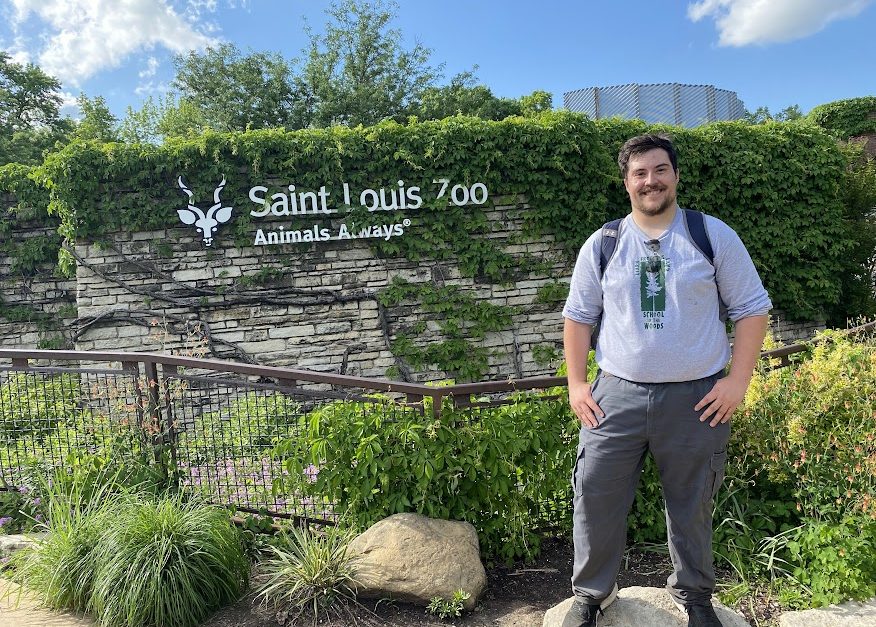
May 21, 2022
It’s been an amazing first week at the Institute for Conservation Medicine! During the week, I was introduced to the ICM team and fellow interns and worked on my preceptorship exam. I was also introduced to the primary project I will be working on this summer, the Saint Louis Box Turtle Project.
The box turtle project is an ongoing study that has been monitoring three-toed box turtles at three different research sites: Forest Park, the largest urban park in the U.S.; Tyson Research Center, a rural forested site; and WildCare Park, a property owned by the zoo located in north Saint Louis County. Individual turtles at each site have been fitted with radio tags and are tracked once a week.
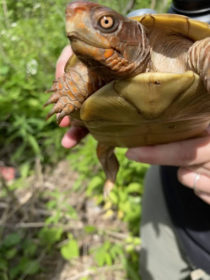
Tracking turtles is more difficult than it sounds. The three-toed box turtles that are a part of the study are tracked using very high frequency (VHF) radio telemetry tags. Each of the turtles have their own unique radio frequency that sends signals back to a receiver. The receiver then converts this signal into a beep. From there, it is similar to a game of hot and cold. If you are facing or moving in the right direction, the signal becomes stronger and the beep becomes louder. Sometimes it is hard to tell what direction a signal is coming from. The key to figuring out what direction a signal is really coming from is to just keep moving.
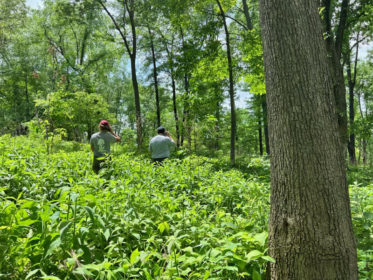
As my fellow interns and I gained more experience with tracking the turtles, our skills were put to the test. Using two receiver antennae, we turned to the same channel and had a friendly competition to see who could locate the turtle first. I ended up losing the race, but it was still a fun way to practice our radio telemetry skills. When we located the study turtles, we practiced taking measurement and performing physical examinations that are an important basis of the box turtle study.
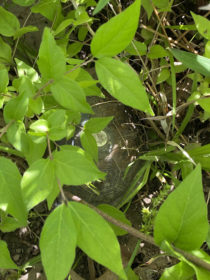
This week we also measured each of the research turtles. Box turtles typically grow at a slow rate, so size measurements besides weight are only measured about once a year. For each turtle we located, we took measurements of both the carapace (top) and plastron (bottom) portions of the shell. I was able to take measurements of carapace length, width, and height along with measurements of the anterior (front) and posterior (back) portions of the plastron on several turtles.
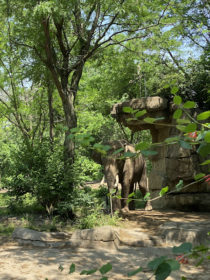
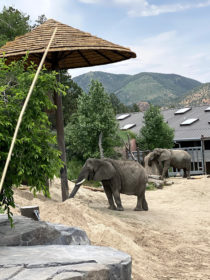
Along with tracking turtles at the research sites, I also had the chance to explore the zoo grounds. One of my favorite exhibits within the zoo is the River’s Edge. One of my favorite animals to watch on the trail are the Asian elephants. I had the opportunity to work with African elephants at the Cheyenne Mountain Zoo in Colorado Springs, so it was interesting to compare the two species!
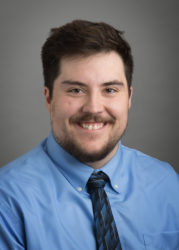
Nate is a biochemistry and molecular biology major from Colorado Springs, Colorado.