
Week 7:
Turtle Trail
July 2, 2022
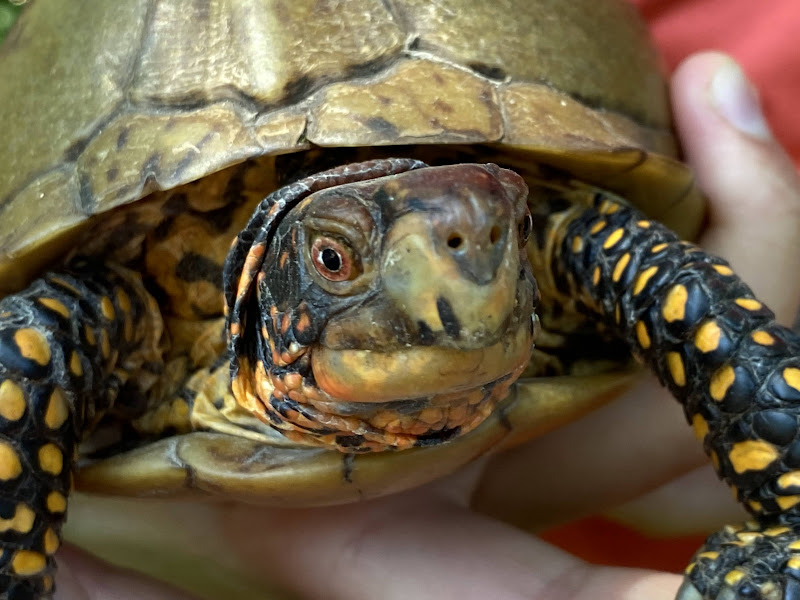
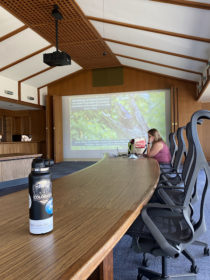
After an office day on Monday making final preparations for microbiome sampling later in the week, we got back to tracking turtles at WildCare Park on Tuesday. We had a successful day of tracking and were able to do a quick health check and record the location of the tagged turtles. We also had the chance to listen to an awesome talk about the Cuban Crocodile Conservation Program with the Saint Louis Zoo WildCare Institute. Similar to the work we are conducting with the box turtles, one of the primary objectives of the Cuban Crocodile program is to develop baseline information on the health of a relatively understudied species. The project involves the collaboration between the four zoos accredited by the Association of Zoos and Aquariums (AZA) and the Zapata Crocodile Farm (ZCF) in Cuba. The Zapata Crocodile Farm works to breed these critically endangered crocodilians for reintroduction into protected areas. By building baseline health data for species for characteristics like blood chemistry and hematology, more informed decisions about their management and veterinary care can be made.
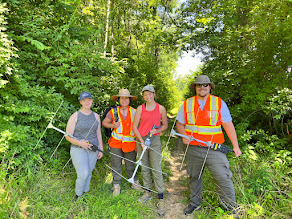
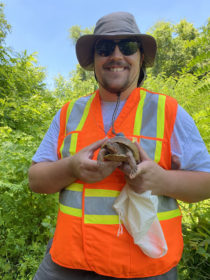
This week we also completed another successful microbiome sampling week. We tracked all of the turtles and collected swabs from both of their back feet, cloaca, and mouths, along with blood collection for blood slides, packed cell volume (PCV), and total solids (TS). Plasma is also set aside for testing and banking for future use. We were able to locate all eight study turtles in Forest Park on Wednesday and all seven of the Tyson turtles on Thursday. We were able to complete sample collections before the hottest part of the day for both turtle cohorts and avoided the brunt of the heat. We successfully worked up the samples and another week of microbiome sampling was complete!
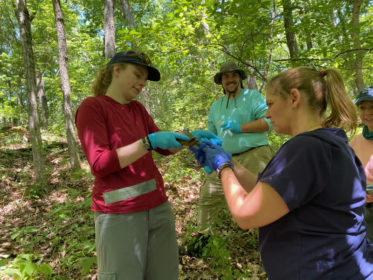
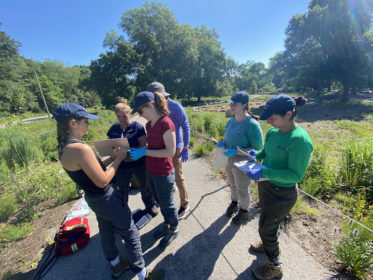
We also spent part of the week looking for another new turtle to tag in Forest Park. Finding a turtle that doesn’t have a tag is not an exact science and is mostly luck. Sometimes we track to the tagged turtles to see if they have any other turtles with them. Three-toed box turtles are generally solitary and spend the majority of their time by themselves. They do, however, occasionally associate with each other, sometimes to mate and other times for unknown reasons. After tracking to these turtles, we will then begin looking for a turtle without help from telemetry. We generally stick to the open areas like park paths and deer trails where it is easier to move and see any turtles. We weren’t able to find a new turtle this week, but we will definitely be looking for more in the coming weeks.
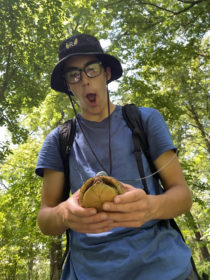
On Friday we had another important project. We had been having some trouble picking up a reliable signal from one of our tagged turtles Alejandra. One of the ICM team members was able to locate her earlier in the week and had found that her tag had been damaged. We set out to find her again and replace her tag with a new one. My brother Josh was also in town this week, and he helped us track a couple of the Forest Park turtles!
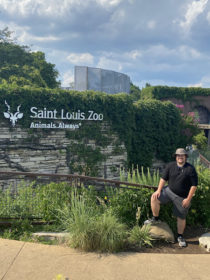
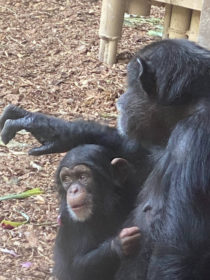
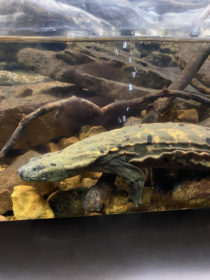
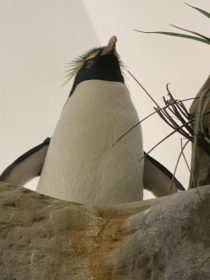
At the end of the week we went to another night of the zoo’s free to attend Jungle Boogie event. The event features live music and all of the animal exhibits. Some of my favorite pictures this week were of Raven the baby chimpanzee, this southern rockhopper penguin, and one of the zoo’s endangered Ozark hellbenders.
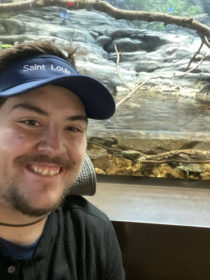

Nate is a biochemistry and molecular biology major from Colorado Springs, Colorado.