
Week 5:
Exciting Shadowing and Disappointing Results
July 10, 2022
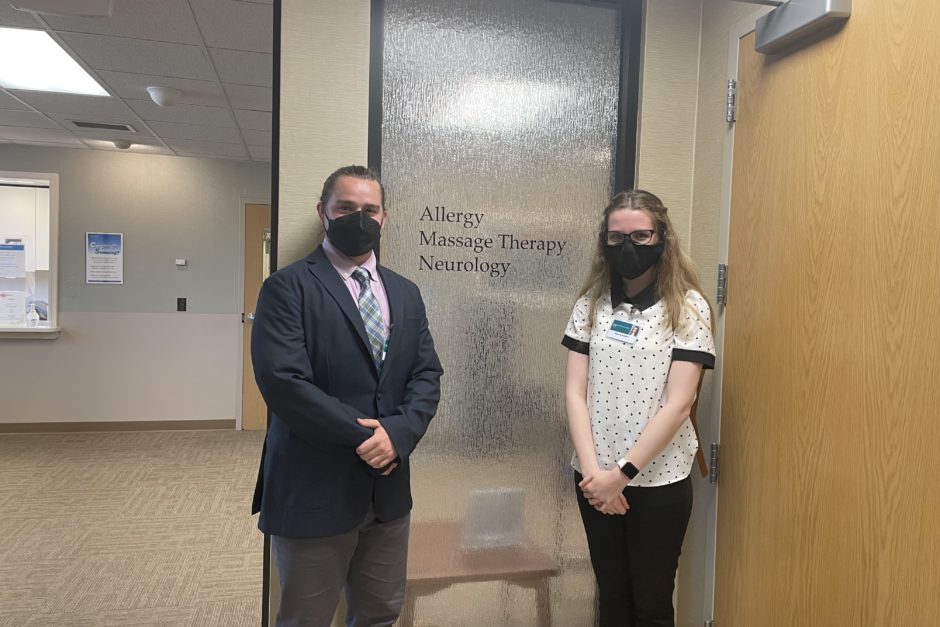
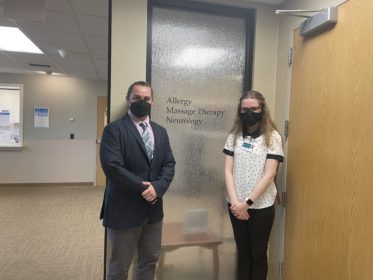
The week consisted primarily of shadowing Dr. St. Louis in two different clinics. The first was in LaCrosse at a smaller Mayo clinic, where I saw primarily epilepsy-focused neurology cases. I was also able to shadow him in the Mayo Clinic in Rochester, where there were no real themes to the patients that came in other than sleep medicine, and I got to see a wide array of cases.
The day in LaCrosse started early, as it was about an hour away from Rochester. The day began with a case of discomfort from a patient that had shingles at one point. We later saw a case of restless leg syndrome, which was cool because that is one thing that we look for when patient charting for the RSWA project.
Most of the epilepsy cases were patient check-ups, with Dr. St. Louis either adjusting medication or altering the treatment plan depending on how their neurological health was improving or declining. Another patient that was both heartbreaking and very interesting was a case of prodromal Lewy Body dementia. I saw Dr. St. Louis break difficult news to the patient and the family, which was a definite unexpected, but valuable piece of shadowing experience.
I never really considered the checking-up part of the patient experience. Most of what I know is the “here is the medication, if it doesn’t work come back, if not great”. In neurology, most of the treatment cannot fully cure the condition (in the case of epilepsy at least). One thing that Dr. St. Louis said that I will remember as good career advice is he loved being able to see his patients again and follow their course throughout treatment. He also said that neurology does not have a lot of clear-cut healed or not healed; a lot of it is finding the combination of medications or treatments that manage best. It is not as definitive in that respect as other fields. Both pieces of information are some that I find very valuable in my own career search and figuring out which branch of medicine I want to pursue.
The shadowing experience in the sleep clinic was super cool because I got to see conditions that I read about in the patient charts I filled out for the RSWA study in person, including REM sleep behavior disorder, idiopathic hypersomnia, and sleep apnea.
I was able to see a similar procedure that Dr. St. Louis used LaCrosse, but with sleep-centered questions. He gave out quite a few home sleep-apnea tests, and showed the observing students how they worked in detail. A case of idiopathic hypersomnia was one of the more interesting cases, as it involved Dr. St. Louis ruling out narcolepsy, one of the interests of our RSWA project, in the process.
I enjoyed seeing the process that Dr. St. Louis took in each of his patient interactions. He usually conversed with them about life and how they were doing, often finding common ground to relate his own experience to his patients’ experiences. He then went into their list of complaints and issues, previous treatment, and adjusted the treatment accordingly. New patients typically took longer for Dr. St. Louis to get a complete picture on, as he needed more history and to ask more questions.
The news from the hypocretin project is less good. Though I did learn how to run a test for variance using the Kruskal-Wallis test on the statistical software BlueSky, the analyzed results were not what we were expecting. There was basically no statistical significance, even after shifting the focus to type-1 narcoleptics with hypocretin in lower vs. higher levels. We will continue to play with this, but it looks like we found a negative association of hypocretin and RSWA.
That said, now we can invest more time in the Charles Bonnet project, which will involve a similar method of scoring and patient charting. The patient chart is very interesting for this project, as the hallucinations the patients had are recorded and are fascinating.
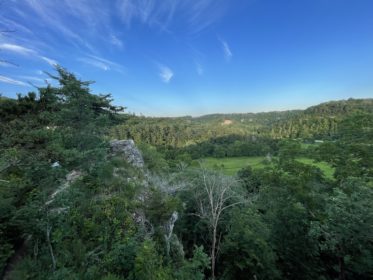
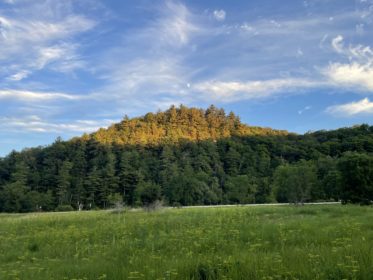
This week, to explore Rochester and Minnesota a bit, I was able to go hiking on Saturday with my girlfriend, who came to visit. We went to Whitewater State Park and took a very pretty hike around sundown, closing out an eventful week.
Nolan is a biochemistry and molecular biology major from Omaha, Nebraska.
PreviousWeek 4: My First Shadow Experience and the Start of the Manuscript
NextWeek 6: Adjusting to the Unexpected