
Week 8:
Audobon Center at Francis Beidler Forest
July 8, 2014
I was able to knock out a lot of important tasks this week and on Monday I had the chance to help out with the Shorebird Warden project that Audubon and the South Carolina DNR cooperate on. Every morning after Monday was spent monitoring the boardwalk trying to find Prothonotary Warblers that would be good candidates for a geolocator. There were a handful of highlights this week so here they come!
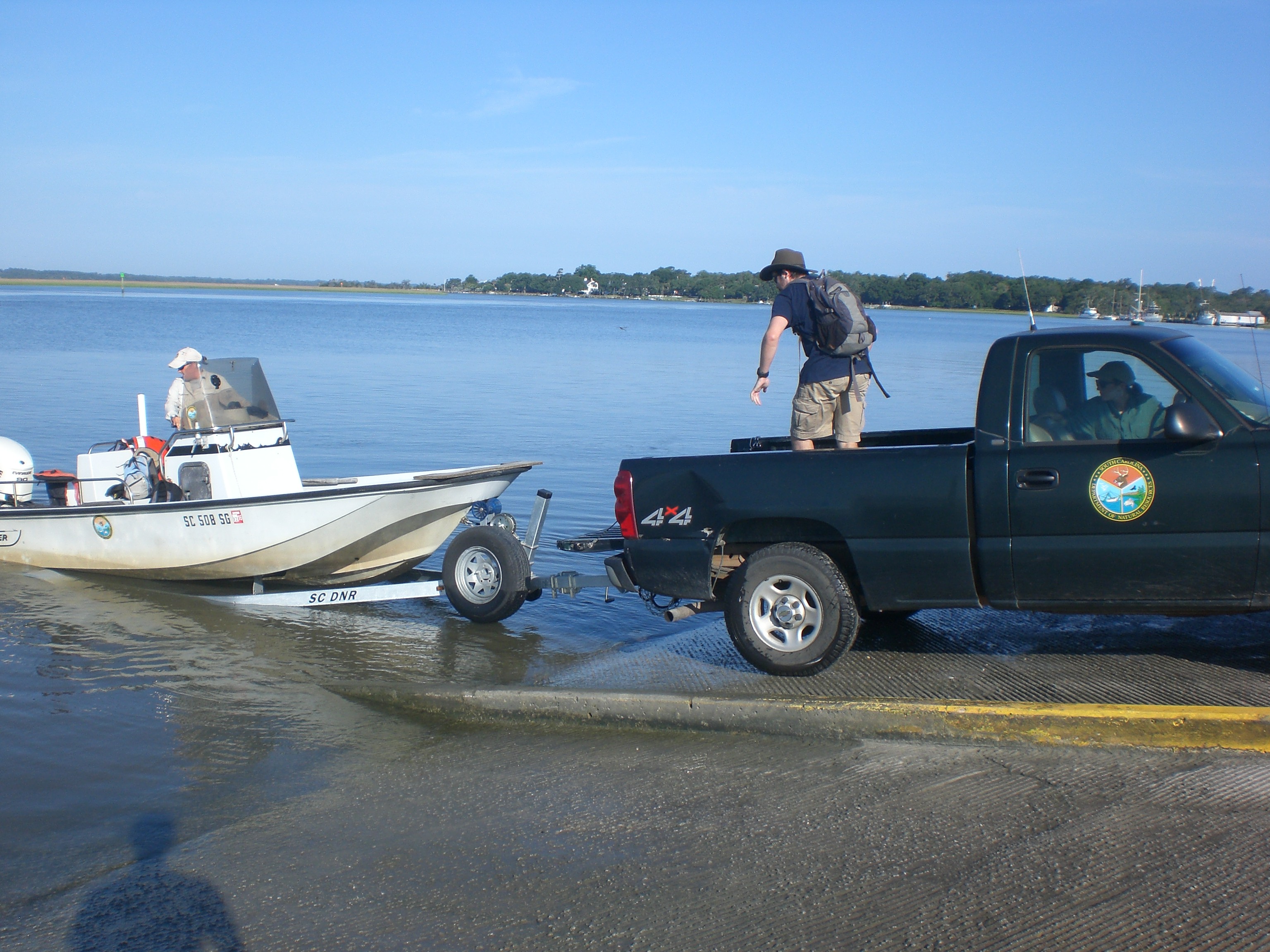
To start, the Shorebird Warden project was exciting! It was nice to walk around a different habitat. Ricky and I left for the coast at 6:30am on Monday, picked up Erin, and then met Janet at the boat launch. Janet is a wildlife biologist for the South Carolina Department of Natural Resources and Erin is Audubon’s seasonal Shorebird Warden along with Ricky. All three are also very fun and interesting people. We had some eye opening conversations about graduate school, seasonal jobs in wildlife biology, and careers in ornithology. It was about a 15 minute motor-boat ride from the boat landing to an island that is mostly untouched by humans. To explain what we were doing there I am going to quote the International Shorebird Survey Page from the Manomet Center for Conservation Sciences web page.
(https://www.manomet.org/program/shorebird-recovery-project/international-shorebird-survey-iss)
“To know where conservation is needed — and if initiatives have been effective — shorebird scientists require a broad understanding of species populations and trends. In 1974, Manomet organized the volunteer-based International Shorebird Survey (ISS) to gather information on shorebirds and the wetlands they depend on. Through the work of dedicated volunteers conducting field surveys during spring and fall migrations, this monitoring network provides hemispheric data on shorebirds. Volunteers have completed almost 80,000 census counts at 1200 locations in 47 U.S. states, with additional counts from Central and South America.”
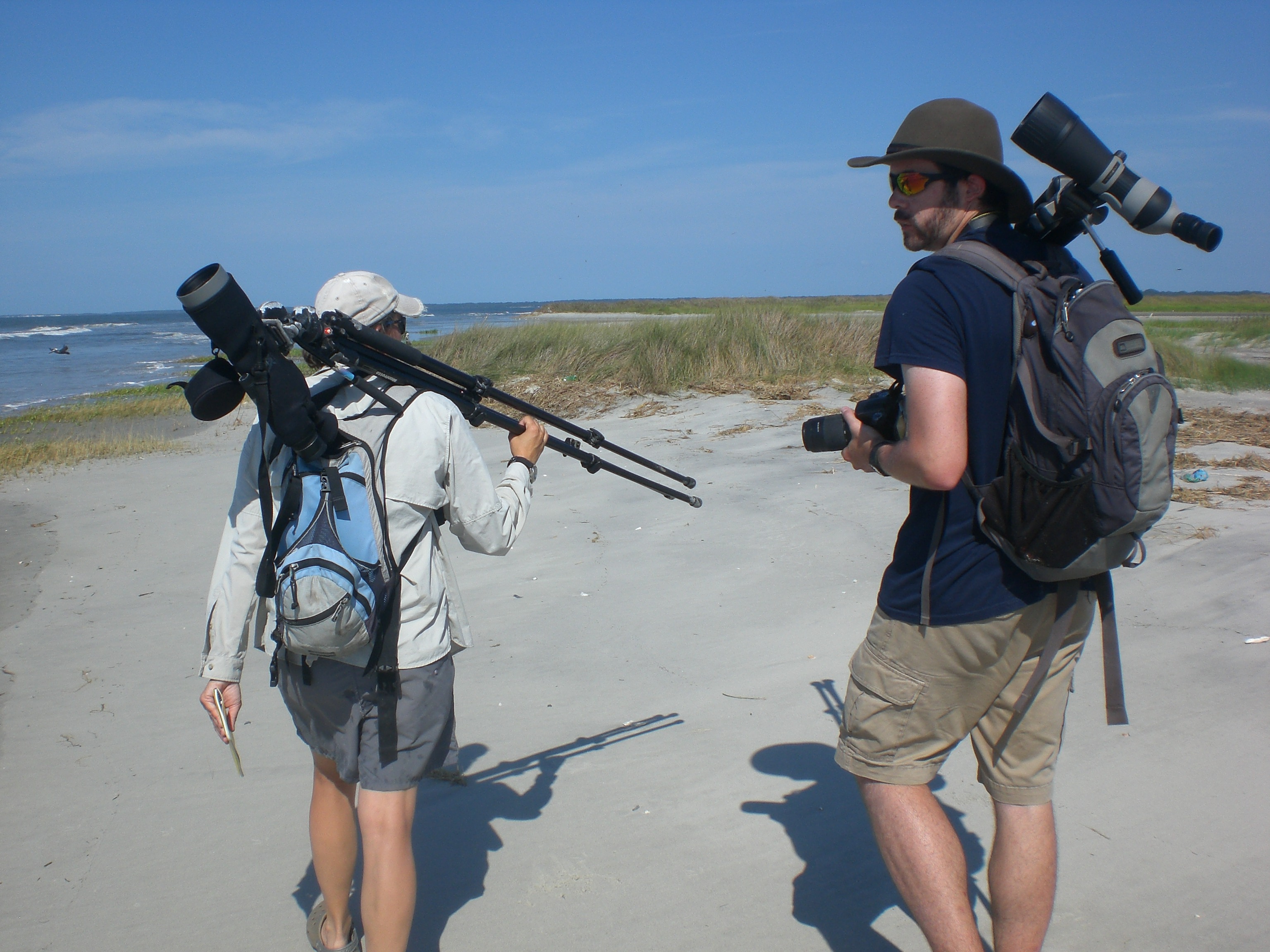
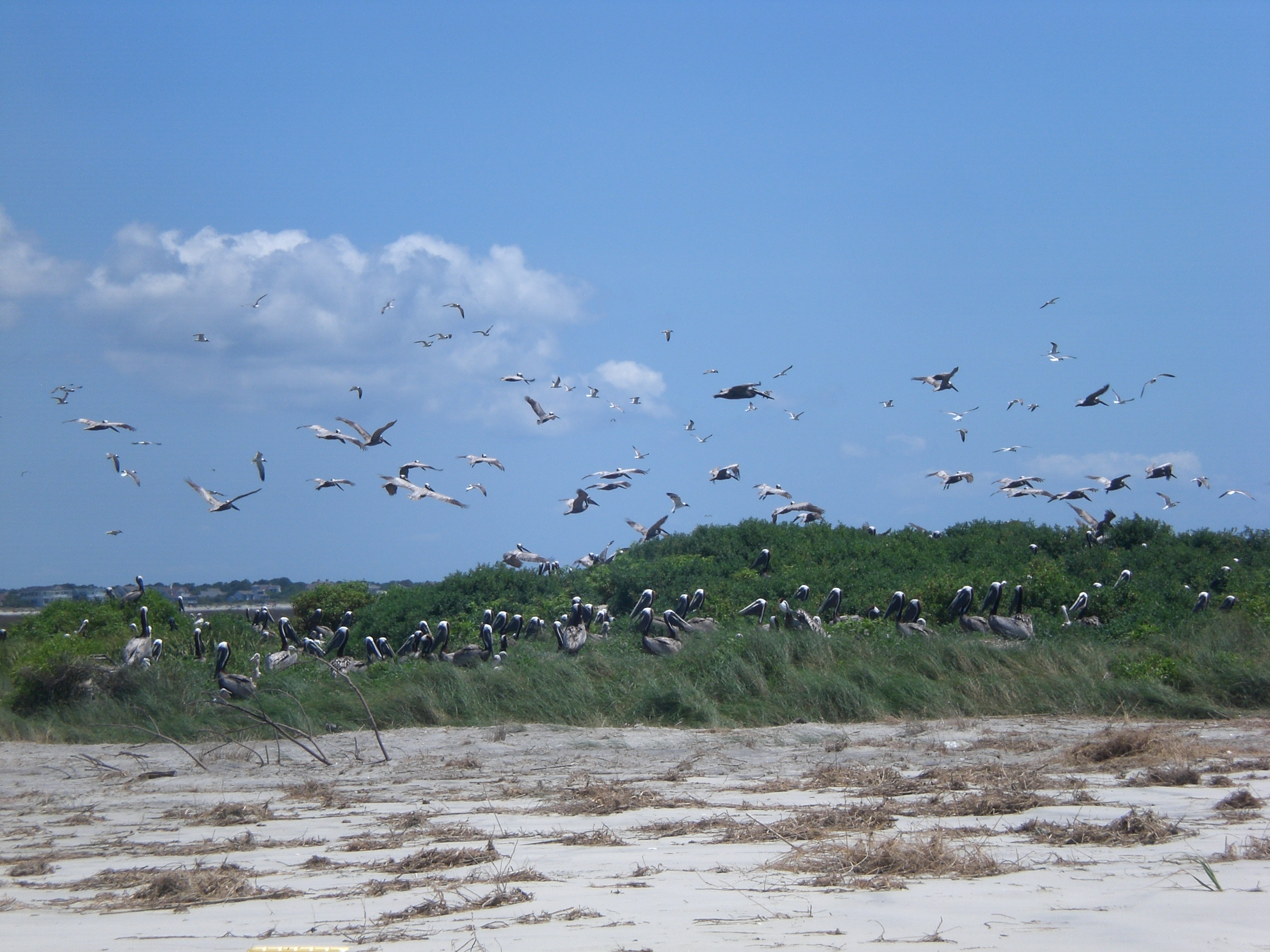
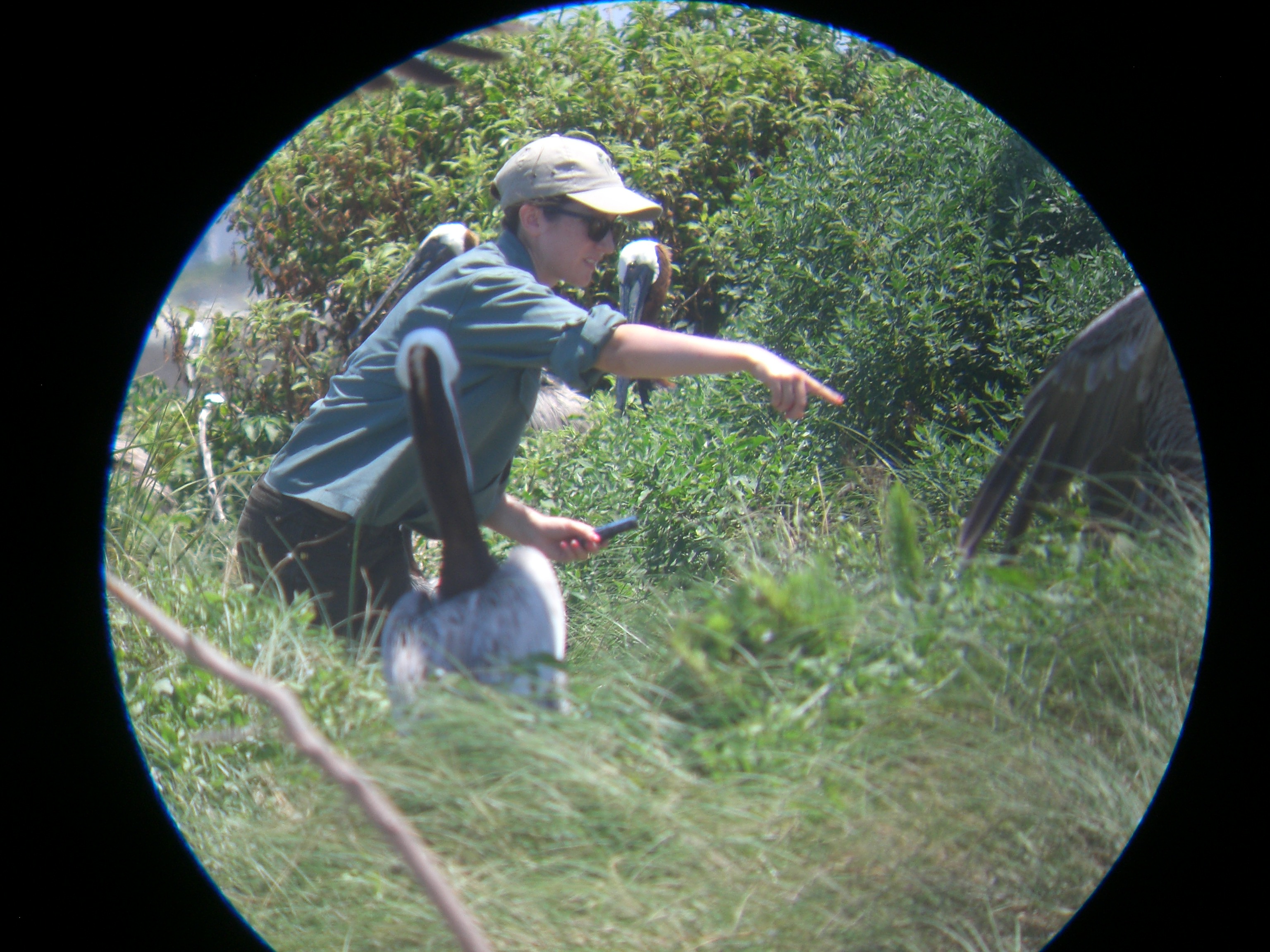
We basically walked around the island carrying telescopes, or “scopes” for short, and stopped at pre-determined locations where nesting sites were visible. At each location we counted all of the birds we saw along with their respective species. I learned how difficult it is to ID shorebirds and seabirds! They all blend in so well with the sand and all look so similar. Many different species hang out together and don’t get very territorial, which adds to the difficulty. I was told that Brown Pelicans will stay about a wing’s length away from each other while they are nesting. That is much closer than the territories Prothonotary Warblers claim! I was glad I brought my Sibley field guide to help me ID the birds. The island we were on is only one of five in South Carolina that the birds still use to nest. The information gathered by Janet, Ricky, Erin, and their volunteers is extremely valuable to the conservation of these birds.
They only conduct these surveys once a month because the slightest agitation can ruin a whole colony’s brood of eggs. This is also why they say you shouldn’t bring your dog to certain beaches or run after a group of birds on the beach just to see them fly away. The sand gets very hot during the day and if the parents aren’t shading the eggs, they will quite literally fry in a matter of minutes. Most shorebirds and seabirds exhibit elusive behavior when predators (dogs or humans) are nearby, and will fly away from their eggs with the hope of drawing away the predator. This leaves the eggs vulnerable to Laughing Gull predation and to the heat. The reason for why you shouldn’t chase after birds on a beach has to do with their migration. Along the coast, beaches are rest stops for many birds during migration and someone chasing them away is akin to if you were shot at every time you stepped out of your car to stretch during a long multi-day road trip.
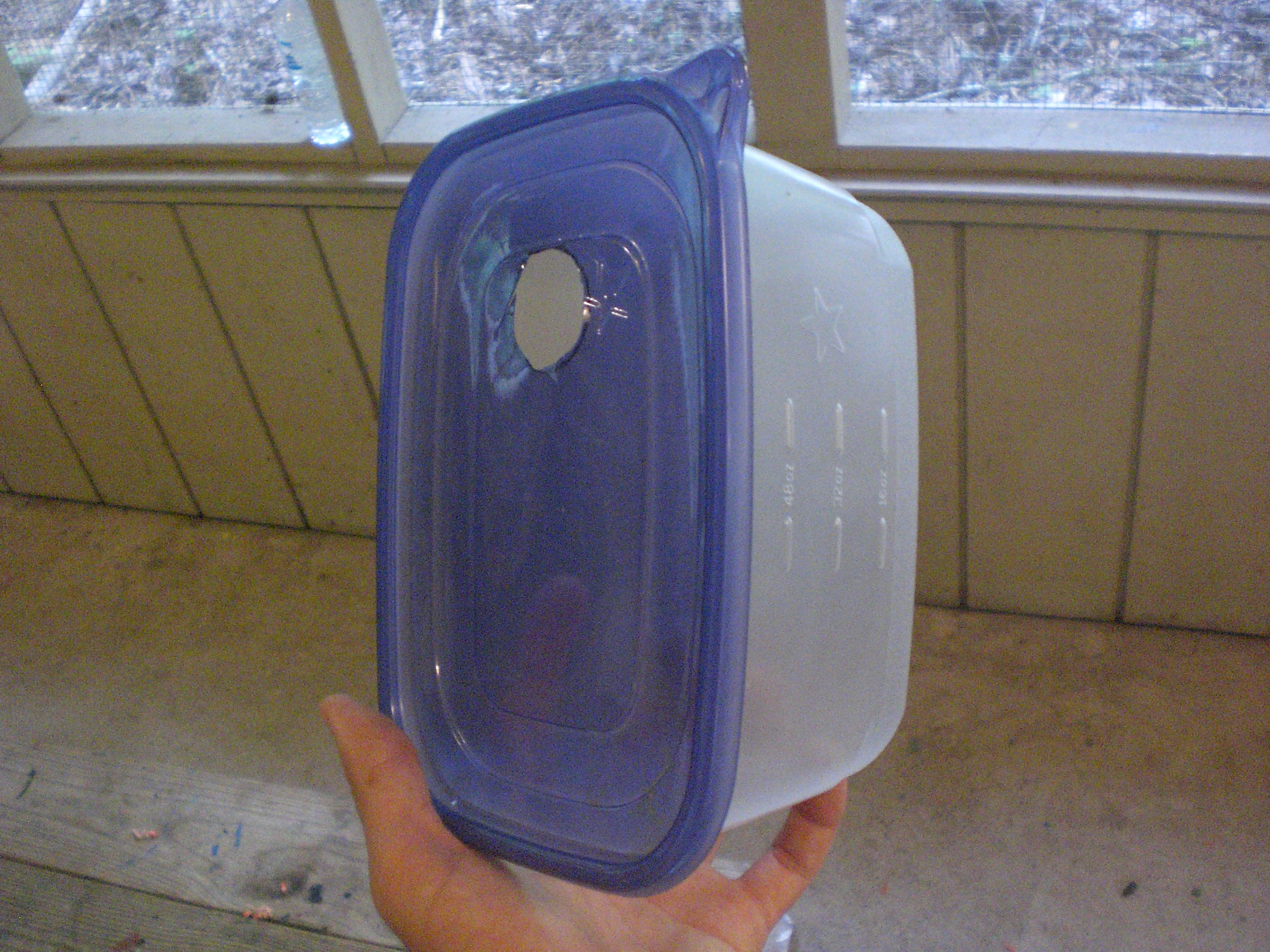
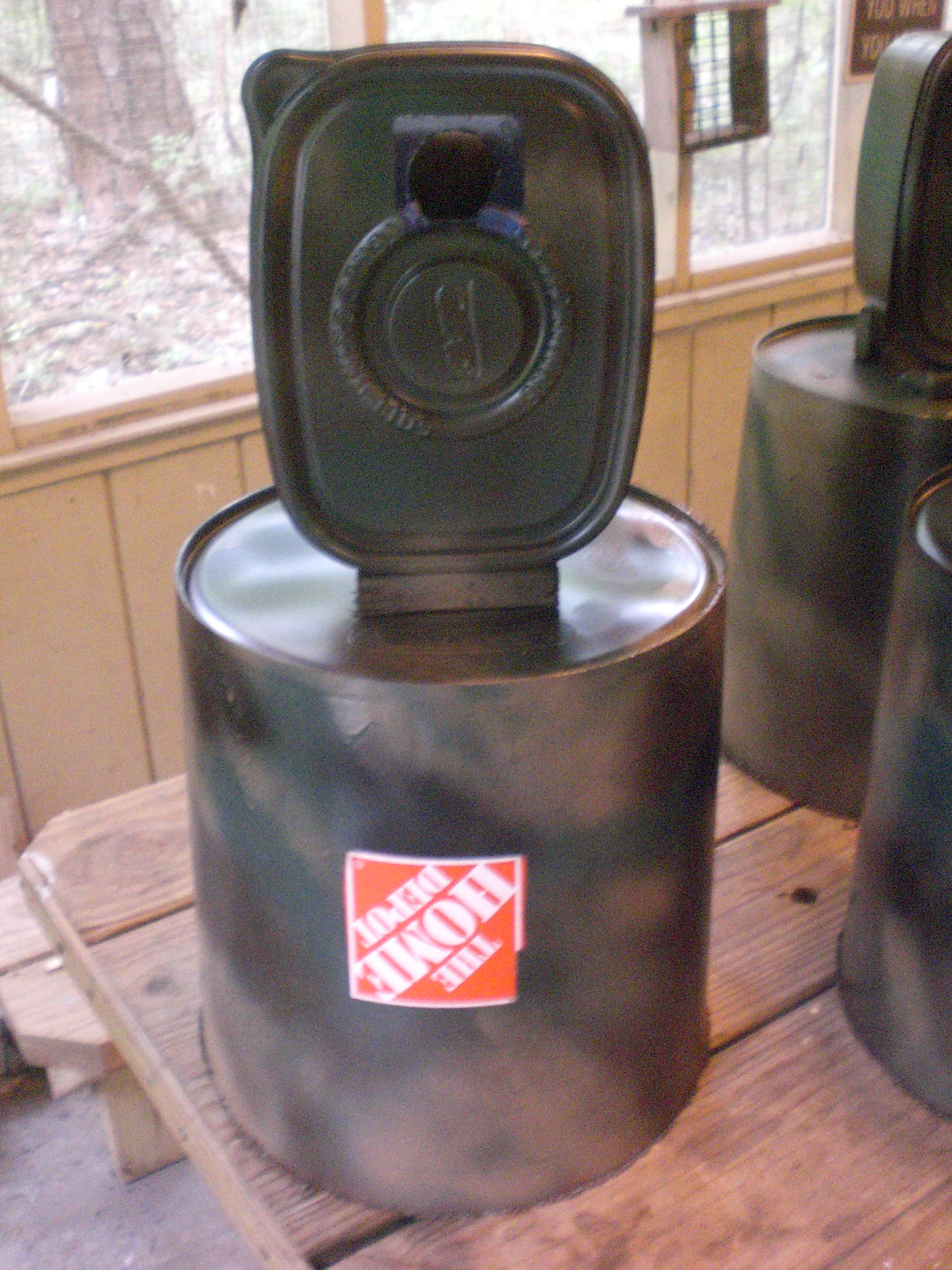
Back in the nature center the rest of the week I made significant progress on the nest boxes. About $300 total was donated to us in order to build nest boxes for Prothonotary Warblers. I sent off thank you letters to all of our kind donors and started building. I am also creating a how-to guide if they want to build and install more when I am gone. My how-to guide will be a lot more detailed than the one we have from the Virginia folks who are working on a similar project with Prothonotary Warblers. We will begin installing nest boxes on Tuesday of next week.
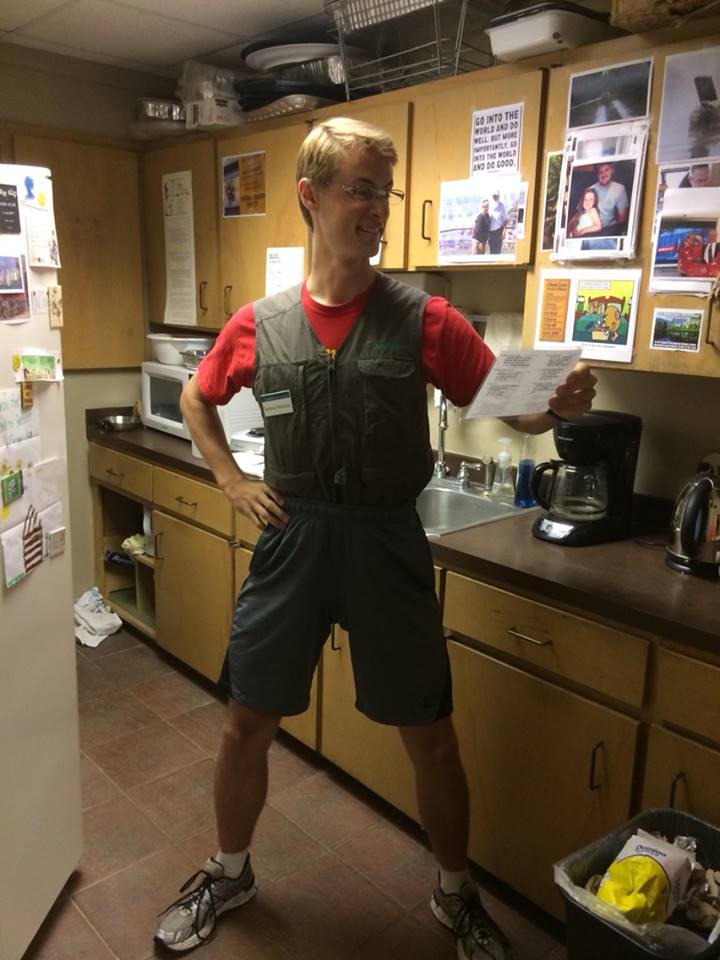
I lead my first guided tour of the boardwalk on Thursday! It was a little last minute because the group was late. Matt was going to lead the tour, but he had a meeting that he couldn’t be late for so he asked me if I wanted to do it. After waffling for a minute or two, I swallowed my doubts, threw on my Audubon vest, and lead a thrilling tour of our swamp and its wildlife. It seems like education is an important aspect of wildlife biology and I believe this tour was an important stepping stone that I will look back on fondly when I am a reputable ornithologist leading frequent birding walks. I surprised myself with how much I knew and could share about the boardwalk and this swamp habitat. I was pointing out snakes and interesting plants that I didn’t even realize I had learned.
Our geolocators were calibrated last weekend by being set out in a sunny area. They collect a data point every time the sun rises and sets. When data is being extracted from the devices next year, these initial points can be used to give all the other points a frame of reference because we will know what the light levels were like and their starting location when they were deployed.

On Saturday we deployed one geolocator on A914 and decided not to try to deploy anymore because they were not responding to our dummy song. Whatever hormone responses that make them want to sing and be territorial must no longer be as high. I was worried about this but I am glad we could catch at least one. It will be a long-shot but we are hopeful. It is my job next week to look for A914 and make sure he is flying OK with the geolocator on his back. Colleagues that use this same technique to harness geolocators on Prothonotary Warblers say they have never had a problem, but we all want to make sure our long-shot is A-OK.
Just to clarify, all of the banding we have done has been under a SCDNR permit and with the assistance of an SCDNR Biologist.
Major: Biology and Environmental Studies. Hometown:Downer’s Grove, Illinois.
PreviousWeek 7: Audobon Center at Francis Beidler Forest
NextWeek 9: Audobon Center at Francis Beidler Forest