
Week 3:
University of South Carolina
June 25, 2014
First time. Shawn Doyle, our consultant at Cornell’s Writing Studio, once talked about how one’s knowledge base and perception of the world evolve by theorizing and inductive reasoning throughout his/her life. Since this process is less complex thus more evident during our early years, he took an example from his childhood: As a little kid, he found the fridge at home a useful (obviously) and curious object, and since, until then, his major life experiences revolved around his domestic environment, his home made his world, as is the case for every little kid. So, accordingly, he got to conceive that this “fridge” existed only in their house. However, when he visited his relative’s house one day, he realized they also have one: “Ha! So ‘fridge’ must a Doyle thing,” Shawn’s realization proceeded, or something along these lines. I am not sure how big of a shock it was at the moment his perception of “fridge” had to change as his experiences expanded. This particular example shows that in the process of getting to know different aspects of life, we formulate and adopt our own theories of the world and go with them until they are negated by life experiences.
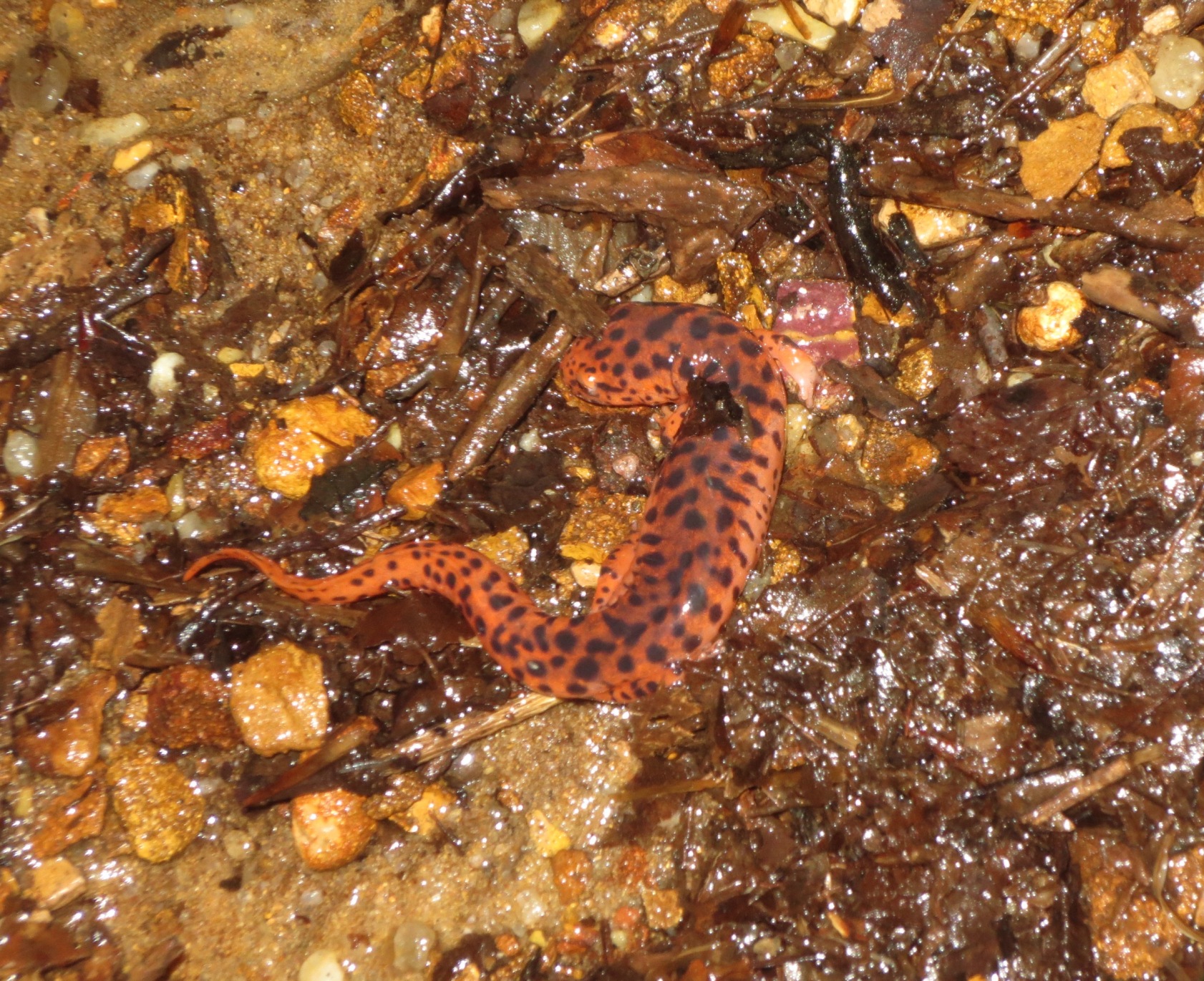
In my case, I did not have an urgent need to have my theory of a creature called “salamander” when I was little, because it was not a part of my life; we don’t have salamanders in Mongolia. Indeed, the fact that there is no properly designated Mongolian word for a salamander in common usage besides “salamander” points out at it. So, when my mom uttered the word as she bought what she called “salamander boots” for my dad, I asked what a salamander was. I was told it was a lizard-like animal. In my imagination, it was a big reptile the size of a cat. That was it. I didn’t need to know more. That was my first and single experience with salamanders till the last several days. When visiting streams and seeps running through forests, Dan checks the wooden boards he put that salamanders tend to make abode. To his surprise, the ones we checked last week had no one beneath them. However, this week, we finally retrieved several! Apparently, the two common species here are differentiated by their eyes: One has completely black eyes with no sclera, while the other one does have a sclera around the irises. Touching the first one we spotted was like touching a locomotive jelly. Dan checks them because they are an endangered species, and an important indicator of the health of stream ecosystems here.
Another first-time encounter was with the big cockroaches here on my way from home to our office. Because I am not young enough to have my understanding of cockroaches be limited only by the ones I have seen, I was not much surprised to see ones ten times bigger than those in Mongolia. Still, the first reaction was comparable to that of having my little toes growing chubbier and taller than the big toe.
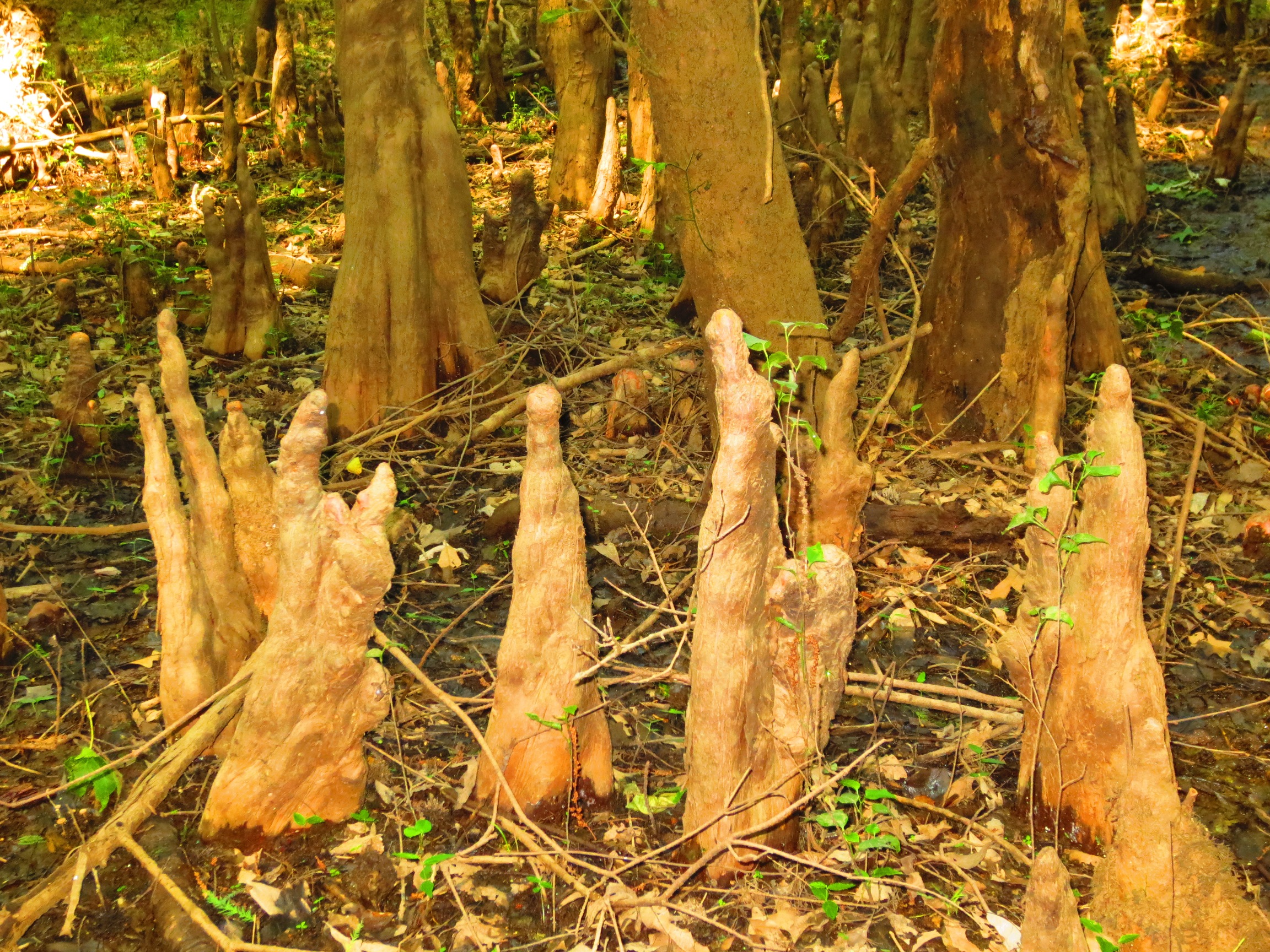
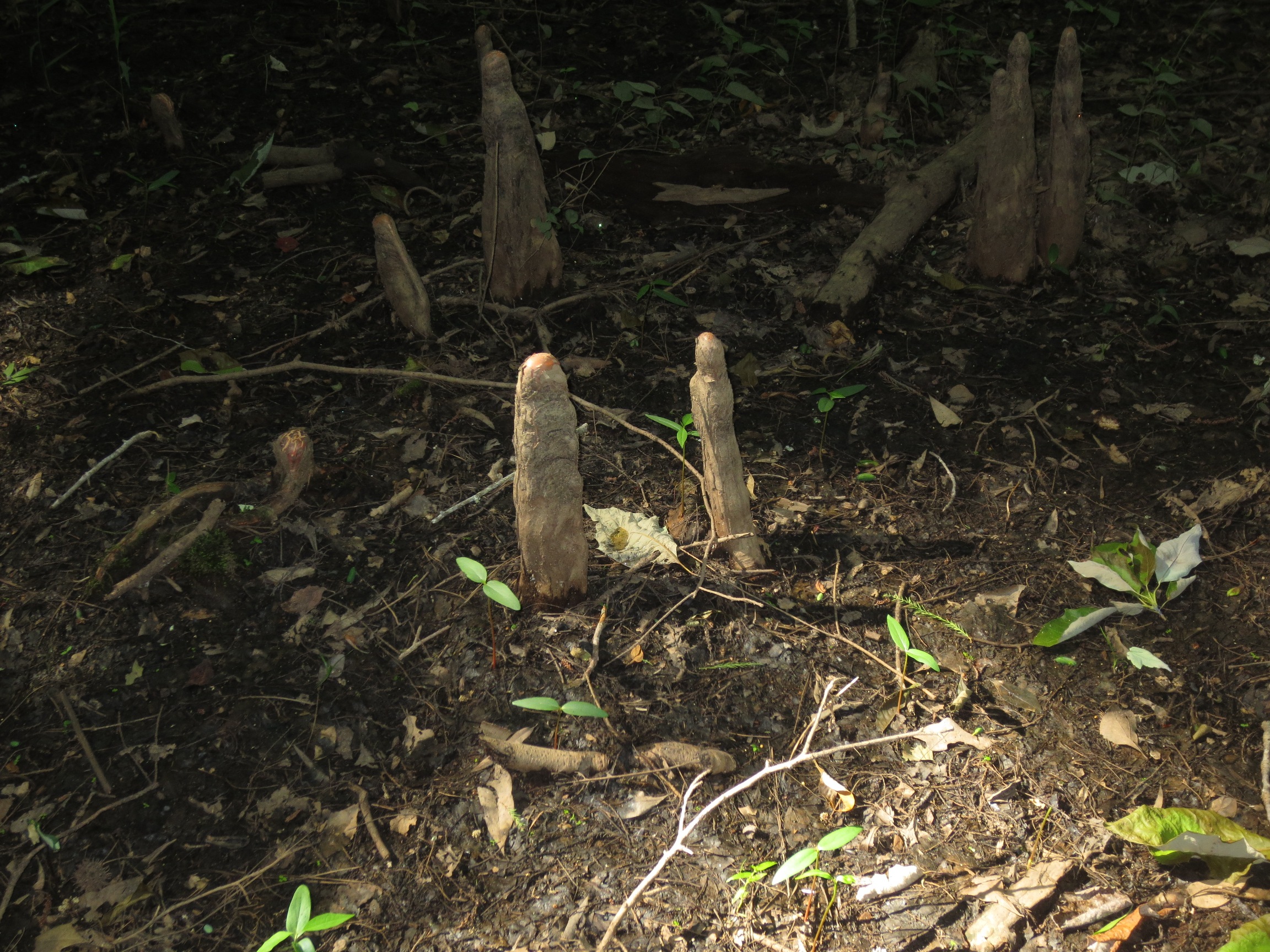
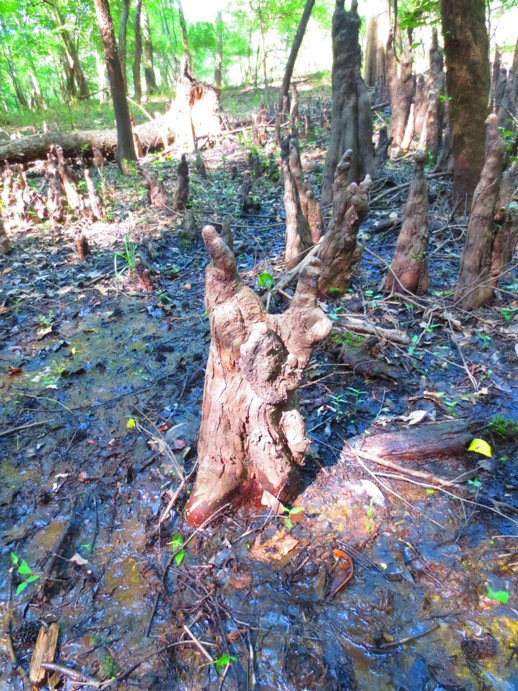
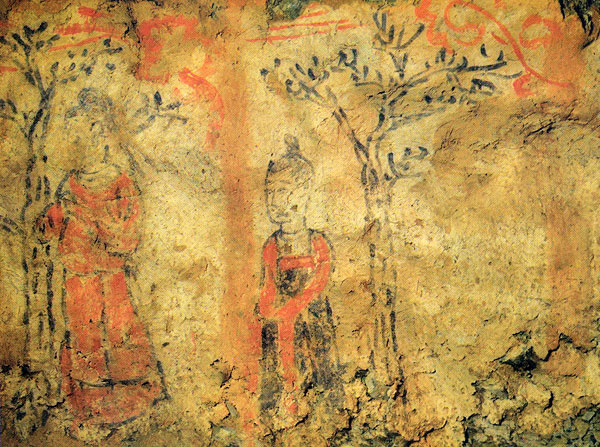
On Thursday, in a forest replete with cypress trees, the cypress knees didn’t cease to amaze me. Currently with no particular scientific explanation regarding their functions, the knees provided great aesthetic pleasure. They seemed like forest communities where you could see all kinds of individuals living peacefully, almost making me feel like an intruder. Travelling through Mongolia, I encountered several archaeological findings dating back to 7th century, where a general’s tomb with several chambers had little human clay figures of various races and ethnicities surrounding the dead body. The shapes of the tree knees resemble their bodies with tall headdresses and deel (coat-like nomadic outfit).
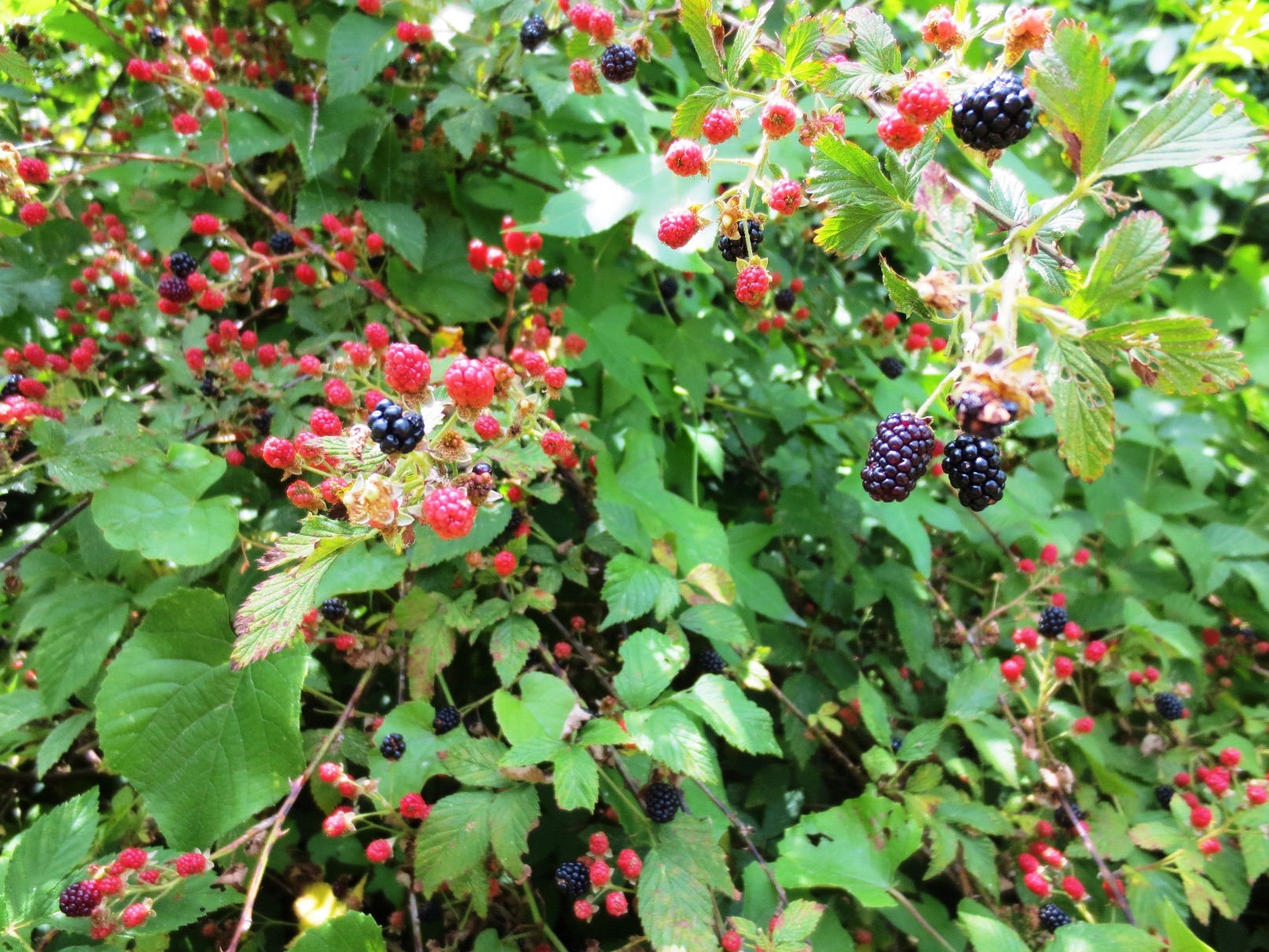
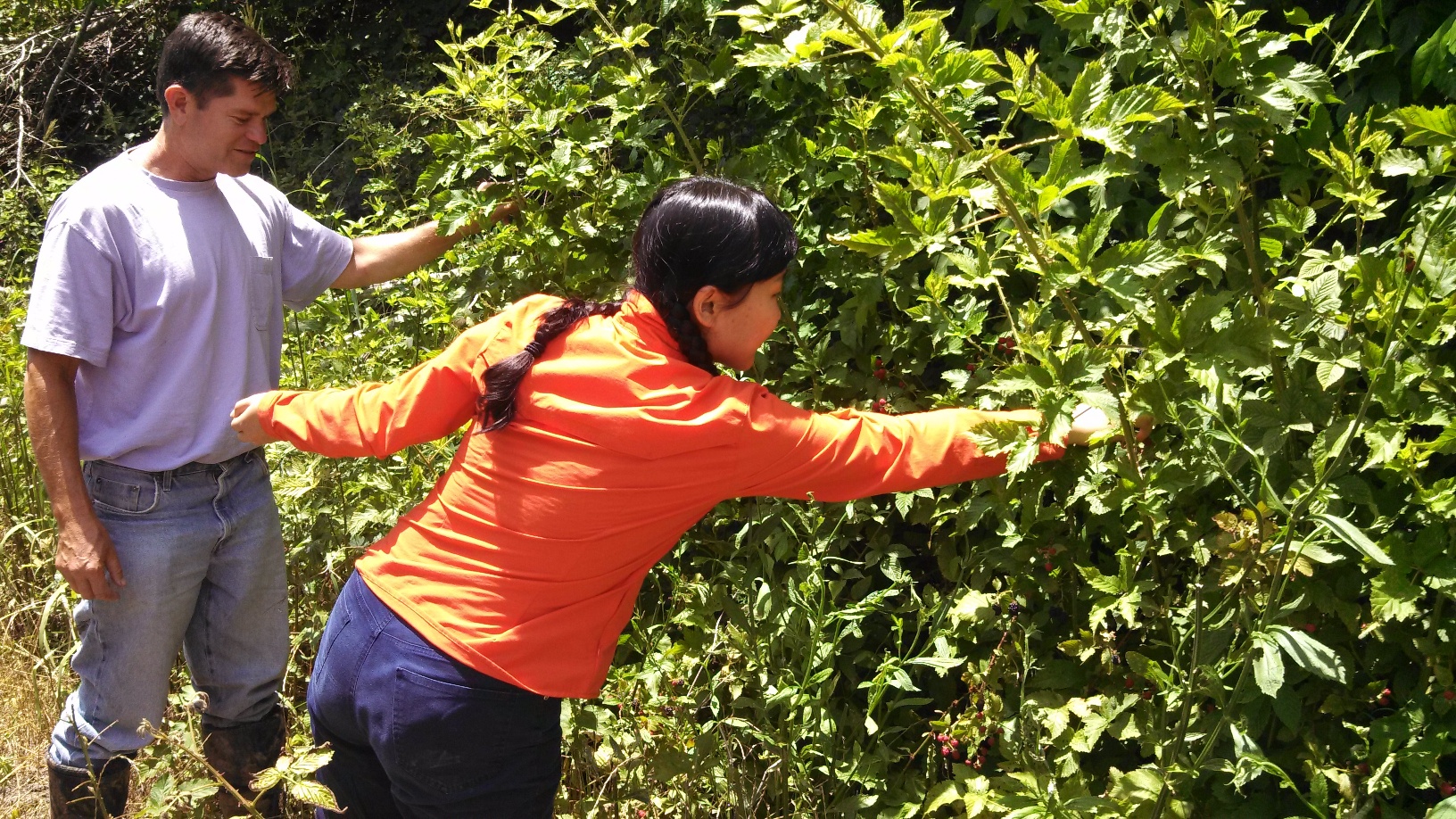
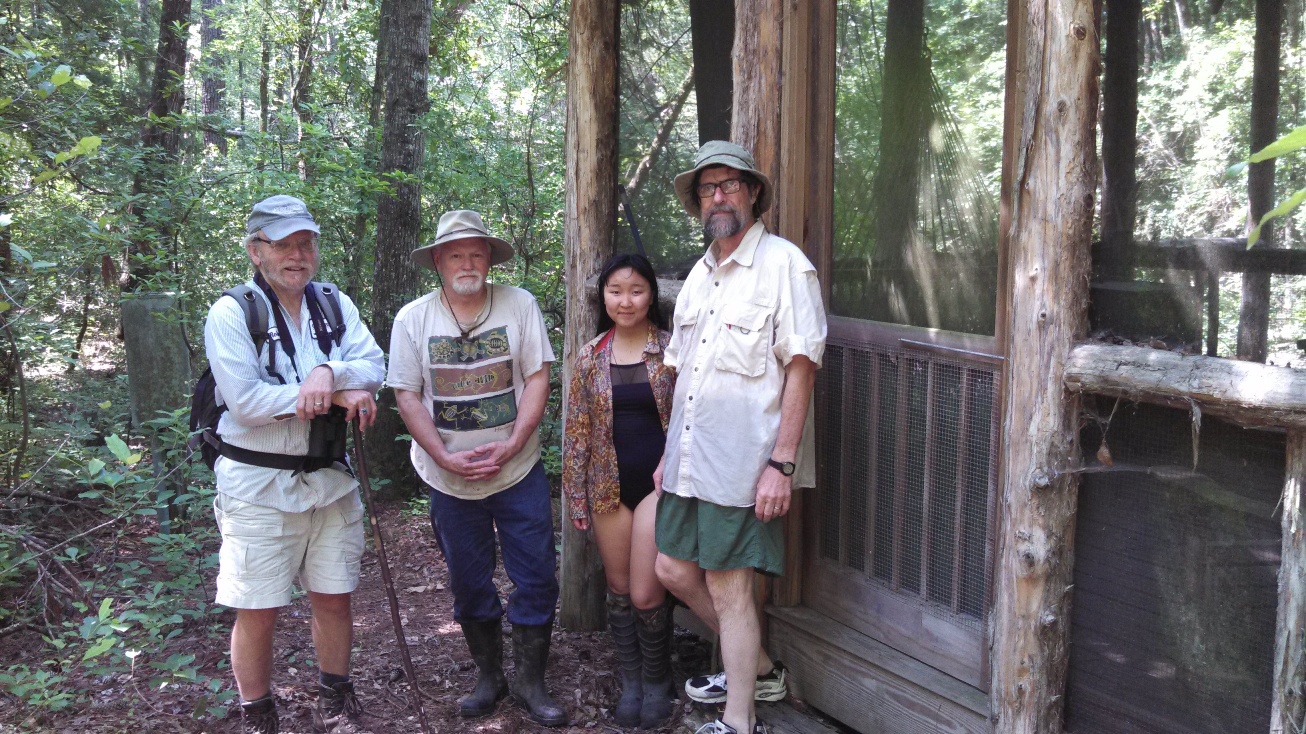
On the field. On Wednesday and Thursday, when Dan, Warren and I went on field to collect more samples, the temperature was 96-99 F, without considering humidity! I now can believe I endured it. Besides salamanders, we encountered blackberries, which made a delightful desert, as we had just munched on our lunches. The most exciting part was swimming after taking stream flow measurement in a river that flowed through a Columbia-based environmental attorney, Bob Guild’s property where we were allowed to take samples. He and his friend, Steve, are environmental activists that are dedicated to protecting wetland ecosystems.
Setsen is a geology major from Ulaanbaatar, Mongolia.