
Week 4:
University of South Carolina
July 5, 2014
I am coming to suspect that time does cheat on us, poor people. Keep a constant eye on it while racing it – you will at most be in line with it; take your eyes off for a moment – time will make a leap of two moments, skipping while we are not watching. However, time’s passage in no time is such a firmly consented phenomenon that it seems like the only way I can seriously comment on its fleeting nature without sounding redundant is finding a more concise, more nuanced, more catchy, more witty, more grandiloquent, in other words, more unique expression. I wonder how mine can stand out when nearly everyone is saying, “Oh time flies so fast…” at least once a day. Isn’t it also how the literature and art worlds work? They put essential barebones of life through eloquent, indirect and influential expressions, which tells something about us: We like to accept only the beautiful, not ugly truth, although it suffices to simply say, “Time is flying.”
This past week was eventful from the beginning. Not because it was incessantly one thing after another, but because I got to take in and digest each one by one.
Two two’s on Tuesday: Interestingly, Dan’s birthday is on June 10, his wife Cindy’s is on June 17, and mine happened to be on June 24, making a chain of 7-day intervals. It was very kind of them to invite me to a dinner for my 22nd birthday. After we had middle eastern food at a local restaurant, our hunt for a godiva chocolate cake brought us to Nonnah’s, an elegant place where we had huge pieces of cakes. I am not going to include the photo from that day because my smile doesn’t do justice to the cake and my gratitude to Dan and Cindy who, in spite of their busy schedules, accommodated to spend their evening with me.
Sampling continues: Wednesday morning started with loading our car at 7:30 am and leaving at around 8:00 am as usual. Our area of interest was Four Hole Swamp Watershed, around 50 miles southwest from Columbia, and we got to visit seven sites that day. I know that I have a poor sense of spatial orientation. Always being a passenger also contributes to this insensibility. Personally, I had never even tried to precisely orient myself wherever I went, because knowing exactly where and how my location stands in relation to the surrounding geographic extent before physically exploring makes the Earth seem much smaller (and flatter) and less enthralling. I prefer to have a child’s perspective on new places so that there is something to be discovered from my eye level instead of seeing things from above and having complete control and knowledge of it. But, not when working! In order to better my map reading and navigation skills and to be more involved from my passenger’s seat (which tends to be conducive to sleepiness especially after getting 5 hours of sleep the previous night), I decided to closely follow our route on the map. It kept me alert, and having a good understanding of where we fit in the big picture would help me see how the streams and rivers I am sampling from travel and diverge.
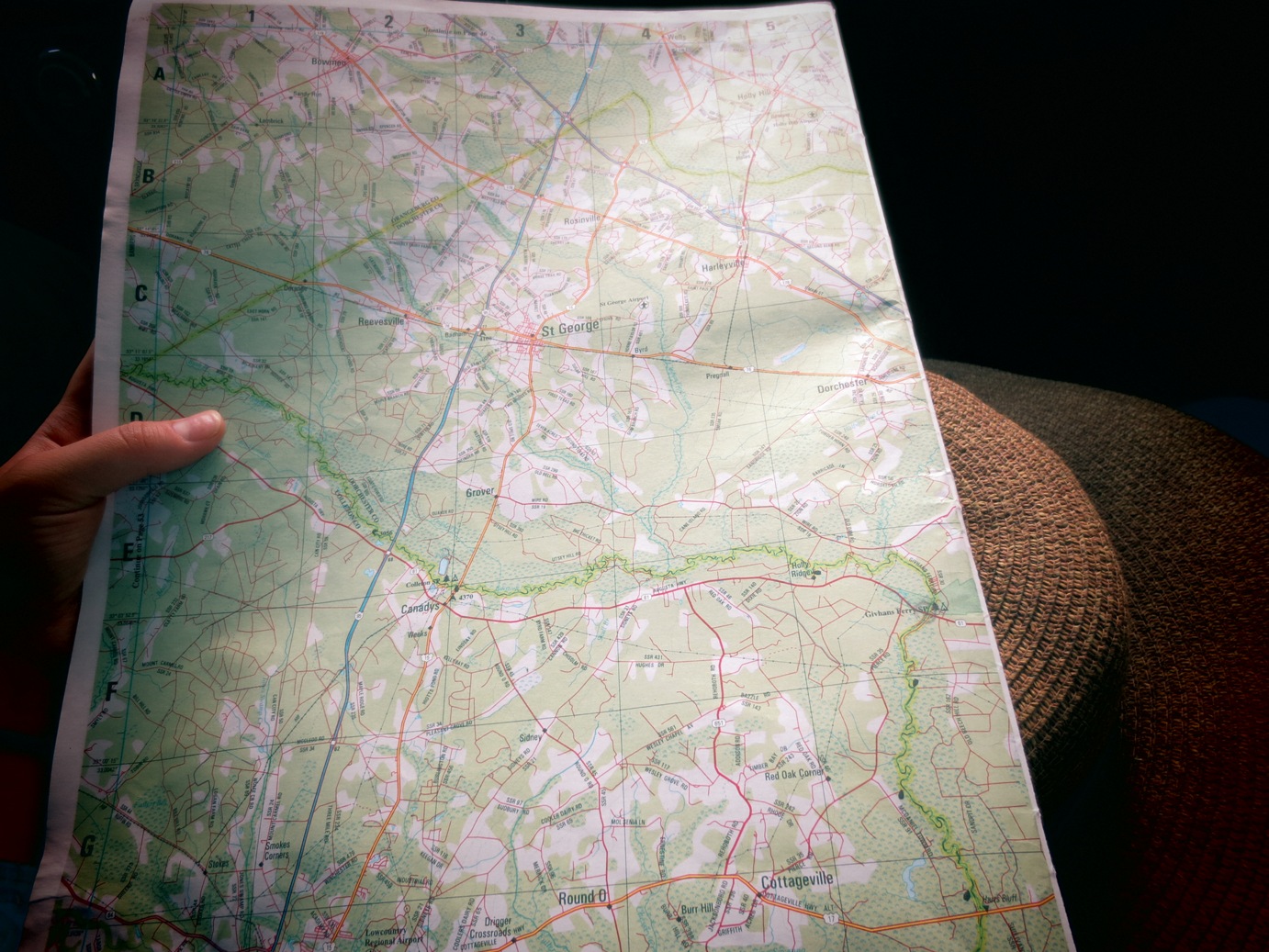
While we were on main roads, I tried to use my time learning some words.
“Is it MAL-inger or mal-IN-ger?”
“Mal-IN-ger,” Dan answered.
“To avoid responsibilities and duties, e.g., by pretending to be ill,” I whispered to myself, recalling my sister refusing to wash the floor because of an apparent headache, and seeing it as an immature way of dealing with things.
I would say that fighting our way through the thickets to reach some of the sampling sites shares more resemblance to Jane and her “civilized” crew coming to jungle than to prince Phillip struggling through giant thorns to reach Aurora: The difference is that the former is about exploring, while the latter is focused on the destination point only. Instead of claiming lands, deforesting and developing structures on them as is the case of Jane’s crew, however, our lunch break brought us to the Audubon Center and Sanctuary in Francis Beidler Forest, whose mission is to conserve and restore natural ecosystems, focusing on birds, other wildlife, and their habitats for the benefit of humanity and the earth’s biological diversity. Soon after, we went to a river within the territory of the Francis Beidler Forest where we planned to take stream flow measurements. Because the water level was about my height, we pulled ourselves by rope on the raft already set up on the bank. Measurements went smoothly, and
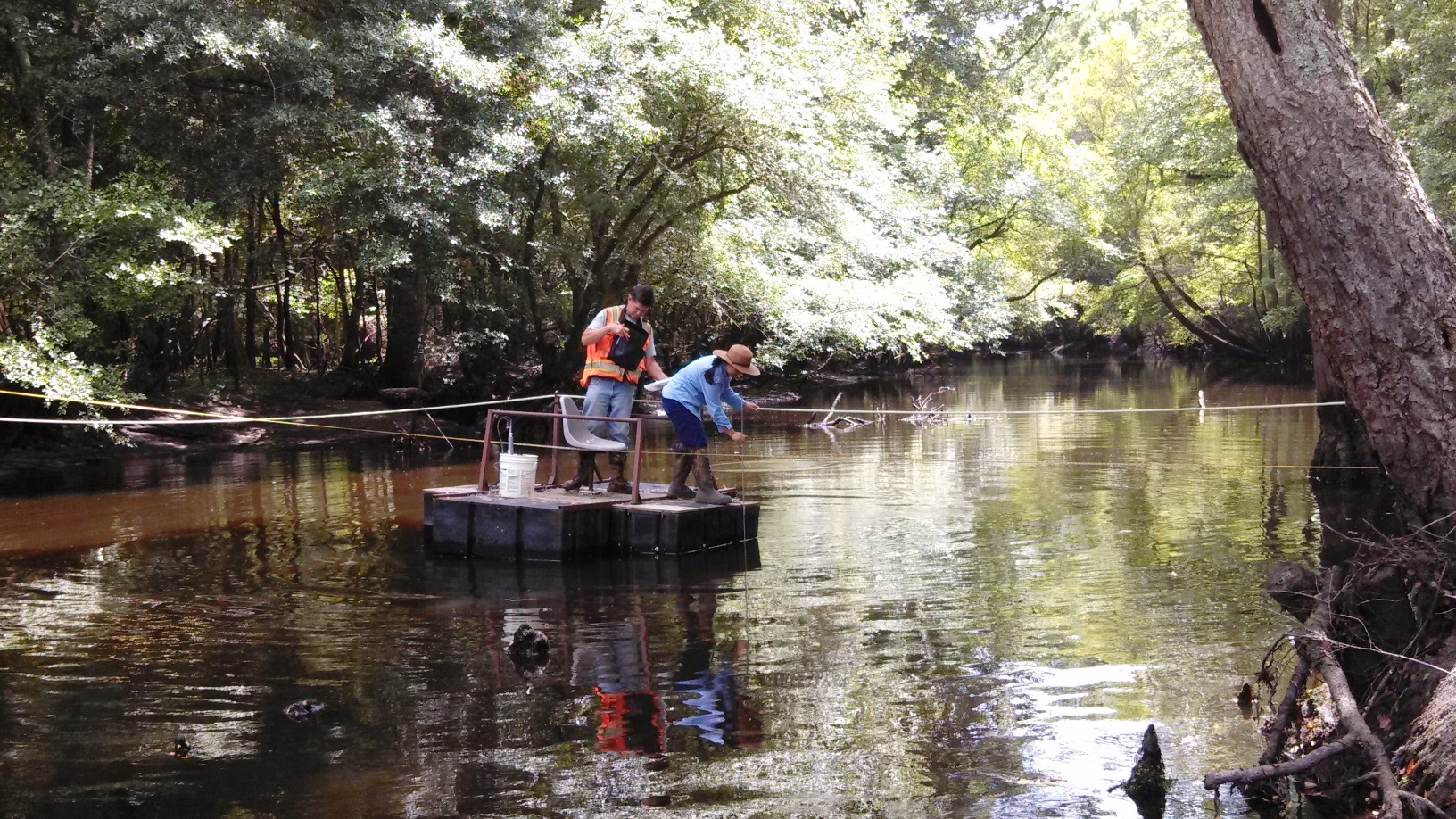
Dan made a video of Warren and me sampling from the raft, where I was commenting on how unpleasant it would be to get into this water, as it looked green, relatively stale, with insects swarming over it. Arriving at the bank and putting our instruments back in the car, Dan and I were trying to pull the bottom of the raft up in order to mount the edge upon a log that kept the raft from drifting away. As I put my foot a bit further, it instantly sank into mud, pulling me into the water. Even near the banks, I couldn’t touch the bottom; the first thoughts that came to my mind were, “I am so sorry, Dan, the seat is going to get wet,” and “Good thing I didn’t have my phone or camera in my pocket.” Other than that, I thoroughly enjoyed the act of falling into the water and being soaked; ironically, in the water I could not conceive anyone getting into a minute ago.
“In the name of science!” jested Warren. Well, I guess this is the phrase that gets used to justify small acts carelessness of as well as heralding great discoveries.
I put on my dry swim suit and put my wet pants on the car roof. Our next sampling required around 45 minutes including walking to the site, so Dan and Warren suggested that I stay in the car this time, because without long pants, one would get scratches and bruises, and possibly poison ivy rashes.
“Oh, no, I didn’t foresee I would use the word so soon. I can walk with my pants on. It will dry soon. If not, this would be mal-IN-gering, no?”
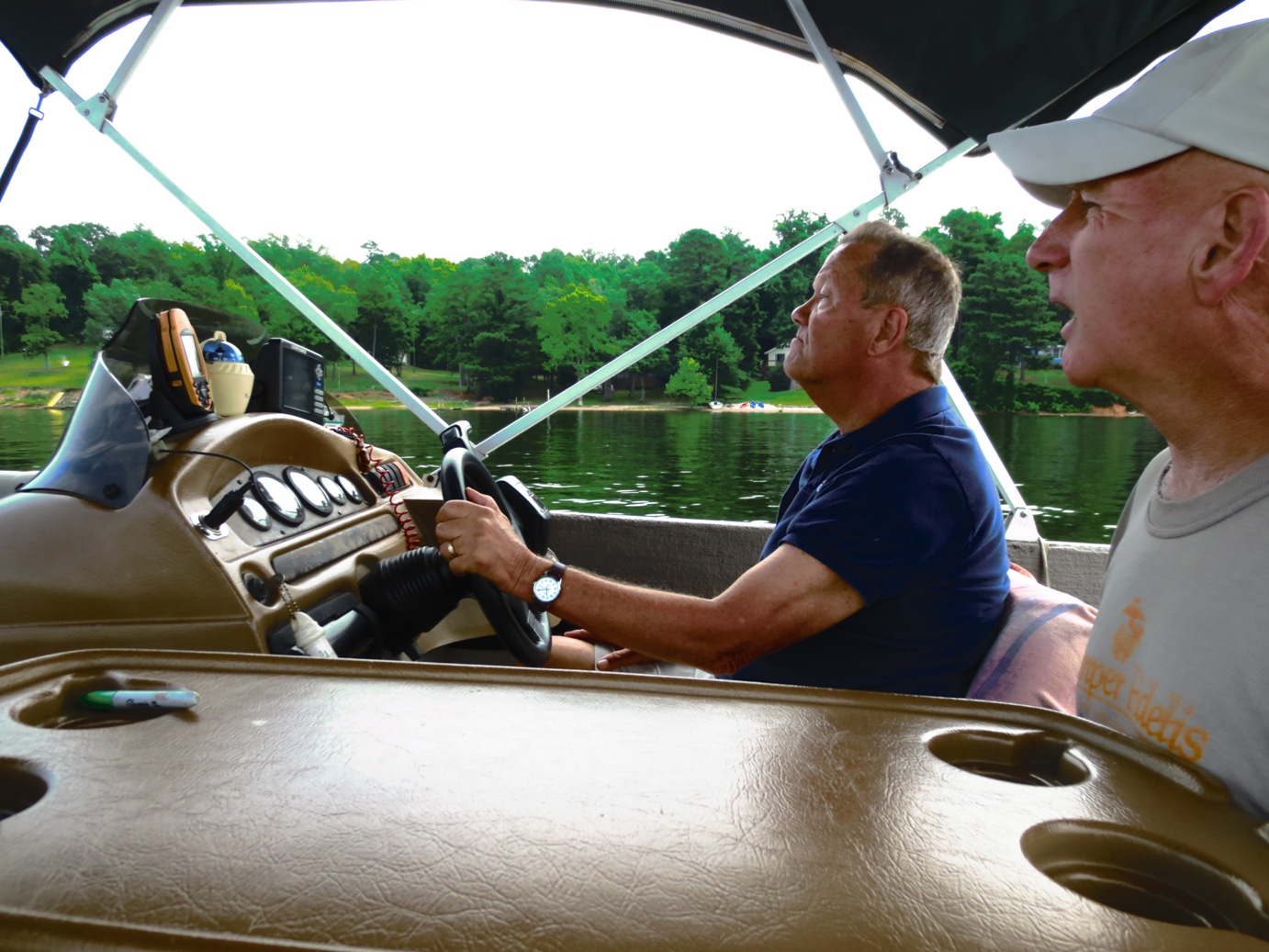
Lake Wateree. “There are no natural lakes in South Carolina,” Dick told me. Dick Foote is a member of the Lake Wateree Waterwatch group, local volunteers who monitor the lake’s water quality and general health and, along the lines, assist Dan in his projects here. Today’s trip to the lake was part of Stephanie’s project; Stephanie La Placa is a rising senior at the University of South Carolina majoring in marine science. It is her second summer working with Dan. Our work included taking YSI measurements at depths of two, four, seven feet and one feet above the bottom, getting water samples and measuring turbidity, which involved identifying at what depth visibility blurs. We visited almost all the major embayments of this long narrow lake, which was formed in 1920 by damming the Wateree River. Though only for a day, meeting with Dick and Dave (on the photo below) was very pleasant, as their attitude showed they truly cared about the lake, and was passionate about what they were doing.
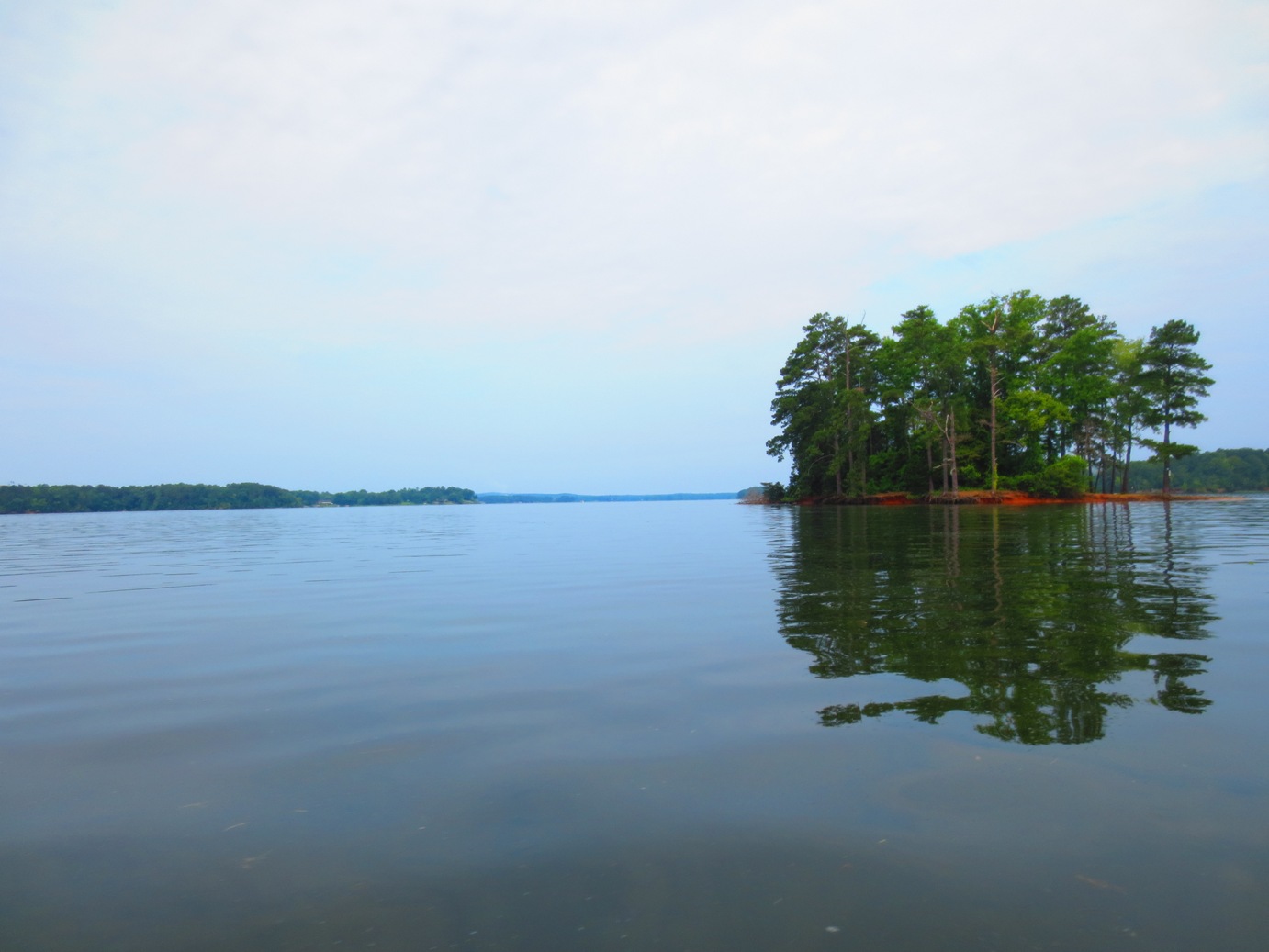
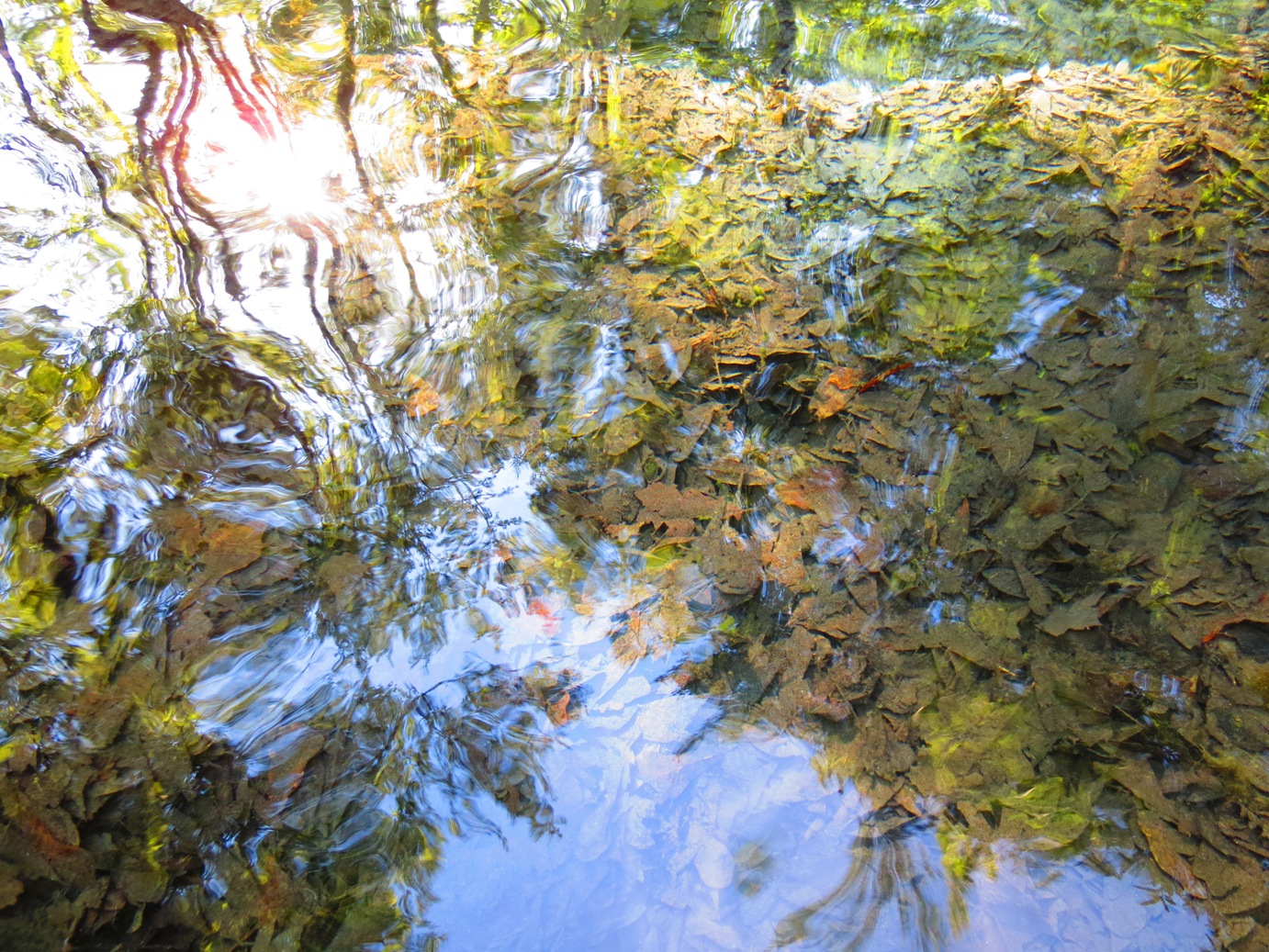
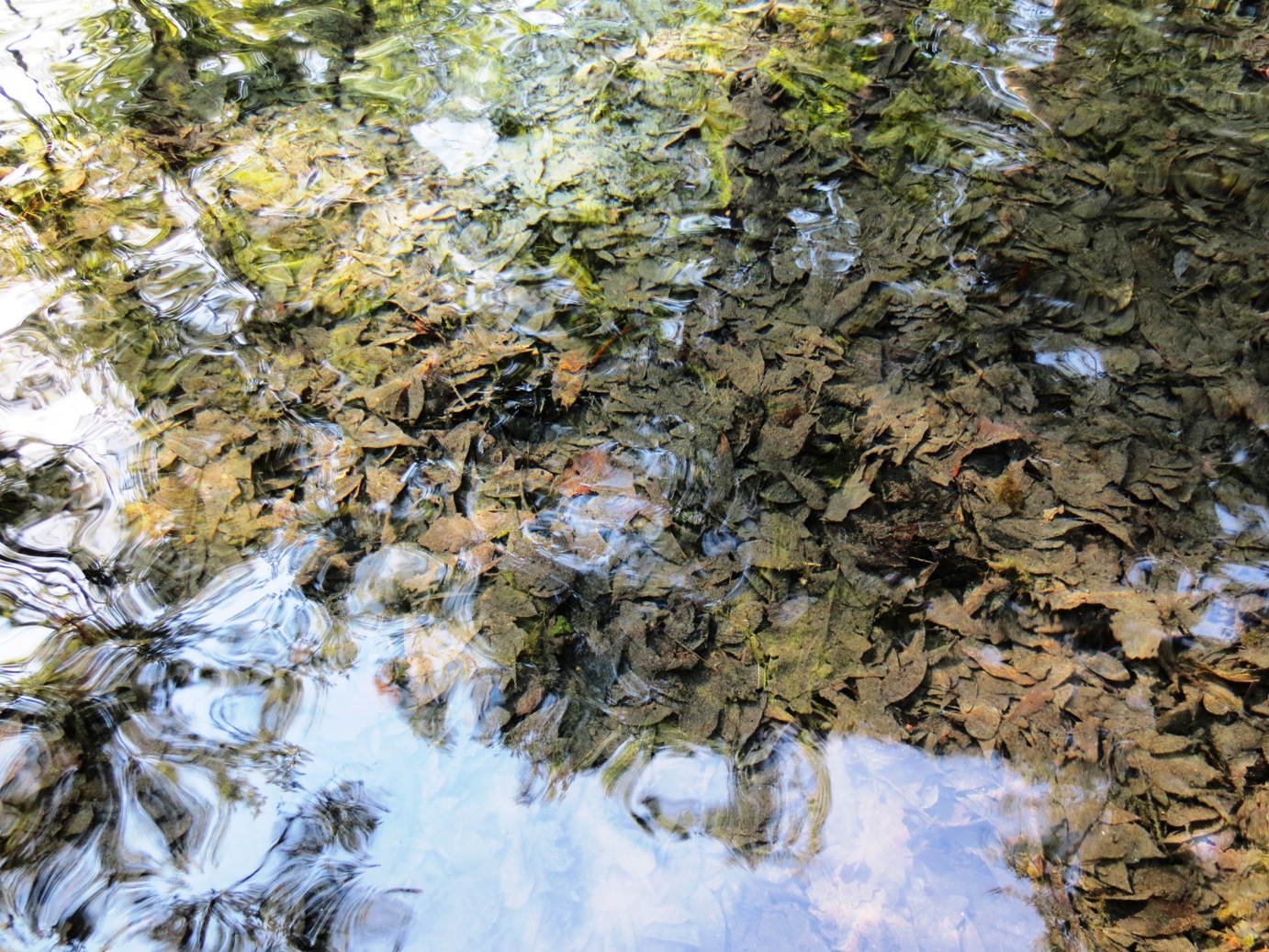
I would say nothing seemed like work, given the scenery provided and opportunity to swim afterwards. The most exciting part of my internship is visiting different water bodies, and the past weeks were mainly about sampling. I hope you enjoy some of my shots of water below.
Setsen is a geology major from Ulaanbaatar, Mongolia.
Comments
To comment you will need to log in with your Cornell account.