
Week 6:
El Fin
February 22, 2016
Well, my six weeks have officially come to an end. As I had anticipated last week, I managed to complete the time index for the second interview (much more easily than the first one went; my ear for the accent and general idea of the best way to go about things have both drastically improved since I started) and have the first transcribed and translated in its totality. So, at this point it is mostly simple reflection.
Over the last few weeks, I’ve learned much of Spanish, English, linguistics, history, and simply people. The experiences I learned about from the immigrants really bring home the issues that sometimes seem almost surreal on the television screen, but it’s been more than that. The books I’ve read detail first-hand accounts of “born and bred” American laborers and their struggles as well. Moreover, I’ve found connections to my own roots in the process; both my mother and father have spent the greater part of their lives working in factories and as part of a union, and during this internship I’ve begun to better understand the terms and talks I overheard as a child with little real significance attached to them.
Of course, one of the largest original lures of working at the Labor Center and doing translation was for Spanish skills, and I cannot ignore how blessed I’ve been to have the opportunity from that standpoint either. My appreciation for languages, ways in which they interact, and the power to be found when a bridge between two languages can be found have all greatly grown; furthermore, I know my confidence in speaking and simply working with Spanish has reached heights I could not have predicted. That’s not to say that my Spanish has suddenly become so much better than it was, or even that my vocabulary, listening, or speaking skills have become phenomenal. They’ve certainly improved. However, the largest difference has been listening to people speak with different grammar, different accents, different vocabularies…and realizing I still understand them, and when I speak to them, if my grammar is a bit off, or my accent sounds funny, or my words are a bit out of place, they’ll still understand me, too.
But, where do I go from here? My plans haven’t really changed; I still plan on a gap year while I work, hone my skills, and prepare for graduate school, buffered by the skills I’ve learned in translation over the last month and a half. I am far more prepared for that year and what will come after it than I would otherwise have been, though, and I’ve been fortunate enough to make some good friends at the Labor Center (and owe them another thanks for taking me out for lunch on my last day!). Moreover, Jen and John have agreed to keep forwarding me things to work on in the future; I could not be more grateful for the opportunity.
Of course, there is an immediate future before I start worrying about graduate school. During my next block here at Cornell, I will be starting my senior English-Creative Writing project in which I plan to translate several short stories by Pio Baroja, a Spanish author who is said to have greatly influenced Earnest Hemingway. As I start planning out this project, I have realized just how much this internship has been helpful. I have studied translation theory, had to make practical choices regarding the maintenance of voice and style, familiarized myself with numerous online resources, and perhaps most importantly, learned how to do something, look at it, and start again in an equally valid direction but different from first intended. With translation, there are almost always multiple ways to translate something, and you can’t be too afraid to go for it in one style or meaning while fully recognizing you could be wrong and need to redo it again…and again…and maybe still yet again.
Not so different from life in general, if I can be forgiven for sliding into a philosophical mode for a moment. Perhaps that is actually the largest benefit from this internship: the idea of working in translation (in whichever arena it may be) is no longer merely an extrapolation, a dream, something you think about being possible but can’t quite see. I’ve done it, albeit temporarily and under slightly different circumstances than a regular job or career would be. The fact remains that I’ve seen a version of my reality in which translation plays a large role, and what is left is simply to make that version lasting; I’ve proven to myself that I can do it, in other words, so there is absolutely no reason why I would not do it when I know I want it. That is a bit of a strange thought since I had not realized there was any question of it in my mind, but apparently there was until these weeks strengthened my confidence and resolve alike.
So, with all that being said, I owe a huge thank you to the Cornell College Fellows program, the University of Iowa’s Labor Center, all the staff who work without nearly enough recognition at both places, and of course, the donors who help fund my fellowship and others like it. Iowa City may not seem that far from campus, but for someone like me, an opportunity like this would not have been possible without the assistance of the program.
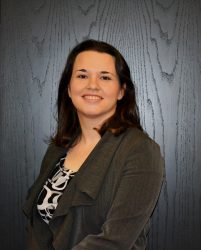
Elizabeth Flick is an English and creative writing major from Paris, Texas.