
Week 2:
Meeting the Community
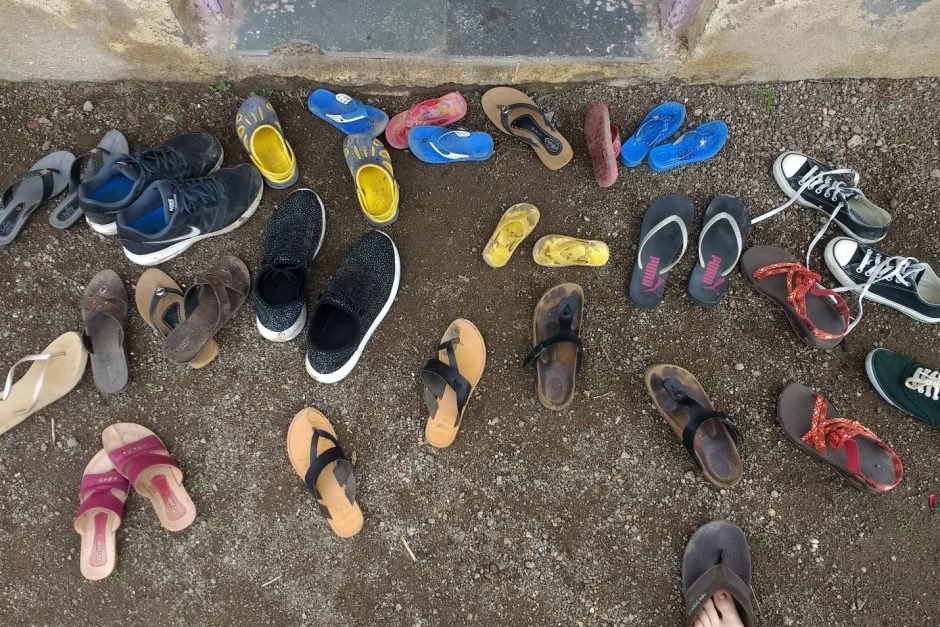
Shoes outside of a preschool we visited in a project village
July 24, 2018
CRHP’s Programs
In the past two weeks we have spent time learning about how the Jamkhed model approaches communities, their process for building rapport with the villagers, and how they provide space and resources for the community to determine what issues they want to address. We discussed topics in small groups as well as a whole class, and spent time engaging with CRHP staff as they taught us a variety of subjects. Although the pace of the orientation to CRHP’s programs can seem overwhelming to some, I have been well prepared by the block plan to handle many readings in a short time, intimate class discussions, and retaining a wealth of information within a handful of days.
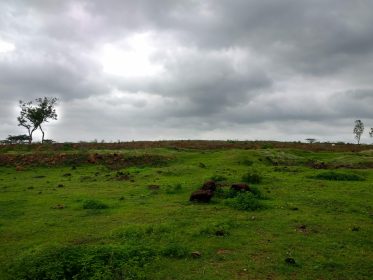
Some of the subjects covered this week included government collaborations, diarrheal diseases and open defecation, mental health, current trends in infectious and non-communicable diseases, watershed development, the women’s movement in India, and community based participatory research. We spent one morning exploring a watershed to see in person how the gully plugs and planted trees prevent soil erosion, and how farm ponds allow farmers to sustain their crops in times of drought. We also spent hours theorizing how cultural context and education play roles in changing the habits that lead to diarrheal diseases, and how instituting just one solution cannot make an impact on mental health diagnosis and treatment, but instead multifaceted approaches are needed to address multiple issues at once.
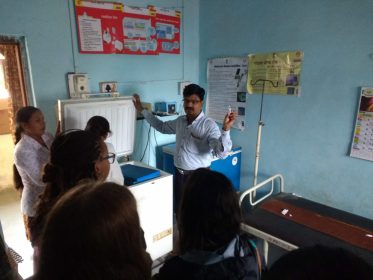
We visited a primary health center in the Jamkhed block where we were given a tour, saw babies vaccinated, and were explained their process for malaria screening. The doctor that hosted us sat and explained healthcare in India while we took notes and asked questions. It was fascinating talking with him and learning about how they assured treatment, what they provide treatment for, and the various government programs and incentives available to people. The most jarring part was the cost; every time he described a treatment for a disease, or vaccinations available, or family planning methods, we would ask how much patients needed to pay to receive the product, and every time his answer was “it is provided free of cost”. I could not believe that it was so easy to receive treatment; there are of course other barriers, like availability, superstitions, and proximity to primary health centers that impact people’s health, but I had never thought to expect something like universal healthcare from a government.
We also learned about the Indian women’s movement and some of the issues that banded Indian feminists together. Sex-selective abortion, dowry, sexual and domestic violence, and political rights for women were just a few of the causes, and although we had discussed these subjects previously, this was the first time that we looked at those issues through a feminist lens. A huge theme in this lecture was cultural context and its importance in planning and implementing social movements. It is impossible to apply a feminist movement model that works in the Western world to a developing country both because every country has its own history (in addition to its own history with gender inequality), and because developing countries specifically have a history of colonialism which the Western world has not experienced (namely because they were/are the colonizers). Professor Thomas ended the session by describing how acts of feminism are unique within each person’s culture – a girl or boy going to the Adolescent Girls Program or Adolescent Boys Program is a feminist act because they are trying to educate themselves on cultural and social issues and make decisions for themselves that are different than those that their parents made; VHWs are acting as feminists by holding their position, influencing their communities, and making choices for themselves. At the very end of the session said “there is no one way to think about feminism. There is no one way to think about freedom”, and I think that is a powerful, moving, and true statement.
“Houses of Cloth”
A definite highlight of the week was preschool pick up with Meena, the preschool teacher for CRHP. We walked to Indiranagar, the poorest part of Jamkhed, with her to pick up her students, but also to check in on the health of families (Meena was a trained lab technician before she started work as a preschool teacher). There were many children running around without clothes, small living spaces, open bathrooms that make bathing difficult and strenuous for women, and houses made out of cloth instead of wood, brick, or metal. Meena explained that the individuals who live in the “houses of cloth” cannot afford other materials, and so must make do with what they have available to them. It was jarring to try and understand what it must be like to live every day in a way so different from my own, but I also remembered that I have seen conditions very similar to this in the United States; no country is free of its own variety of struggle.
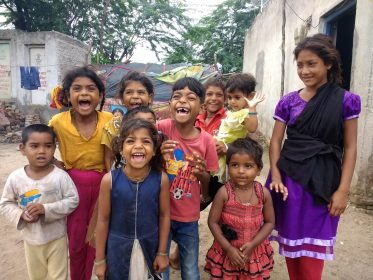
Although seeing the poverty in this small village was difficult, the children were just ecstatic to see us – and our phones. They asked us for pictures incessantly, and at one point there was a group of 10 kids all smiling and laughing as I snapped their picture. They were glowing with the kind of joy that comes from curiosity. In no way did my pictures (which I have no way to get to them) help their situations or that of their families, but for those few minutes they were like any little kids who want to have their pictures taken. I believe that innocence and joy are universal attributes and I am grateful I could share those moments with them.
Happenings in Jamkhed
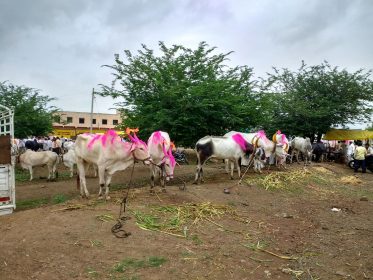
Since I last wrote there have been a couple of fun events here in Jamkhed and on the CRHP campus. At the end of last week, the group of CRHP students and interns as well as a few CRHP staff members went to town (a normally forbidden act on a Saturday) to see the cattle and farmer’s market. We drove through crowds of people and vehicles while a traffic director blew sharply on his whistle and walked amidst traffic, gesturing sternly for people to stop and go. When we finally arrived at the cattle market it was obvious that we were a sight to see. Stares and smiles are standard for us when we go into town, but as we walked into a sea of men dressed in white and cattle with painted horns and bright pink powder dusted along their backs, it was apparent that we were the sore thumbs. Nevertheless, listening to Marathi spoken quickly over a massive speaker, seeing the livestock decorated with colors and bells, and walking through what is a standard Saturday morning for everyone else was a fun start to my day.
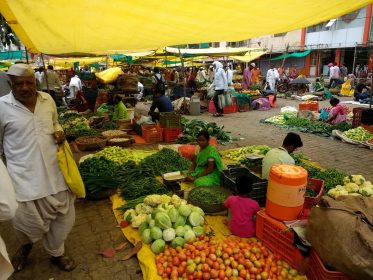
After the cattle market was the farmer’s market. Men and women with varieties of fresh vegetables, grains, baskets, and powders sat on their mats underneath yellow tarps that gave the whole street a vibrant glow reminiscent of sunshine despite the clouds. Scales sat on the ground by the venders’ feet as they picked through their products or chatted up potential customers. The colors were stunning and the smiles people gave us were brighter. We saw the house where CRHP first started, and it is still difficult to imagine such a small building as the birthplace for such an expansive organization. It was a lovely Saturday followed by another great week.
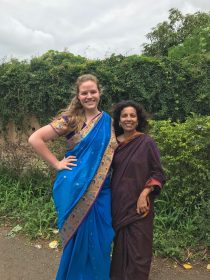
We also had a birthday celebration! Ratna, a member of the CRHP staff and the mother of Jayesh (another CRHP staff member), turned 75 on Thursday and the entire group of students and interns were invited to her celebration – as well as another 200 or so guests. After our morning session the women congregated in a single room to be folded and wrapped into our saris by women from the kitchen and CRHP staff. I held as still as I could while Surekha wrapped the yards of blue cloth around my waist; folding, pleating, tucking, and pinning all around me. Surprisingly quickly I was ready, but not before I started sweating profusely. Luckily, saris do a very good job of covering up any areas that might have shown during the actual ceremony. The celebration lasted for about 3 hours, and although I was not able to understand most of the speeches, it was touching to see how many of Ratna’s friends and family had come to celebrate her accomplishments.
All in all it was a beautiful week, and I am excited to see what new adventures lie ahead.
Taylor is an international relations and Spanish double major from Denver, Colorado.