
Week 8:
Finalizing COVI-SWA Preliminary Data
July 27, 2021
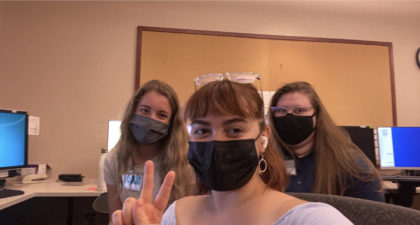
Olivia, Emma, and I finalizing COVI-SWA files together
Week 8 was focused on making our final changes to the scoring of all COVI-SWA files to ensure that the data analysis that we will be running next week is as accurate as possible to standardized methods of scoring. To do this, we reviewed chin tone analysis called REM atonia index (RAI) in Hypnolab, made sure all user markings were in the correct channels, reviewed artifact markings denoting arousal events, and verified tonic muscle activity markings. We downloaded and began exploring R studio, a coding software, in preparation to begin the final data analysis next week. Our ultimate goal of the study is to establish whether or not there is an elevated REM sleep behavior disorder (RBD) diagnostic qualification called REM sleep without atonia (RSWA) in consented Mayo Clinic Center for Sleep Medicine participants who tested COVID-19 positive before the time of their polysomnogram (PSG). From recent COVID-19 neuroimmunology studies, the proposed mechanisms of COVID-19 in the brain involve inflammatory pathways that could also interact with the brainstem: the REM sleep atonia control center. Neurology and COVID-19 case studies also suggest the prevalence of sleep disorders as characteristic of long COVID along with depression, anxiety, fatigue, and delirium, which are also characteristic of synucleinopathies associated with elevated RSWA and RBD. Our study will be fairly novel as there has only been one other study published to examine RSWA post-COVID-19 infection.
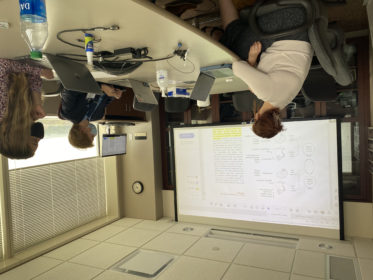
Olivia, Kevin, and I at Journal Club #6
Our journal for the week aimed to examine the relationship between synaptic scaling in mouse brains with varying sleep/wake cycles. Synaptic scaling is essentially the pruning of synapses that mediates learning, memory, synaptic volume, signaling, and saturation through synaptic depression and potentiation. It has been hypothesized that synaptic potentiation, or the creation of new synapses and the strengthening of existing synapses, occurs largely in the wake state and that synaptic depression, the degradation of synapses, occurs largely in the sleep state. The factors studied to expound the extent of this relationship included postsynaptic density, the number of synaptic AMPA receptors, the volume of the neuronal spine head, the number of presynaptic vesicles, and vesicle fusion/docking/binding proteins. The findings concurred with the synaptic scaling theory: scaling occurred more in sleep than in wake, and denser, larger volume, vesicle, and vesicle machinery-laden synapses escaped the degradation of scaling more than other synapses. In other words, more sleep contributed to more synaptic desaturation and pruning of weaker, smaller synapses formed in the wake state that would otherwise over-saturate neuronal signaling and brain capacity. These findings further support the importance of adequate sleep for neurologic health.
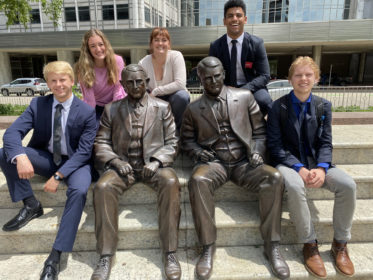
Dr. St Louis’s Minions and the Mayo Brothers
I look forward to continuing shadowing and running data analysis next week in preparation to begin co-writing our novel COVI-SWA study in my final week at Mayo Clinic. Reflecting on this time has given me so much insight into my career goals, and I aspire more and more every day to work in healthcare as my passion for our work grows. I’m very blessed to work closely with our principal investigator Dr. Eric St Louis, who I will be shadowing on Monday, our amazing supervisors Paul Timm, Scoring Master Tyler Steele, as well as my fellow interns and true friends Olivia, Kevin, David, and Emma. The connections I have made here have been significant and motivational to continue working with more like-minded, healthcare-oriented individuals in my future.

Gwen Paule is a chemistry major from Saint Paul, Minnesota
PreviousWeek 7: Scoring the Rest of COVI-SWA and more Shadowing
NextWeek 9: Writing COVI-SWA and the Full Whipple with Reconstruction