
Week 4:
Behind the Scenes
June 18, 2022
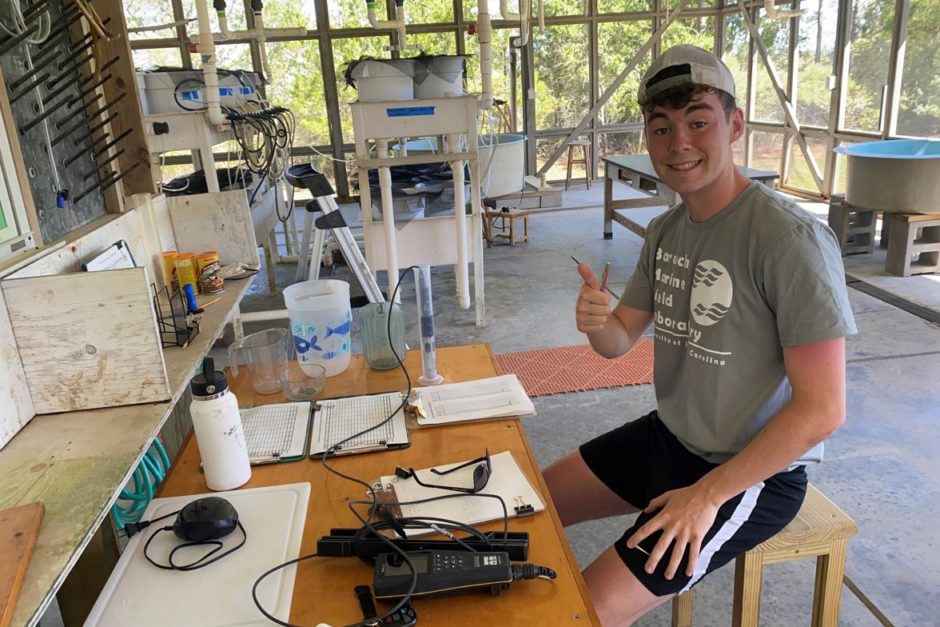
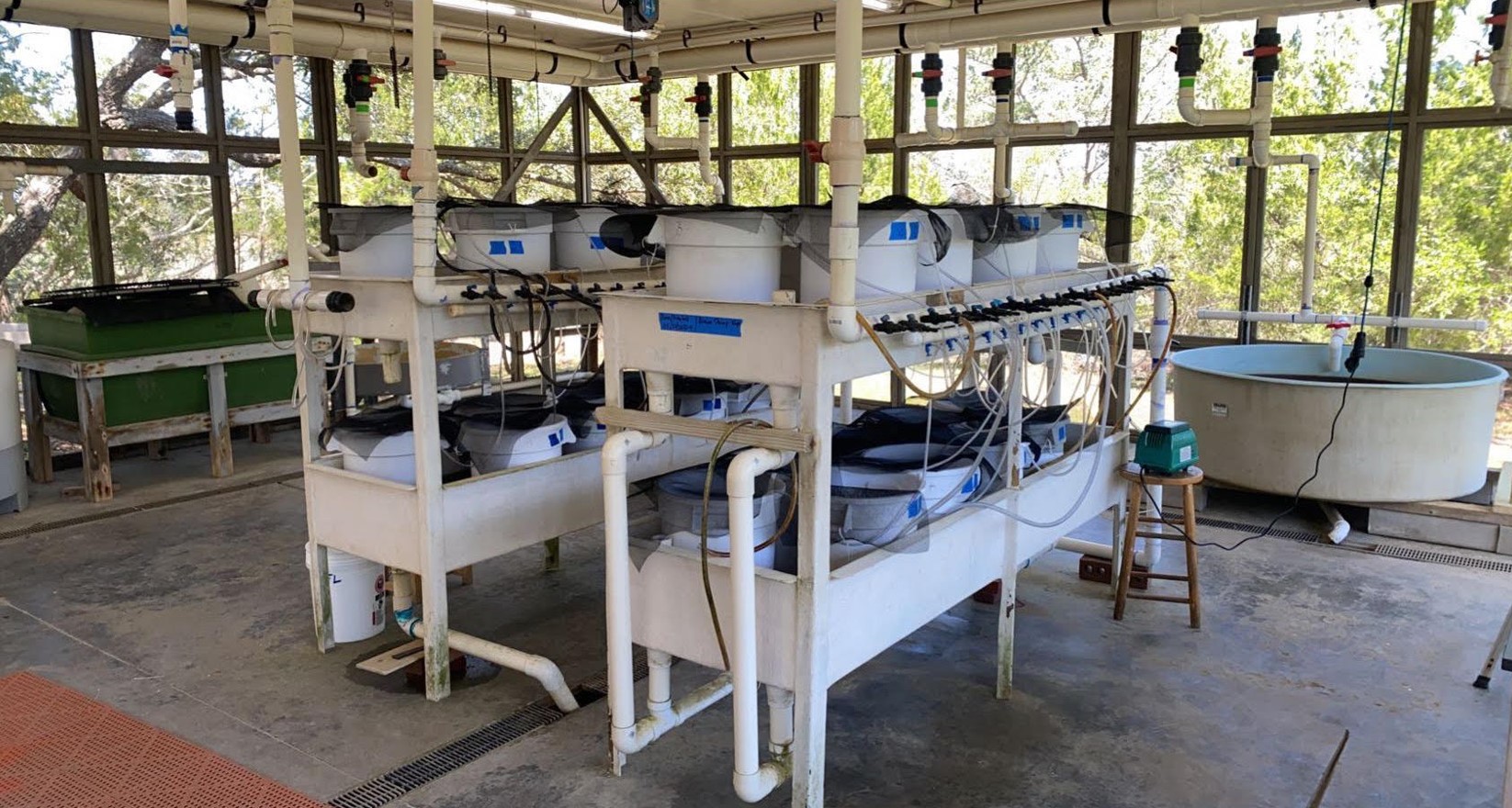
This past week has been quite a roller coaster ride for our brown shrimp experiment. Over the past couple of weeks, Matt, Robert, Willa, and I have been preparing the seawater lab for our shrimp experiment, and on Friday we officially started! Initially, it was our intention to start our 15-day experiment earlier in the week, but we had a few bumps in the road with PIT tagging and our shrimp size in general, so we ended up starting a bit later. Now that we’re underway, I’ll be spending a good portion of my time working in the seawater lab monitoring the water quality and all of the shrimp’s growth.
I think one of the coolest aspects about research out here at Baruch is that the majority of ongoing projects are very cohesive amongst everyone, which leaves ample opportunity for someone like me as an intern to learn a bunch. For example, Monday was a full day of fieldwork for me. In the morning I went out on the boat to help some others with zooplankton sampling out in Winyah Bay which was interesting, and then in the afternoon pulled a seine and did some species identification on various types of fish, shrimp, and crabs. If you’re unfamiliar with what a seine is, it’s essentially a method of fishing where you pull a large net through a body of water (in our case though shallow estuarine creeks) to collect anything and everything in its path. For our purpose on Monday, it was great because we wanted to catch and identify any types of species currently in the creeks. As the summer goes on, species abundance varies greatly in the estuary, so it’s an effective method to get an idea of what type of species are present at a given time.
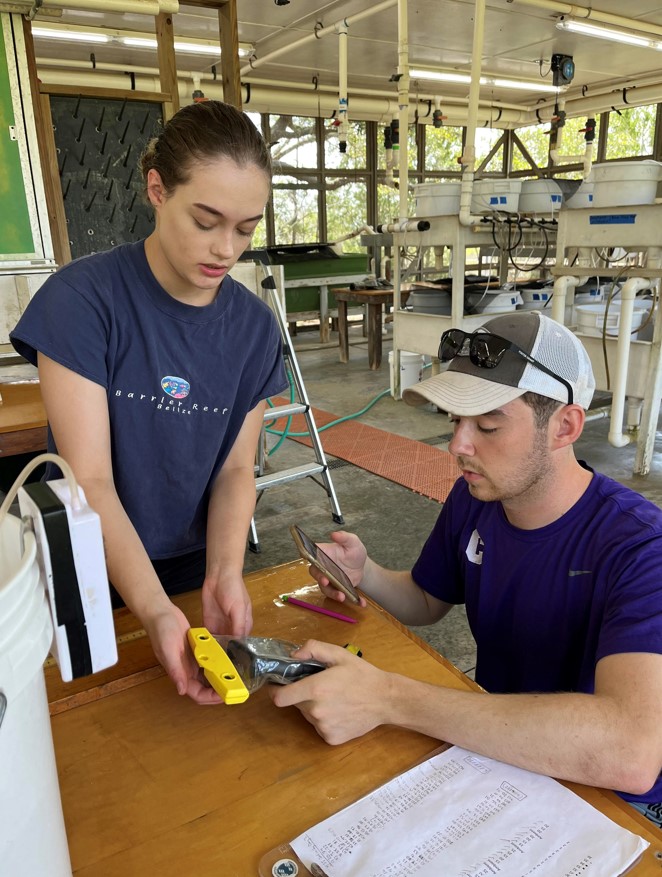
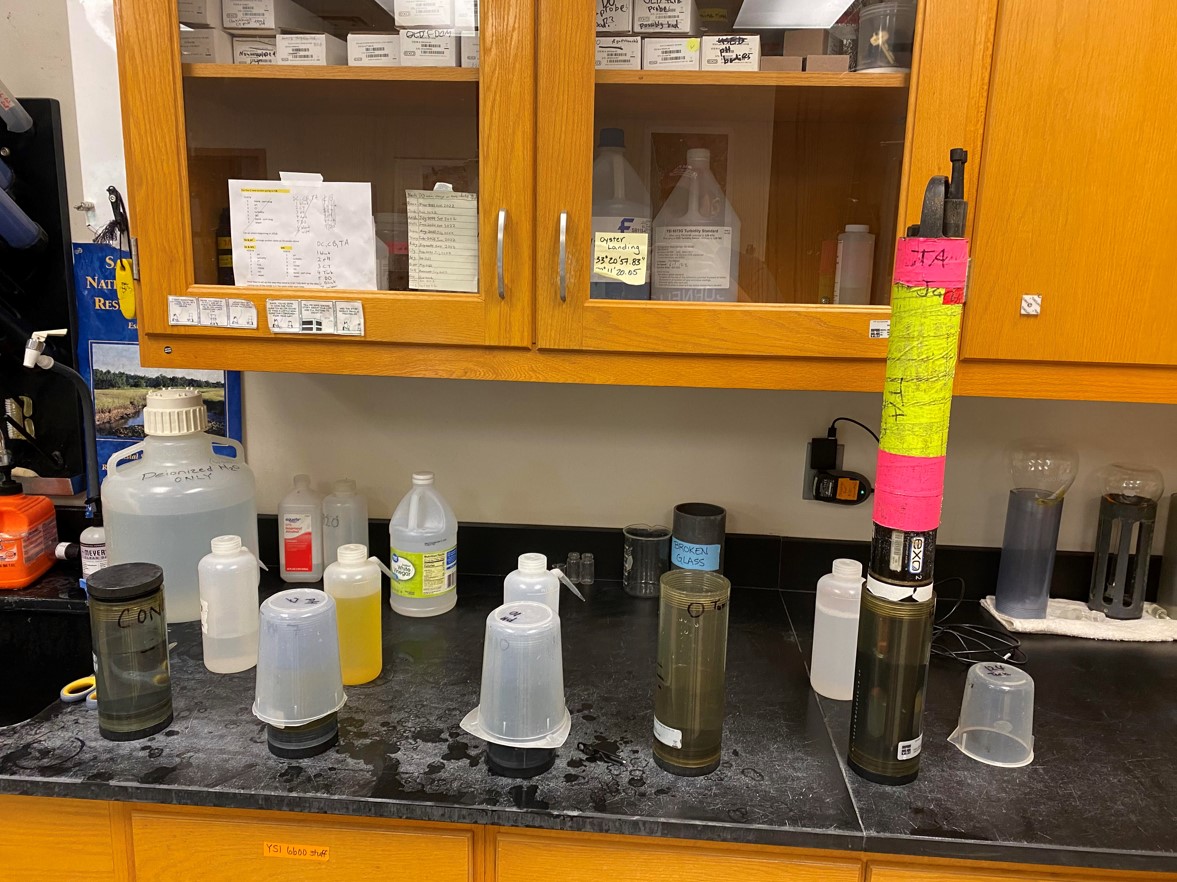
One thing that I’ve come to realize, especially with all of the shrimp preparation going on this week, is how much work really does go into conducting fieldwork. There’s way more behind-the-scenes preparation that you don’t learn about in the classroom or read about in research papers. For example, I spent the majority of Wednesday helping Baker calibrate some deployable water quality sondes needed for fieldwork that week. The sonde sensors we use (pictured below) are equipped with seven individual sensor ports that are interchangeable depending on what sort of data you’re looking to collect. To give you an idea of what some of them measure, we calibrated pH, conductivity, turbidity, chlorophyll, dissolved oxygen, and depth sensors to name a few. It was quite interesting to learn the ins and outs of the calibration software and learn what preparation this sort of data collection requires.
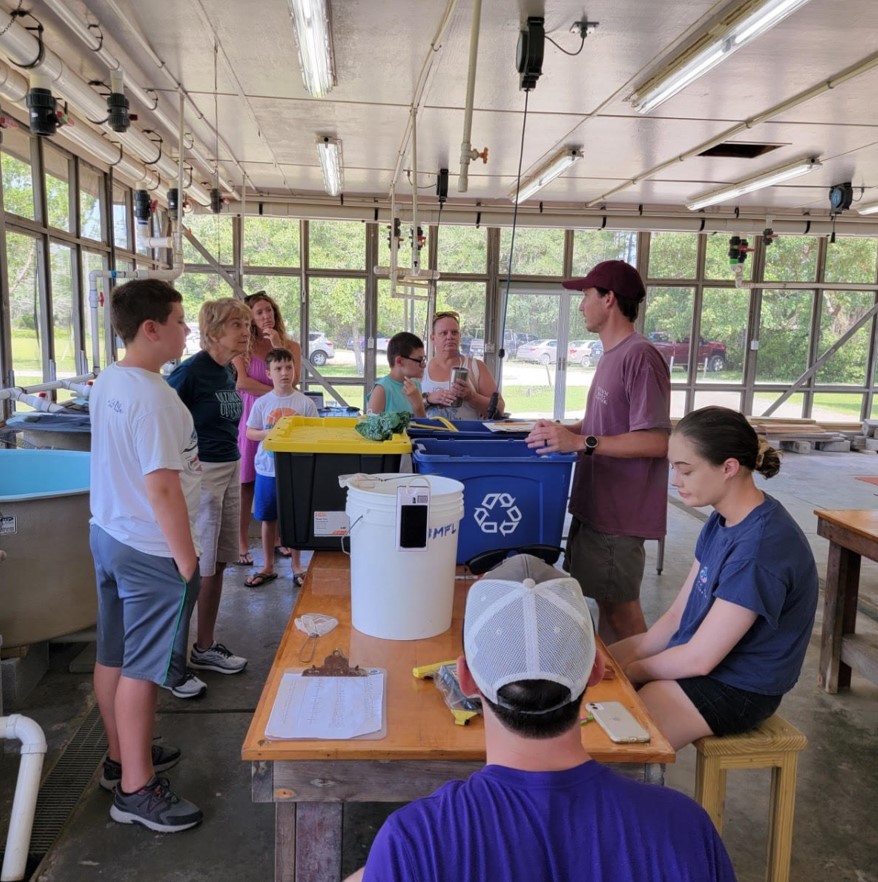
The education side of estuaries and estuarine species is something that is valued quite a bit out here at Baruch as well, which surprised me initially. Coming in, I thought the lab as a whole was strictly for research and maybe some college field courses, but I was totally wrong. This week while working in the seawater lab, a small class of younger kids was visiting the lab and learning all about what sort of research we were conducting, and it was cool to explain to them the brown shrimp’s lifecycle in the estuary and what they look like up close and personal.
Drew is an environmental science major from Solon, Iowa.