
Week 6:
Rain, Rain, and More Rain
July 2, 2022
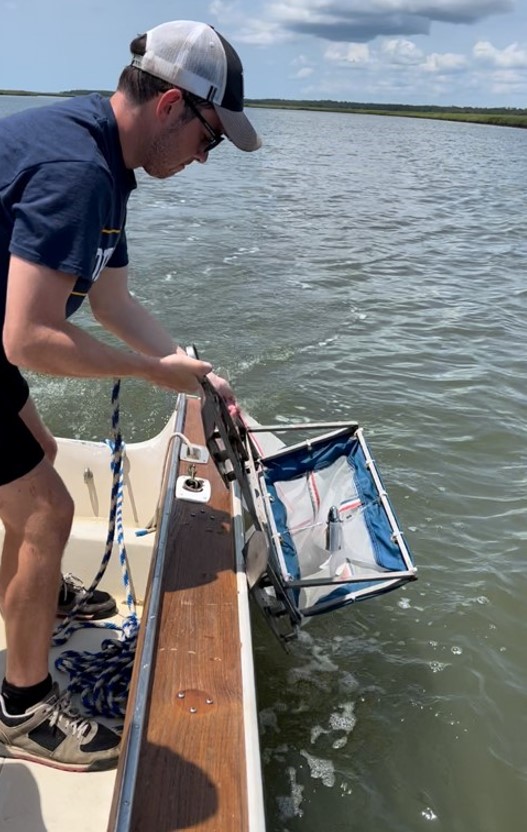
Although it rained almost every day, it was another great week out here at Baruch! On Monday afternoon, Isabel, Willa, and I went out in the field with Bruce to help conduct a zooplankton cruise in the creeks of the estuary. The purpose of these samplings was to, at specific creek sites, cast very fine mesh nets and collect zooplankton floating in the water column. One part of the zooplankton collections I found particularly interesting was that placed inside the nets was a flow meter that measured the rate at which water flows through the mesh, which can be used later on to measure the actual volume of water flowing through the nets each time we sampled. Thankfully, this afternoon was one of the few times where it wasn’t pouring rain, which meant it was a great afternoon spent on the water. On our way back after collecting samples, we stopped to observe a handful of dolphins swimming in the creek which was pretty awesome.
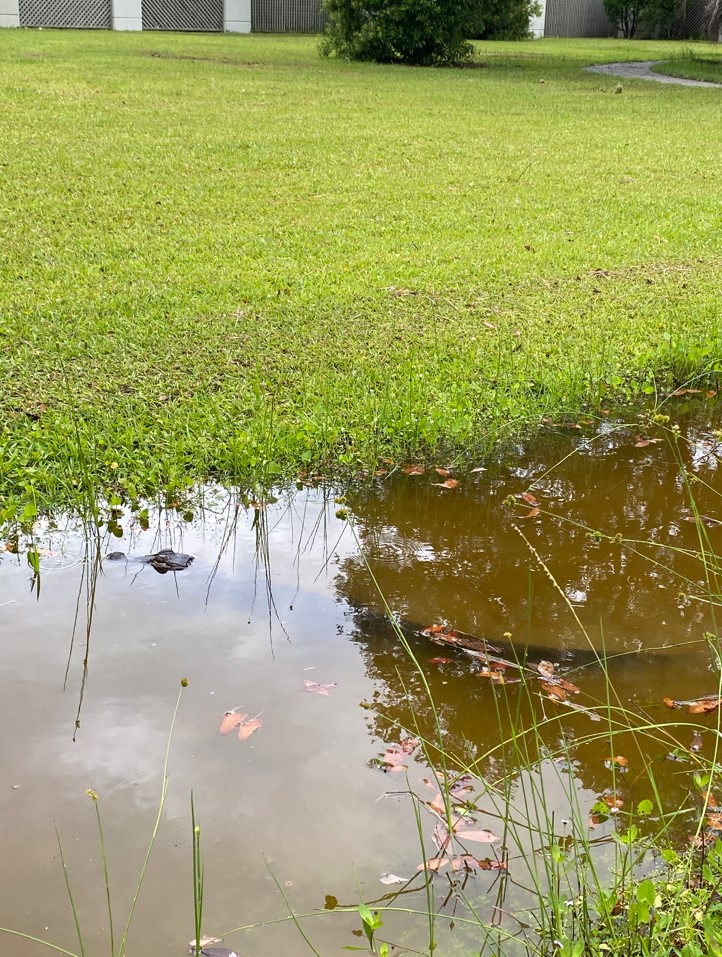
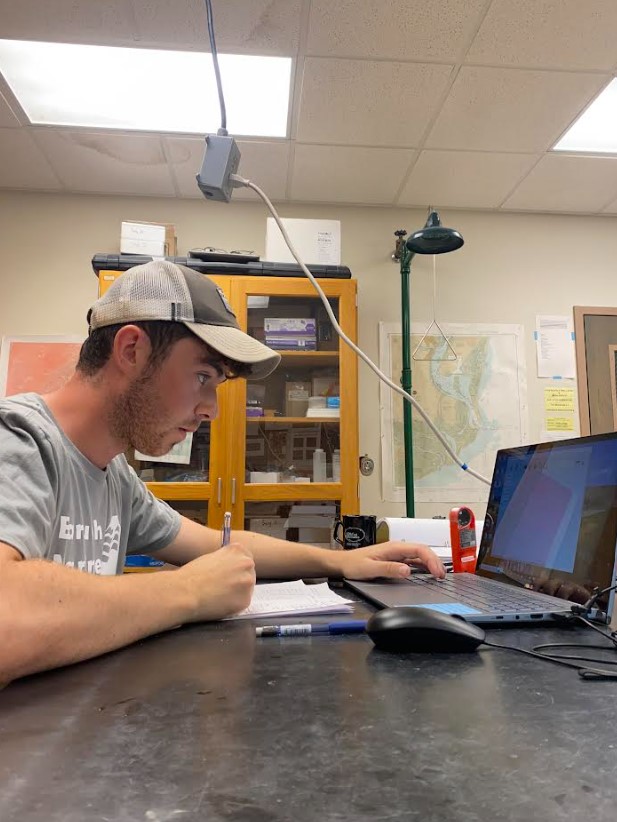
Despite it being rainy and overcast all Tuesday as well, this gave Willa and me the opportunity to sit down and sift through some data we’ve collected so far during our shrimp experiment. Let me tell you, we just passed the halfway point of our experimental period, and our datasheets are filling up fast! On top of some computer work, I also jumped in and helped Isabel fix up crab traps for some blue crab research Robert has planned later on this summer, so I am definitely looking forward to seeing how that goes as well. Lastly, on the walk to my car at the end of the day, I stumbled upon an alligator swimming in the ditch next to the main parking lot. It definitely took me by surprise because it hasn’t rained much recently so they haven’t been around too much. It’s not uncommon for them to swim around the ditches when they’re filled full of water after a storm, so it’s always cool to stop and see what they’re up to throughout the day.
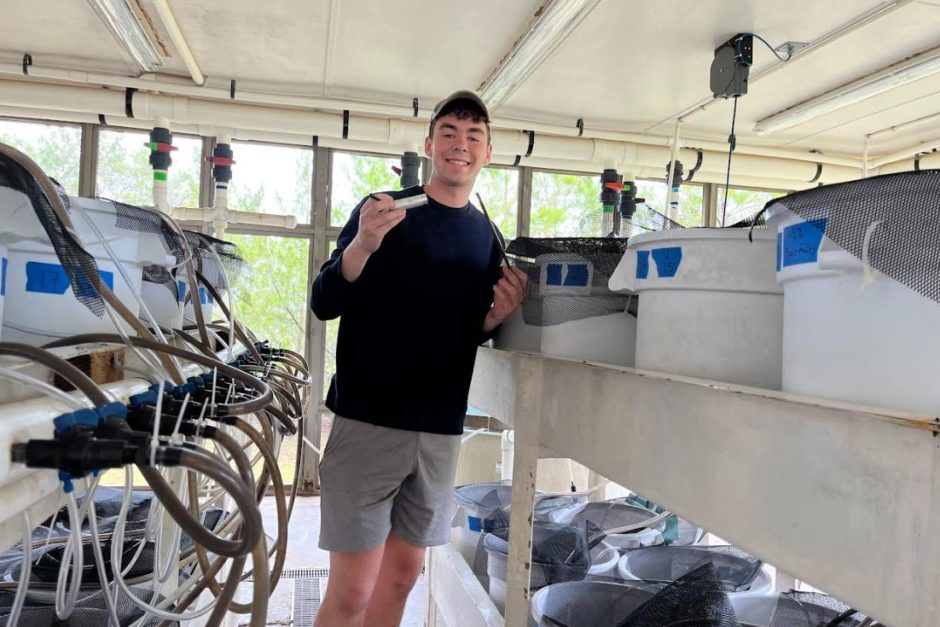
I would say that Wednesday was probably the busiest day of the week for me. On days 5, 10, and 15 of our shrimp experiment, we measure and weigh every individual shrimp in our experimental tanks, and because Wednesday was day 5, we spent the whole morning out in the seawater lab measuring them all. The purpose behind these measurement days is to give us the ability to identify trends in shrimp growth on an individual level. Theoretically, we could measure the length and weight at the very beginning and at the conclusion of the 15 days, but after the 15 days are up, our intention is to be able to calculate individual shrimp growth rates over time, which is why these incremental measurements days are important.
In the afternoon, I took a break from shrimp duties and helped Baker calibrate and prep some more water quality sondes to be deployed on Thursday. Because I’ve helped him with the calibration process on several occasions now, I’ve familiarized myself enough with the sensors and the calibration software to the point where I can do it easily without needing to ask him many questions. I also learned how to post-calibrate the sondes after being deployed in the field for a while which was cool. Often times algae or barnacle growth on the face of the sensors occurs, which can impact how accurate the collected data might be. If during the post-calibration process, we find out that some of the sensors are not functioning properly because of such growth, it’s a big indicator to us that we need to re-evaluate how viable our data really is.
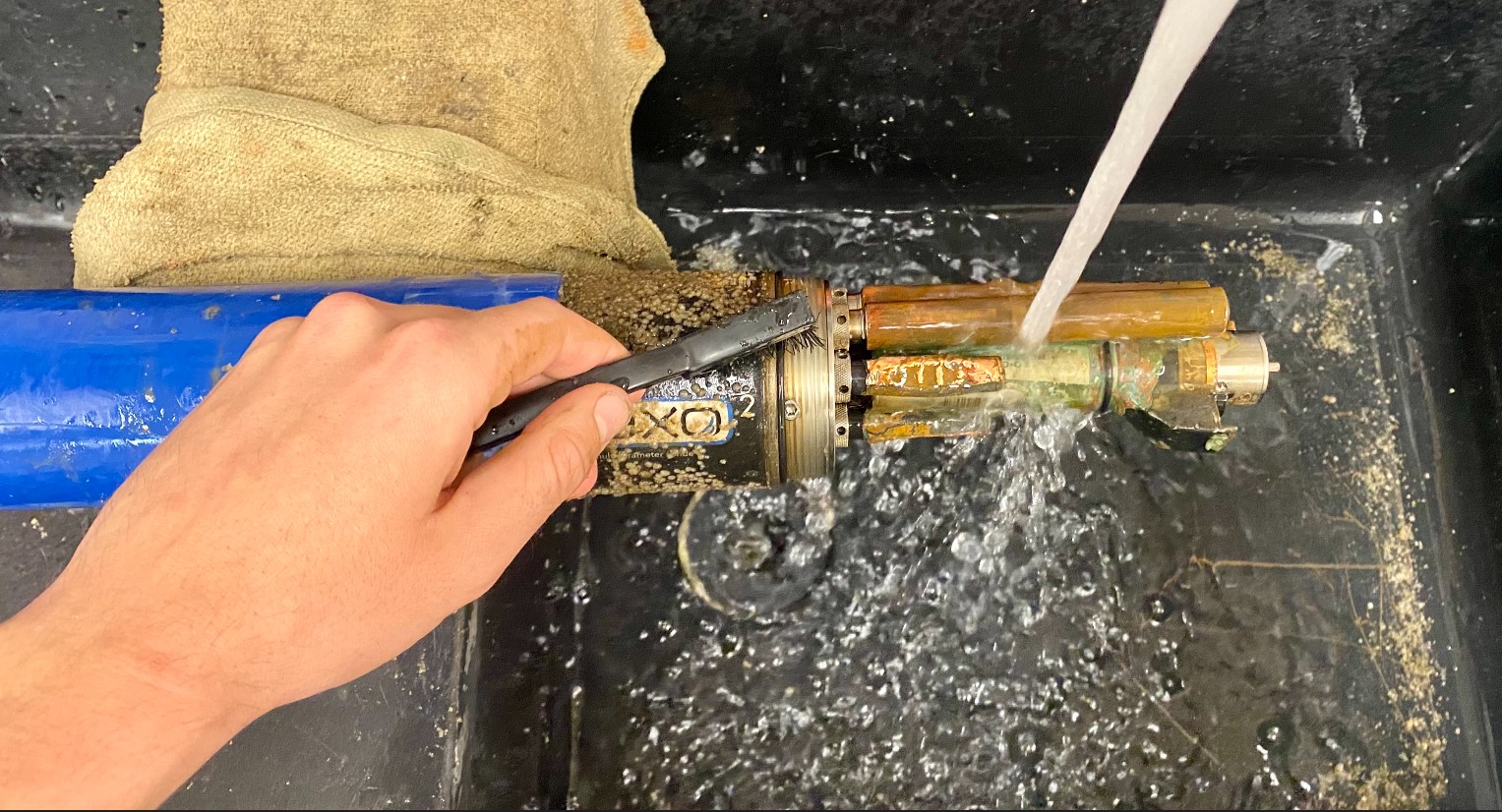
For the remainder of the week, I spent most of my time in the seawater lab maintaining the tanks and making sure all the water lines were working properly. Because seawater is constantly being pumped into the lab directly from the estuary, sometimes when we get a lot of rain or a big storm, for example, the water flow into the tanks can fluctuate. So, for an experiment like ours where all of our tanks depend on water being pumped in directly, all the rain this week can become an issue.
Next week is the home stretch for our 15-day experimental period, which means that its going to be another really busy and exciting week out here. Stay tuned!
Drew is an environmental science major from Solon, Iowa.