
Week 3:
A Living Laboratory
June 4, 2022
After having Monday off for Memorial Day, we got right back to work early Tuesday morning making final preparations for microbiome sampling. The box turtle microbiome project consists of tracking all tagged individuals in Forest Park and Tyson Research Center, and then collecting a series of swabs, a blood sample, and performing a general health assessment. For each turtle, three swabs are taken from each hind foot, three swabs are taken from the cloaca, and four swabs are taken from the mouth for a total of 13 swabs for each individual. With 15 turtles included in the study, that’s a total of 195 swabs that need to be placed in individual tubes! The purpose of this study is to gain a better understanding of the unique microbial communities present on turtles and how they vary depending on habitat and time of year. The samples are also tested for four viral pathogens that have been observed in box turtles: morbillivirus, arbovirus, ranavirus, and reptilian herpesvirus. One possibility being explored is increased disease susceptibility within the urban population (Forest Park) due to increased anthropogenic (human-caused) factors including stress and the introduction of new pathogens through pet drop-offs.
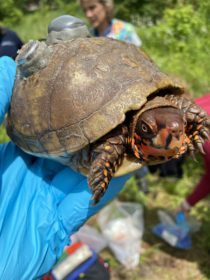
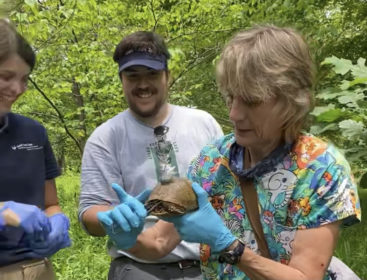
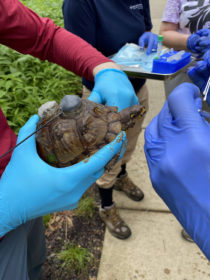
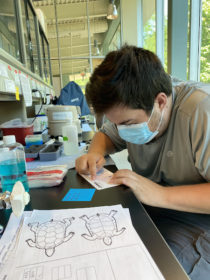
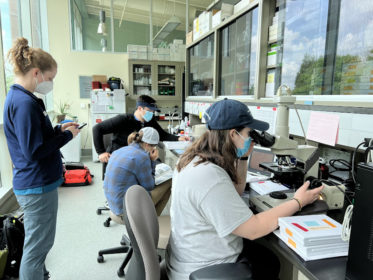
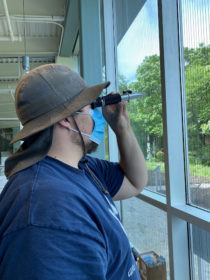
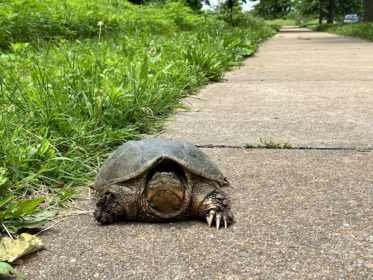
On Wednesday we started sampling for the project in Forest Park. Unfortunately, our ability to track turtles was limited by the weather as there were intermittent showers for most of the day. We were, however, able to collect samples from 5 of the 8 Forest Park turtles and headed back to the zoo to process the samples. Along with ensuring that the microbiome swabs were stored in their proper sample boxes, we also finished labeling blood slides prepared in the field and worked up the blood samples taken from the turtles. I was able to prepare hematocrit samples to analyze packed cell count (amount of red blood cells) and also examine total blood solids using a refractometer. It was interesting comparing the blood samples to mammalian samples and seeing the differences and similarities. One major difference is that reptilian red blood cells (RBCs) are nucleated whereas in mammals RBCs in circulation are unnucleated. We also saw a common snapping turtle walking down the sidewalk and had to stop and get a quick picture!
Thursday we continued sampling by collecting samples from all 7 tagged individuals at Tyson Research Center. The weather was much more cooperative for tracking and we were able to collect samples from all the individuals before we headed off for lunch. In the afternoon, we worked up all of the Tyson samples back at the zoo and got ready for our final day of sampling on Friday. We were able to collect samples from the remaining three turtles and ended a very successful first microbiome week!
The three-toed box turtles were far from the only focus of this week. The Institute for Conservation Medicine is involved in numerous other projects, and this week I was able to observe and assist with the Forest Park Living Lab project. The Living Lab is a collaborative project that is examining species across different animal taxa in Forest Park. The goals of the study are to gain a better understanding of urban habitat usage by a variety of species, understand disease prevalence and transmission, and perhaps most importantly to help educate people about the incredible wildlife found right in the middle of Saint Louis. Among the animals that are already part of the study are raccoons, a great horned owl, common snapping turtles, and the three-toed box turtles that are also part of the St. Louis Box Turtle Project.
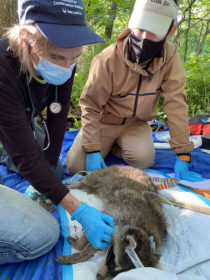
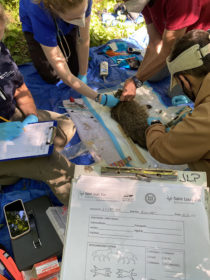
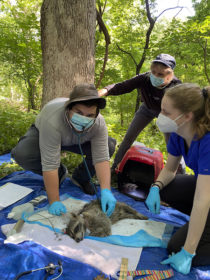
On Thursday night, baited traps were placed in the park with the hopes of capturing new small carnivores to become part of the study. Early Friday morning I received a text that two raccoons had been caught the night before. I rushed over to the park just after 6:00am and was able to assist with two knock-down procedures on the raccoons. Under anesthesia, a full health assessment was performed on both individuals. Overall body condition was assessed and samples of blood and hair were collected along with swabs to test for pathogens. Radio collars were also placed on the raccoons in order to track their movements as part of the study. Before one of the raccoons was given the the reversal to the anesthetic, I had the opportunity to listen to its heartbeat and breathing. It was truly an amazing experience! Both raccoons were successfully released and made their way back into the park.
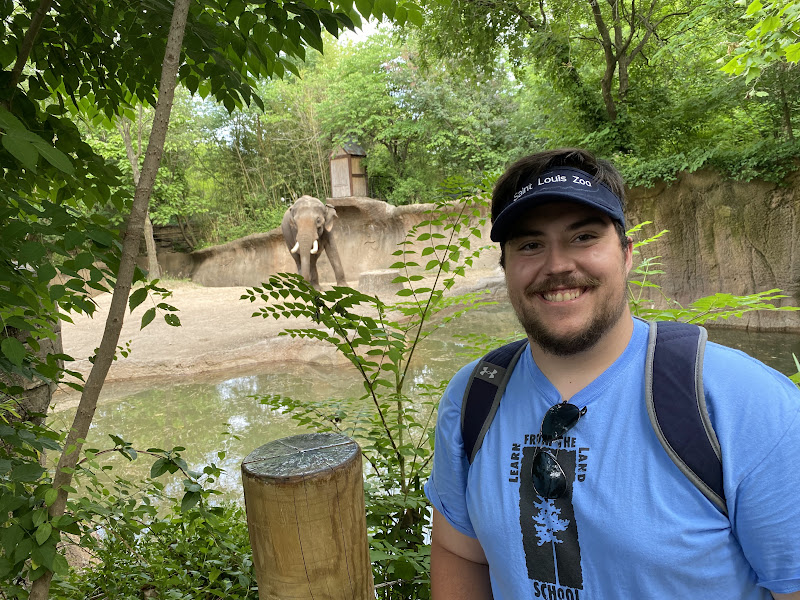
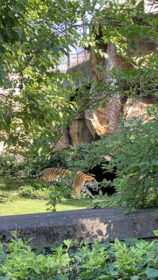
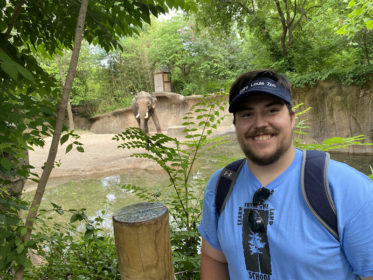
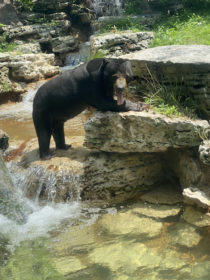
Of course I also explored the zoo again this week. Some of my favorite pictures from the week were Reka the Amur tiger exploring her exhibit, me and Asian elephant Raja, and Rimba the Malayan sun bear relaxing in a waterfall.
Nate is a biochemistry and molecular biology major from Colorado Springs, Colorado.